
The short answer: vacuum the sofa thoroughly with the upholstery and crevice tools, including under the cushions, then lift surface grime with a dry cleaning sponge and freshen it with bicarbonate of soda left on for a few hours before vacuuming it out. On fabric coded S, a solvent upholstery cleaner can treat marks. On X coded fabric, stick to vacuuming, brushing and the sponge.
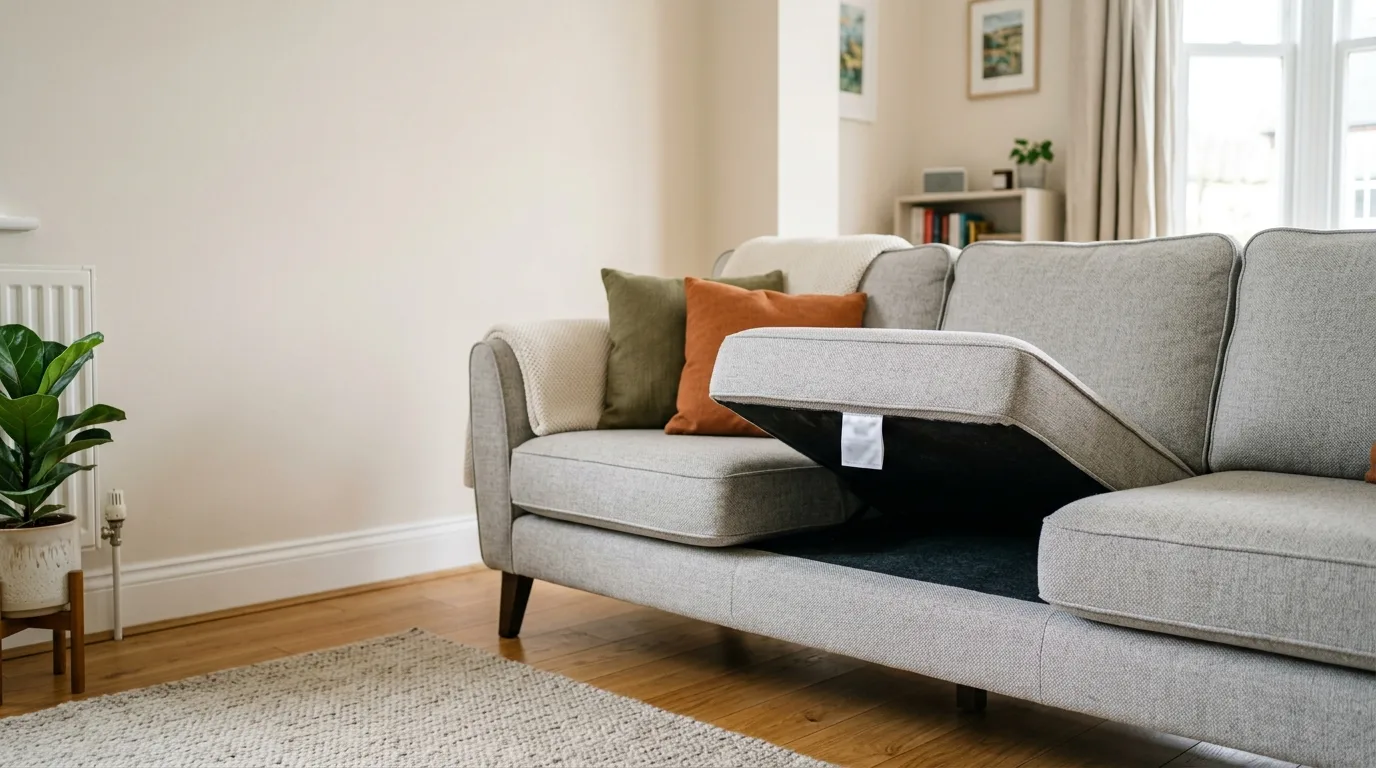
The care code on the label under the seat cushion tells you whether water is allowed. S means solvent only, X means vacuum only, and on both of them water is what causes rings, shrinkage and colour loss. But water-free cleaning is not just for those fabrics. It is also the safest first step on any sofa, and it often turns out to be all that was needed.
Which method suits which code
| Method | W | WS | S | X |
|---|---|---|---|---|
| Vacuuming and brushing | Yes | Yes | Yes | Yes |
| Dry cleaning sponge | Yes | Yes | Yes | Yes |
| Bicarbonate of soda | Yes | Yes | Yes | Yes, dry only |
| Solvent upholstery cleaner | Not needed | Yes | Yes | No |
| Water or steam | Yes | Yes | No | No |
Step one: vacuum more thoroughly than you think
Most of what makes a sofa look tired is dry soil: dust, grit, skin flakes, crumbs and hair lodged in the weave. It dulls the colour and, over time, grinds at the fibres. A proper vacuum removes a great deal of it.
- Take every cushion off. The base under the seat cushions collects the most debris in the whole sofa.
- Crevice tool into every seam and along the joins between the arms, back and seat.
- Upholstery tool over every surface, including both sides of each cushion and the back of the sofa if it is away from the wall.
- Brush textured fabrics such as chenille, bouclé or tweed with a soft clothes brush first, to loosen what is caught in the weave, then vacuum again.
Step two: lift surface grime with a dry sponge
A dry cleaning sponge is a block of natural vulcanised rubber, and it is the most useful tool most people have never heard of. It lifts soil by friction alone, with no liquid, which is why it is used in conservation work on delicate textiles and on soot-damaged surfaces.
Wipe it across the fabric in one direction using light, overlapping strokes, never scrubbing back and forth. You will see the grime transfer into the sponge. Once a surface is dirty, slice it away with a knife to expose clean rubber, rather than pressing dirt back onto the fabric. It works best on arms and headrests, where body oils and handling build up.
Step three: freshen with bicarbonate of soda
Bicarbonate of soda absorbs odour without adding moisture, which makes it safe on almost every fabric. Sift a light, even layer over the dry sofa, brush it gently into the fabric with a soft brush, and leave it for a few hours, or overnight if you can. Then vacuum it out thoroughly, going over each area twice, especially on dark fabric where any left behind shows as pale dust. If a smell comes back quickly, it is probably coming from the cushion filling rather than the cover, which is covered in how to get smells out of a sofa.
Marks on solvent-only fabric
On fabric coded S or WS, a solvent-based upholstery cleaner can treat marks that dry methods will not shift, such as greasy patches on arms and headrests. Use it carefully:
- Test it on a hidden area and let it dry fully before judging.
- Apply it to a white cloth, never straight onto the sofa.
- Dab lightly, working from the outside of the mark inwards.
- Keep windows open while you work and while it dries.
- Never use it on X coded fabric.
Pet hair without a vacuum
A rubber washing-up glove, barely damp, dragged across the fabric in one direction pulls pet hair into clumps that are easy to pick off. A lint roller finishes the job. Neither needs anything more than the faintest dampness on the glove, so the fabric stays dry.
What dry methods cannot do
Being honest about the limits: dry methods clean the surface. They will not flush out a spill that has soaked into the cushion, body oil that has worked deep into the fabric over years, or a smell held in the foam. For those, a W or WS sofa needs a careful wet clean, and an S or X sofa needs a specialist with professional dry and solvent equipment.
If a wet clean has already left a ring, see how to get water marks out of a sofa, and for the care codes in full, how to clean a fabric sofa.
Where this advice comes from
We work to the standards below, and we have pointed you to them directly so you can check anything here yourself rather than taking our word for it.
- HSE guidance on solvents (COSHH): Worth a look before using any solvent-based cleaner indoors, for the ventilation and handling advice.
- National Carpet Cleaners Association (NCCA): A reasonable place to check a firm before handing over a delicate or valuable sofa.
What we would actually buy
Everything here works without water. The sponge is the one most people do not already own.
A vacuum with upholstery and crevice tools
Removes the dust and grit that make fabric look dull, and it is safe on every fabric code.
A dry cleaning sponge (vulcanised rubber sponge)
Lifts soil by friction alone. Wipe in one direction, and cut away the dirty layer of the sponge as it fills.
Bicarbonate of soda and a soft brush
Brushed lightly into dry fabric and vacuumed out a few hours later, it absorbs odour without wetting anything.
A damp rubber glove or a lint roller
Rubber drags hair into clumps you can pick off. The glove only needs to be barely damp, and the fabric stays dry.
A solvent-based upholstery cleaner
For marks on solvent-only fabric. Test on a hidden area, apply to a cloth rather than the fabric, and ventilate the room.
Nobody pays us to list these and there are no affiliate links on this page. They are simply what we have found works, and in several cases the cheapest option genuinely is the best one. Whatever you use, patch-test it somewhere hidden first.
The Carpetix Team
We are a carpet, upholstery and rug cleaning team based in Leytonstone, East London. We write these guides from what we run into on actual jobs, which is why you will find us telling you when to leave something alone or handle it yourself rather than call anyone out. If a guide here saves you a call, it has done its job.
Last reviewed and updated 27 September 2026