The thing worth understanding before you start is what you are actually being measured against. A check-out clerk is not judging the flat against a show home. They are comparing it against the check-in inventory taken the day you moved in, allowing for fair wear and tear.
That single fact should shape your whole approach. Dig out the check-in report first. If it recorded the oven as clean, the oven needs to be clean. If it noted a mark on the living room carpet then, that mark is not your problem now. Most disputes we hear about come from tenants who never read the document they are being assessed against.
Know your rights before you spend anything
Since the Tenant Fees Act 2019, a landlord in England cannot make paying for professional cleaning a condition of your tenancy. They can require the property back in the condition it was let, and deduct fairly from the deposit if it is not. So doing it yourself is entirely legitimate. It just has to be done properly.
The order to work in
Sequence matters more than people expect. Get it wrong and you will clean the same floor three times.
- Empty it completely first. Every belonging, every bag of rubbish. Anything left behind can be charged as removal, and you cannot clean a floor covered in boxes.
- Start the oven soaking. Before anything else. Cleaner on, shelves in to soak. It needs an hour or more of dwell time, and that hour should run while you are elsewhere.
- Work top down in every room. Light fittings, then cornices and picture rails, then surfaces, then skirting, then floors. Dust falls, so anything you do above ruins what is below.
- Kitchen and bathroom in detail. These take the longest and carry the most risk.
- Floors absolutely last. Vacuum everywhere, mop hard floors, carpets at the very end once every other job is finished.
- Photograph everything. Empty, clean, dated. Then hand the keys back.
Room by room
Kitchen
Where most deductions come from. Budget half your total time here.
- Oven interior, door glass (including between the panes if it splits), shelves and runners
- Hob, burner caps, and the surround where grease collects
- Extractor hood, and the filter itself — soak it in hot degreaser, do not just wipe the outside
- Inside every cupboard and drawer, including the runners and the top edges of doors
- Fridge and freezer: emptied, defrosted, shelves and salad drawers out and washed, door seal cleaned
- Washing machine: drum, rubber door seal, and the detergent drawer removed and scrubbed
- Sink, taps, plughole and drainer, descaled
- Tiles, splashback and grout
- Bins cleaned inside and out
- Behind and underneath appliances if they pull out safely
Bathroom
Limescale is the theme. Give products contact time instead of scrubbing.
- Toilet: bowl, under the rim, the seat hinges, and behind the pan
- Bath and shower, including the screen, and the tracks the screen runs in
- All taps, shower head and hoses descaled
- Sealant and grout — mould treated, not just wiped
- Mirror and any cabinet, inside and out
- Extractor fan cover
- Towel rails, toilet roll holder and any fixings
- Floor, including behind the toilet and into the corners
Bedrooms and living areas
Mostly straightforward. The catches are all at height or behind things.
- Inside and on top of all wardrobes and drawers
- Skirting boards, including the top edge where dust sits
- Doors, door frames and handles
- Light switches, sockets and light fittings
- Windows internally, plus the frames, sills and the tracks
- Radiators, including behind them
- Curtain rails and blinds
- Any marks or scuffs on walls, treated gently
- Carpets vacuumed thoroughly, including the edges
Hallway, stairs and communal
Easy to forget because you walk through rather than stopping.
- Stair carpet, including the treads and the edges of each step
- Bannister and spindles
- Meter cupboard and any storage under the stairs
- Front door, both sides, and the letterbox
- Any shared entrance area your tenancy covers
The six things that catch nearly everyone
These come up again and again. None of them are hard, they are just easy to walk past.
- The extractor hood filter. Not the hood, the metal mesh filter inside it. Soak it in hot water and degreaser. Almost nobody does this and every clerk checks it.
- The washing machine detergent drawer. Pulls right out. What is growing behind it is usually the worst thing in the flat.
- Behind and around the base of the toilet. Including the fixing caps and the pipe where it meets the floor.
- Window tracks. The channel the window sits in collects grit and dead insects. Cotton buds and a brush.
- The top edge of skirting boards. You never see it standing up. A clerk runs a finger along it.
- The underside of fridge shelves and the door seal folds. Take the shelves out entirely.
Carpets and what counts as fair wear
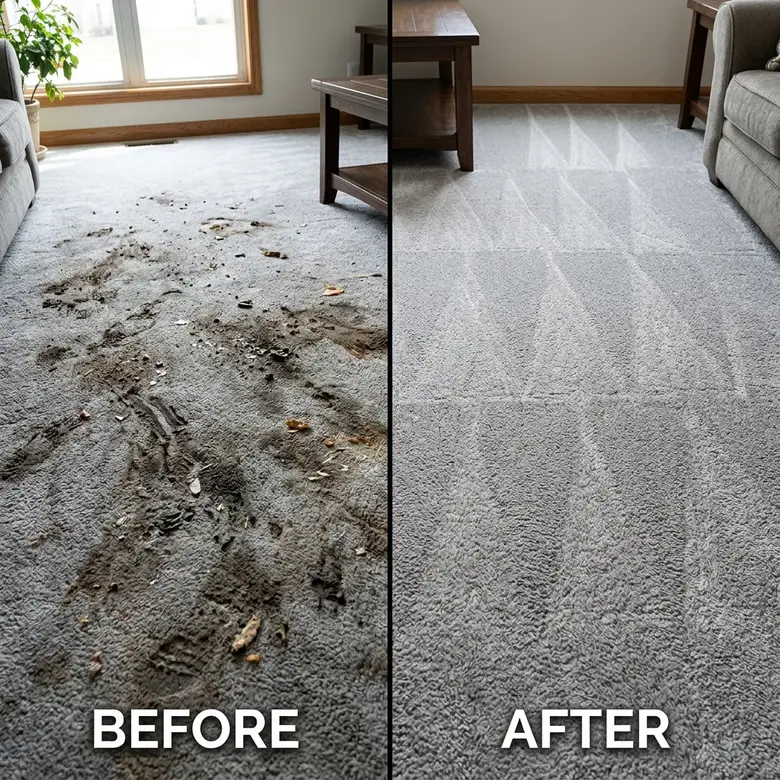
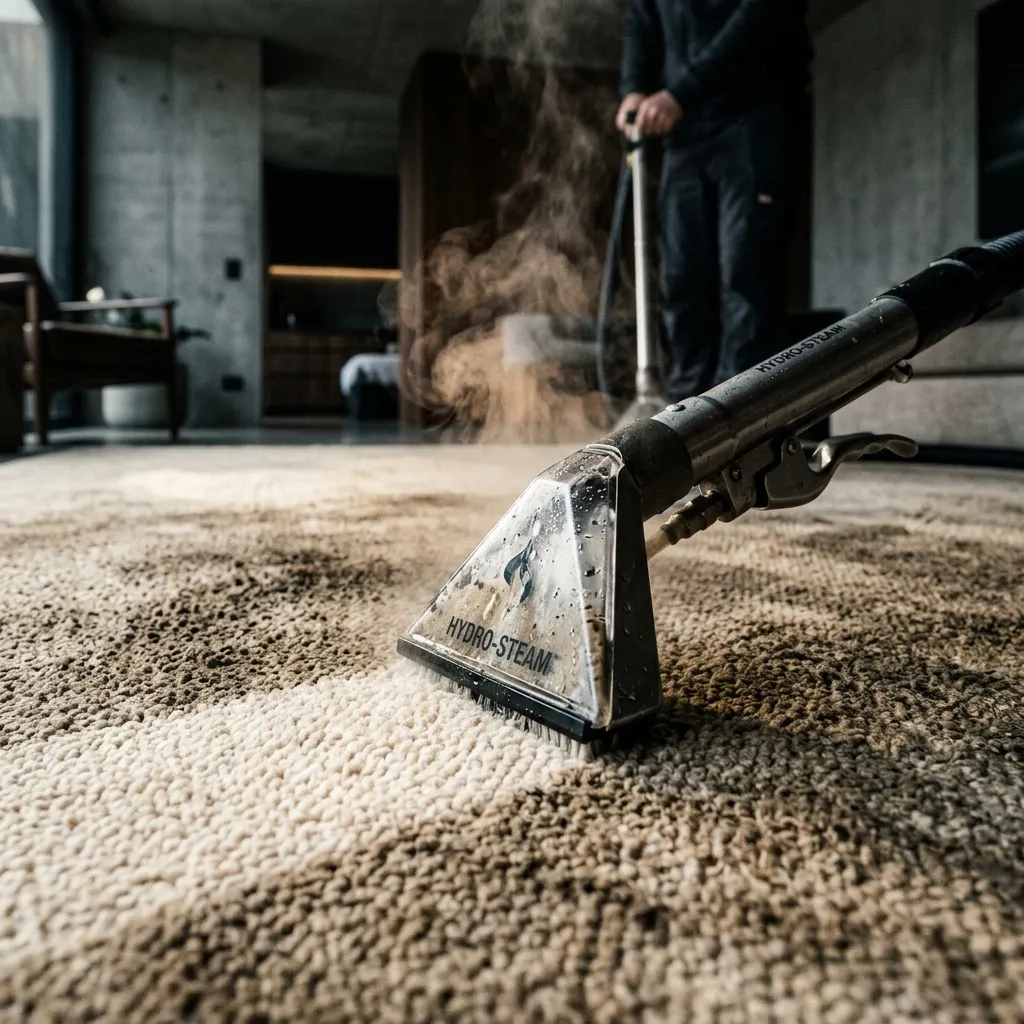
Carpets sit in a grey area, and it helps to know where the line falls. Fair wear and tear covers the flattening and gradual dulling that comes from ordinary living over a tenancy. It does not cover stains, burns, pet damage or a carpet that is simply filthy.
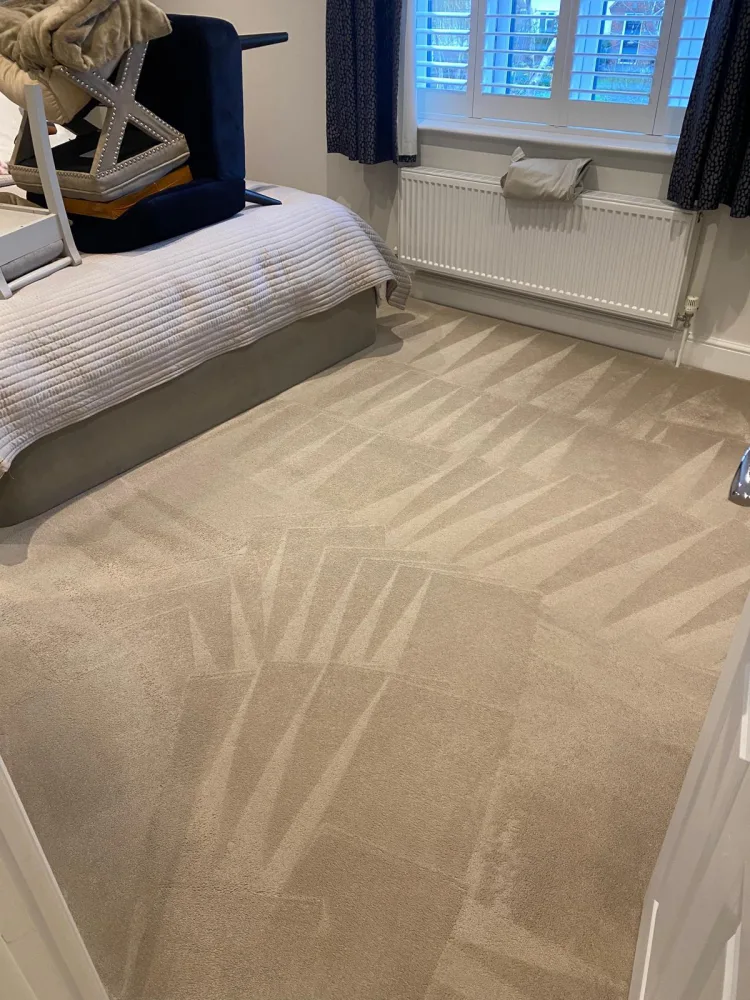
The practical test is the check-in report again. If the carpets were recorded as professionally cleaned when you moved in, returning them vacuumed is not equivalent. If there are visible traffic lanes or marks, a vacuum will not resolve it, and the adjudication schemes are generally unsympathetic to the argument that it looked fine to you.
If you do have marks to deal with, our guide to removing common carpet stains covers the fresh ones, and drying times matters here too, because handing back a damp carpet on check-out day creates a new problem.
Evidence wins disputes, not arguments
If a deduction is proposed, the deposit scheme adjudicator decides on documents. They were not there. They cannot see the flat. All they have is what each side submits.
- Photograph every room empty and clean, with the date visible in the file metadata.
- Take close-ups of the oven, the extractor filter, inside the fridge and the bathroom.
- Keep every receipt, including any carpet or oven cleaning you paid for.
- Keep your copy of the check-in inventory. Without it you cannot show what changed.
If a deduction still looks unreasonable, the scheme your deposit is protected in has a free dispute service, and Shelter publishes clear guidance on how it works. We have written more on where the line sits in can a landlord deduct your deposit for cleaning.
Where this advice comes from
We work to the standards below, and we have pointed you to them directly so you can check anything here yourself rather than taking our word for it.
- GOV.UK — Tenancy deposit protection — The official rules on how deposits must be protected and how disputes are handled. Start here if a deduction is proposed.
- Tenancy Deposit Scheme (TDS) — One of the three government-approved schemes. They publish adjudication guidance showing what evidence actually wins cleaning disputes.
- GOV.UK — Tenant Fees Act guidance — Confirms a landlord cannot require professional cleaning as a blanket tenancy condition in England.
- Shelter England — Free, independent advice on deposits and disputes if a deduction looks unreasonable and the conversation stalls.
What we would actually buy
Nothing exotic. The oven cleaner and the detailing brushes earn their place; the phone camera matters more than any of it.
A caustic-free oven cleaner with a bag or tray system
The oven decides more deposit disputes than anything else, and every cleaner needs dwell time. Put the shelves in to soak before you start any other room and it works while you do the rest.
A limescale remover with an acid base
London water is hard and general bathroom sprays will not shift established scale on taps and shower screens. Give it contact time rather than scrubbing harder.
A degreaser and a non-scratch pad
For the extractor filter, the hob surround and the cupboard doors nearest the cooker. The filter is the single most missed item in the whole property.
Cheap detailing brushes and a pack of cotton buds
Window tracks, tap bases, the fridge door seal and cupboard hinges. This is exactly where clerks look, and nothing else gets into those spaces.
Microfibre cloths, several colours
Colour-code by room so you are not carrying bathroom cloths into the kitchen. Cheap in bulk and better than paper towel on glass and stainless.
Your phone camera
Photograph every room, empty and clean, with the date on. This is the evidence that settles a dispute. Costs nothing and it is the most valuable thing on this list.
Nobody pays us to list these and there are no affiliate links on this page. They are simply what we have found works, and in several cases the cheapest option genuinely is the best one. Whatever you use, patch-test it somewhere hidden first.
The Carpetix Team
We are a carpet, upholstery and rug cleaning team based in Leytonstone, East London. We write these guides from what we run into on actual jobs, which is why you will find us telling you when to leave something alone or handle it yourself rather than call anyone out. If a guide here saves you a call, it has done its job.
Last reviewed and updated 31 July 2026