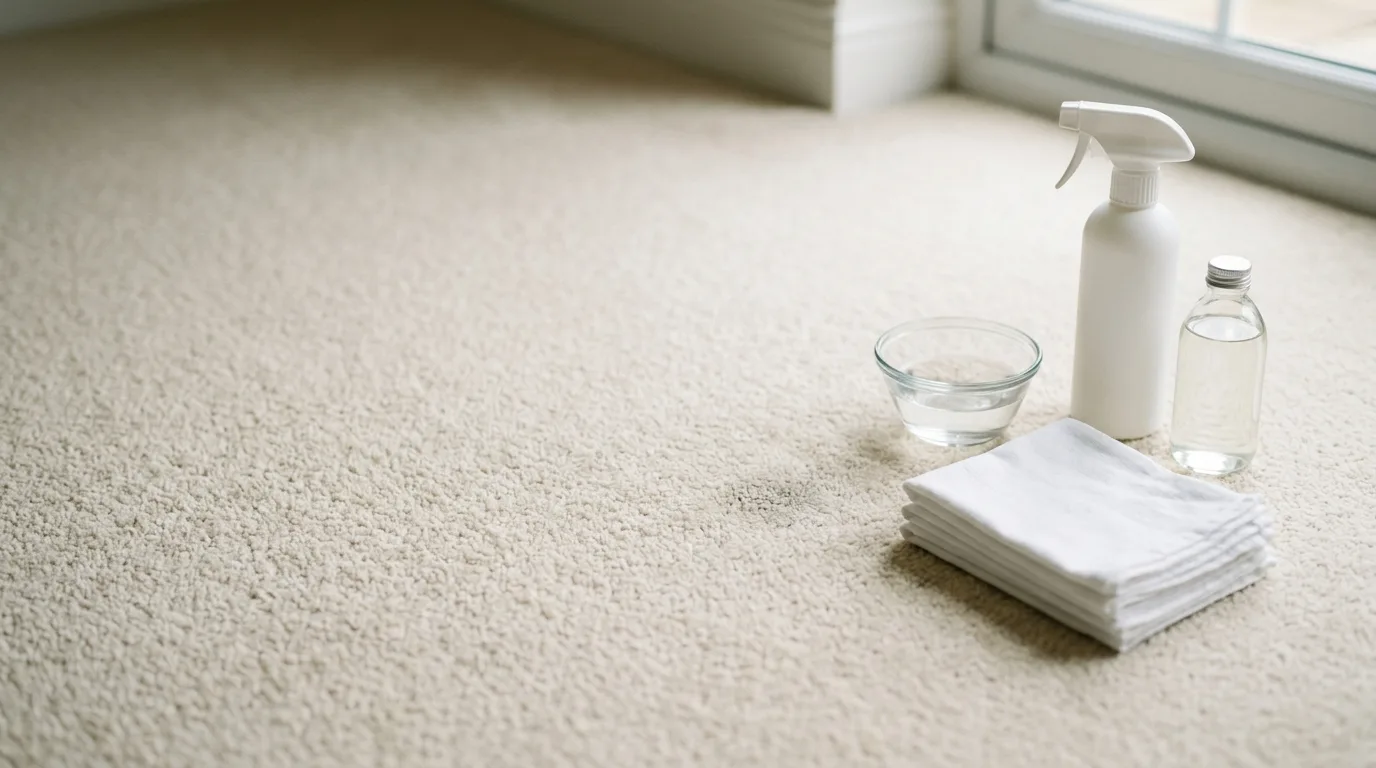
The short answer: Blot, never rub, and work from the outside of the stain inwards. Use cool water, because heat sets many stains, and apply any solution to a cloth rather than pouring it onto the carpet. For most fresh spills, a teaspoon of clear washing-up liquid in a cup of warm water is enough. Blood, pet urine, grease, red wine and coffee each have a specific method, covered in the guides below.
The stains we get called out to are rarely the spill itself. They are what happened in the ten minutes afterwards. Somebody scrubbed hard at it with a tea towel, or reached for something strong under the sink, or put a hot cloth on it. The original spill was usually recoverable. What came next often was not.
So this guide is as much about restraint as technique. Below are the rules that apply to every spill, the solution that handles most of them, links to a full guide for each common stain, and an honest note on which marks are genuinely permanent.
Five rules that apply before you touch anything
- 01Move now. A wet spill is a spill, a dry one is a stain. The first ten minutes matter more than everything you do afterwards combined.
- 02Blot, never rub. Press straight down and lift. Rubbing drives the spill towards the backing and frays the fibre tips, which leaves a fuzzy patch that stays visible even after the colour has gone.
- 03Work inwards. Start at the outside edge and move towards the middle. Going the other way grows the stain.
- 04White cloths only. Coloured cloths and printed kitchen roll can release their own dye into wet carpet.
- 05Test somewhere hidden. Inside a wardrobe or under the sofa. Thirty seconds that occasionally saves a carpet.
The solution we start with
One teaspoon of clear washing-up liquid in one cup of warm water. Add a tablespoon of white vinegar for acidic spills and odours. Apply it to the cloth rather than pouring it onto the carpet, and use as little as you can get away with. Over-wetting causes more call-outs than the spills themselves.
Guides for specific stains
The rules above apply to everything. Beyond that, each stain behaves differently, and the right method depends on what it is made of. Each guide below covers fresh and dried stains, which products help, and when it is not coming out.
Ink
Ink is dye, so you are trying to lift colour without disturbing the carpet’s own colour. Test properly on this one, more carefully than for anything else here.
- Dab, never wipe, with a cloth barely dampened in isopropyl alcohol.
- Move to a clean section of cloth constantly, so you are not putting ink back down as fast as you lift it.
- Rinse-blot with detergent solution, then plain water.
The honest bit: some stains are not coming out
We would rather tell you this now than have you spend a weekend on it. Bleach and some strong dyes do not sit on top of the fibre, they replace or strip its colour. There is nothing to lift, because the colour itself has changed. Similarly, an old stain that has been through a summer of sunlight or had heat applied has bonded to the fibre.
In those cases the realistic options are patch repair or living with it, and anyone promising otherwise is guessing. That said, plenty of marks that look hopeless with a cloth do come out under proper extraction, simply because the equipment reaches depth that hand-blotting cannot. The test is whether the stain is sitting in the pile or has changed the fibre itself.
Quick reference
| Stain | First move | Then | Never |
|---|---|---|---|
| Blood | Blot, cold water | Salt paste, or enzyme if dried | Warm or hot water |
| Pet urine | Soak up, rinse cold | Enzyme cleaner, full dwell time | Any heat, ammonia cleaners |
| Grease | Lift solids, absorb with cornflour | Washing-up liquid, rinse well | Water on its own |
| Red wine | Blot, dilute with cool water | Detergent, then vinegar mix | Hot water, salt, white wine |
| Coffee or tea | Blot immediately | Vinegar and detergent, rinse twice | Let it dry untreated |
| Ink | Dab with alcohol | Detergent, then rinse | Wiping it sideways |
One last thing worth saying: if the same patch keeps staining, the problem may not be the spills. Detergent residue left from a previous clean attracts soil and shows as a recurring dark patch in the same spot. If that sounds familiar, rinse the area thoroughly with plain water and blot it out properly, and see whether it stops coming back.
Where this advice comes from
We work to the standards below, and we have pointed you to them directly so you can check anything here yourself rather than taking our word for it.
- National Carpet Cleaners Association (NCCA): UK trade body with consumer stain guidance, and the place to check whether a firm you are considering is actually a member.
- WoolSafe stain removal guide: If your carpet is wool, check products here first. Several supermarket stain removers are alkaline enough to strip wool of its natural lanolin.
- IICRC: The body behind the S100 standard that professional carpet cleaning is measured against internationally.
What we would actually buy
Most of this lives in a kitchen cupboard already. The only thing we would genuinely insist on buying is an enzyme cleaner, and only if you have pets.
Clear washing-up liquid and warm water
We are not being falsely modest here. A teaspoon in a cup of warm water genuinely deals with the majority of fresh spills. Use a clear one, since coloured washing-up liquids can add their own tint to a light carpet.
An enzyme cleaner such as Simple Solution or Urine Off
The one category where a specialist product really is necessary. Enzymes digest the uric acid that causes the smell. No amount of ordinary detergent does this, which is why the smell keeps coming back after a normal clean.
Bicarbonate of soda
Sprinkle on, leave fifteen minutes to draw the oil out, vacuum thoroughly, then treat what is left with detergent solution. Cheap and genuinely effective on the greasy element that water alone will not shift.
Dr. Beckmann Carpet Stain Remover, or an equivalent spot cleaner
Worth having ready so you are not hunting for something at the moment a glass goes over. Patch-test in a wardrobe first, and follow the dwell time on the bottle rather than guessing.
A stack of plain white cotton cloths
Coloured cloths and patterned kitchen roll can transfer their own dye into damp carpet, and then you have two problems. Old white towels cut up work perfectly.
Isopropyl alcohol (surgical spirit)
Dab, never wipe, and move to a clean part of the cloth each time so you are not putting the ink straight back down. Test carefully first, because alcohol can affect some carpet dyes.
Nobody pays us to list these and there are no affiliate links on this page. They are simply what we have found works, and in several cases the cheapest option genuinely is the best one. Whatever you use, patch-test it somewhere hidden first.
The Carpetix Team
We are a carpet, upholstery and rug cleaning team based in Leytonstone, East London. We write these guides from what we run into on actual jobs, which is why you will find us telling you when to leave something alone or handle it yourself rather than call anyone out. If a guide here saves you a call, it has done its job.
Last reviewed and updated 30 July 2026