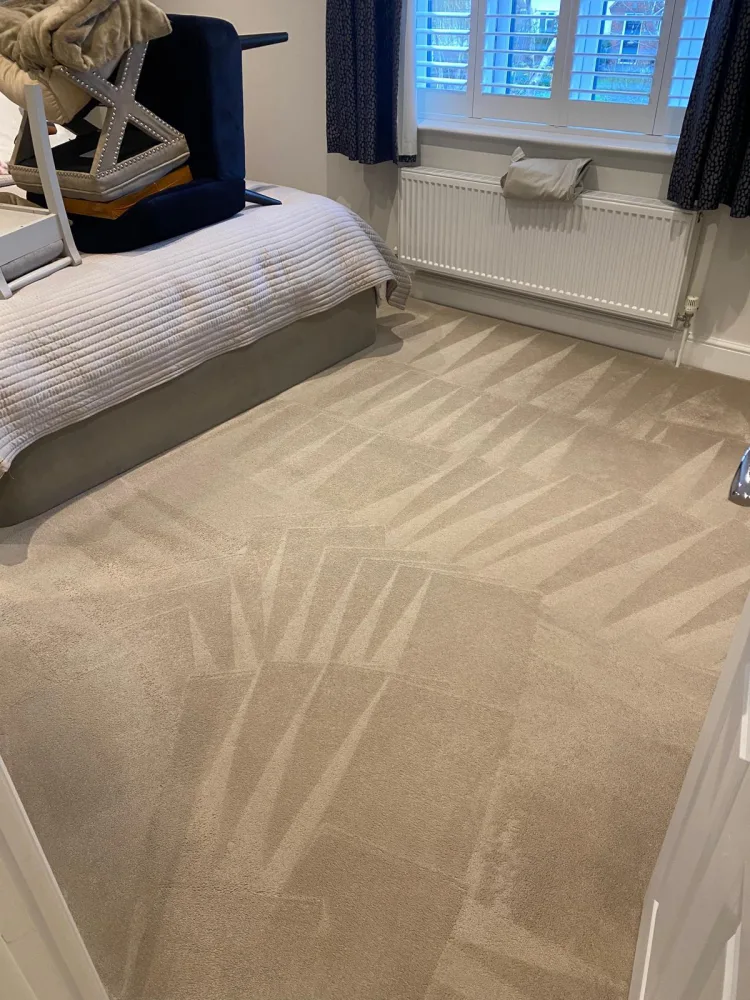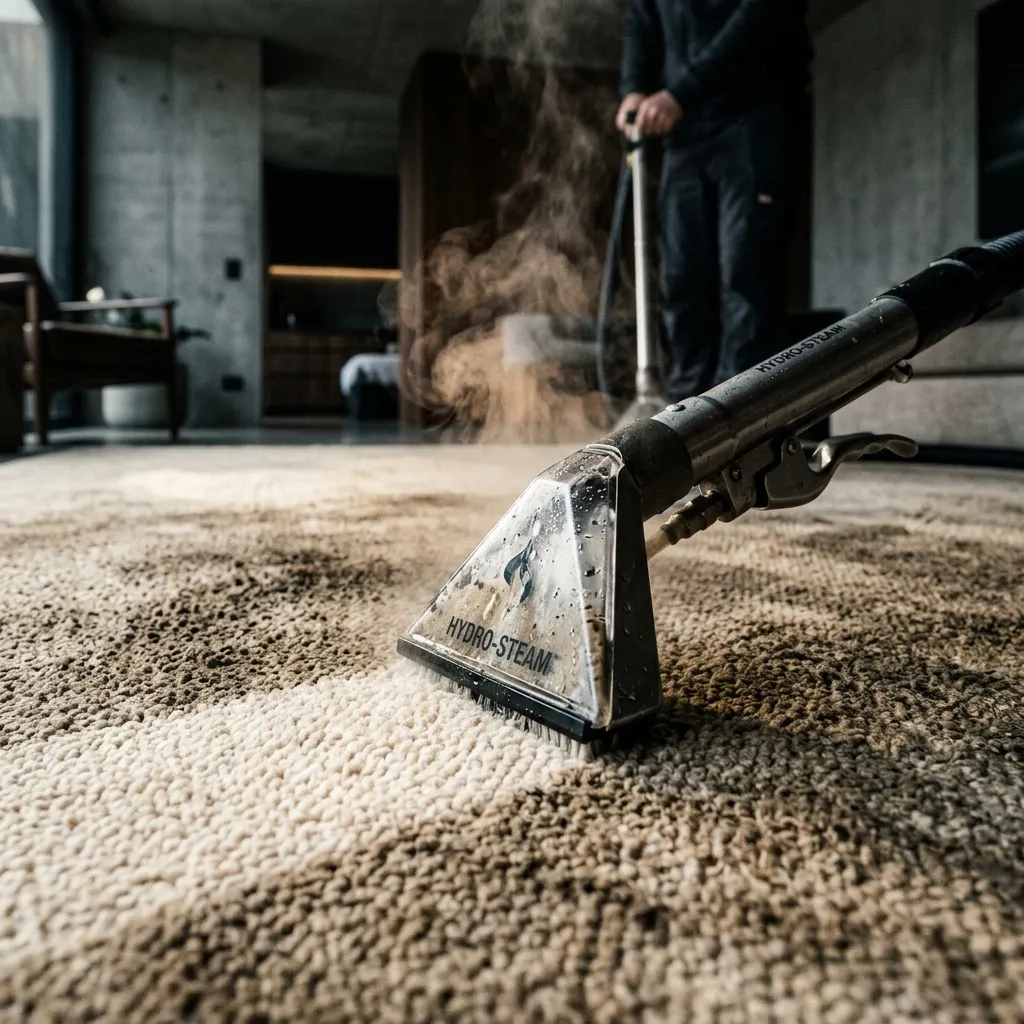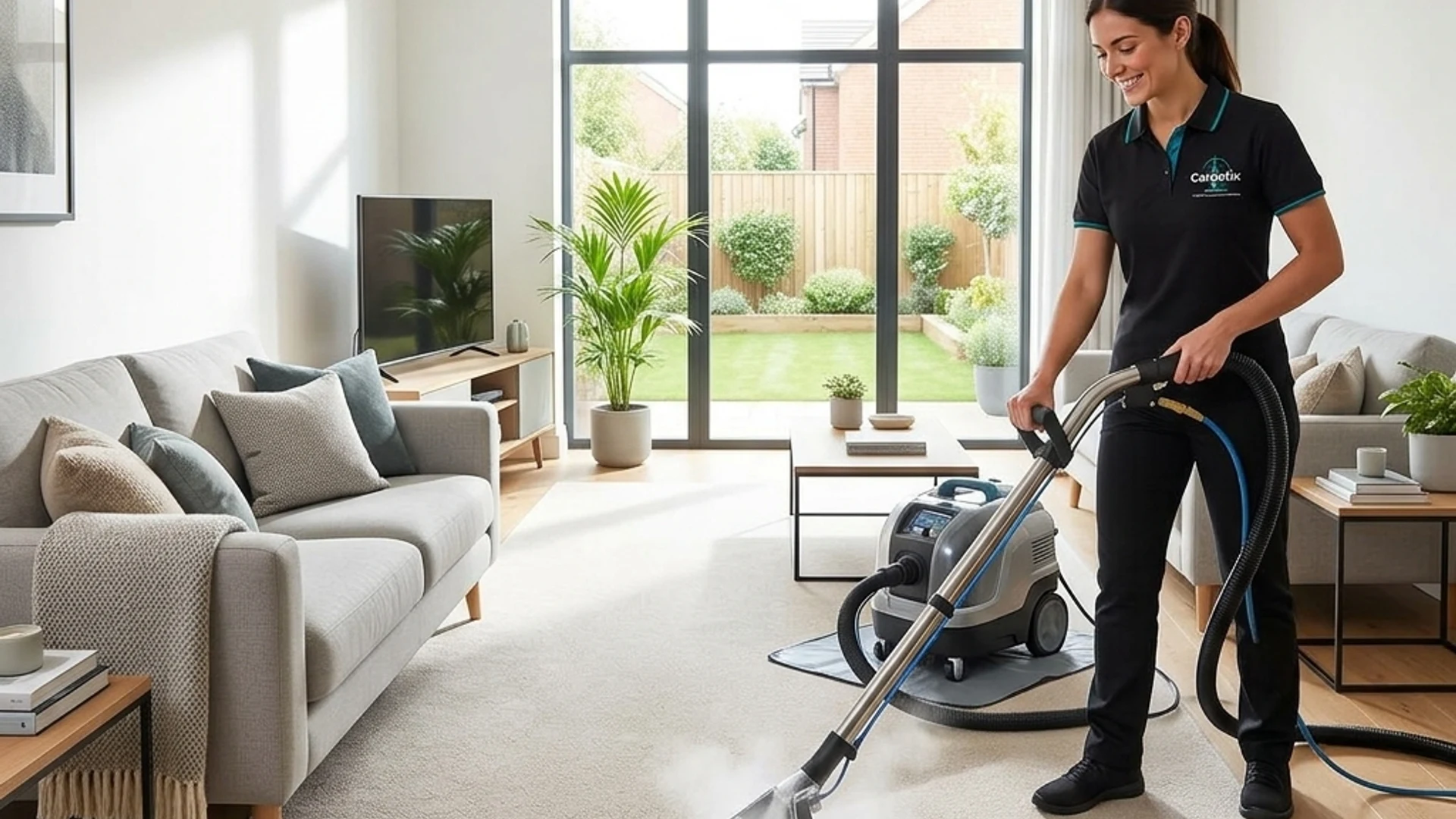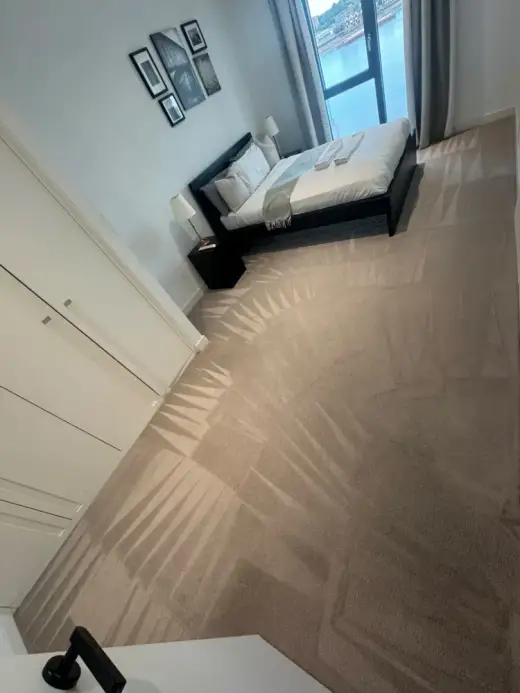
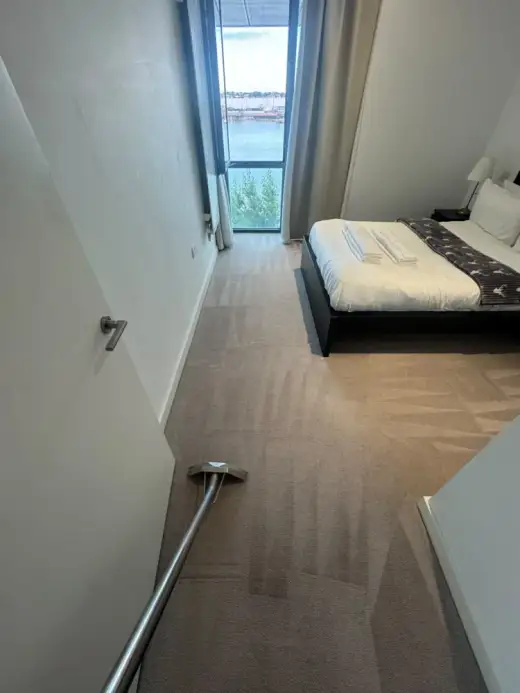
People usually ask this because they want to know when they can put the sofa back. Fair enough. But drying time is worth more attention than that, because it is the clearest signal you get about whether a carpet was cleaned well, and almost every problem that turns up afterwards traces back to a carpet that stayed wet too long.
After a properly extracted hot water clean, most carpets are touch-dry in two to four hours and fully dry within about six. Low-moisture cleaning is often usable inside the hour. A carpet still damp the following morning is not just inconvenient, it is telling you something went wrong at the extraction stage.
Touch-dry and fully dry are not the same thing
This distinction matters more than it sounds, because most of the mistakes we see come from treating the first one as the finish line.
Touch-dry, roughly 2 to 4 hours
The surface feels dry against your hand. You can walk on it carefully in clean socks. The base of the pile is probably still holding a little moisture, so keep shoes and pets off it and do not treat the room as fully back in service.
Fully dry, about 6 hours or overnight
The whole depth of the pile and the backing beneath it are dry. This is the point that actually matters. Furniture back, rugs back down, room used normally. Press your palm firmly into the pile for a few seconds and check for any coolness or damp before you commit.
What actually changes the number
Extraction power, which outweighs everything else
We could stop the list here and you would have most of the answer. Strong extraction pulls the majority of the water straight back out, so there is far less left to evaporate. Weak extraction leaves the carpet genuinely wet, and no amount of open windows fully compensates. Two cleans using identical water volumes can dry hours or days apart purely on this. It is why the same method produces such different experiences depending on who turns up.
The method used
Hot water extraction introduces more moisture than low-moisture cleaning, so it takes longer by nature, though done properly it stays comfortably in the two to four hour range. Dry compound methods barely need drying at all. We compare them properly in steam versus dry carpet cleaning.
The carpet itself
Thick, deep-pile and wool carpets hold noticeably more moisture and release it more slowly. Wool in particular is highly absorbent by nature. A dense backing adds time too, because moisture has further to travel before it can evaporate. If you have deep wool, add a couple of hours to any figure you are quoted for a standard synthetic.
Airflow, the bit you control
This is the one variable entirely in your hands, and it makes a genuine difference. Still air directly above a damp carpet becomes saturated with moisture fairly quickly and then stops accepting any more, which is exactly why a closed room can seem to stall halfway through drying. Moving that air away and replacing it is the whole trick.
Weather and heating
Warm, dry air takes up moisture readily. Cold, damp air does not. The same clean on a bright day with windows open and on a wet January afternoon with everything shut are genuinely different jobs. Not a reason to avoid winter cleaning, just a reason to lean harder on heating and a dehumidifier when you do.
How dirty it was to begin with
A heavily soiled carpet needs more pre-spray and more passes, which adds a little moisture overall. Modest compared to extraction quality, but it is why a carpet left five years often takes slightly longer than one done annually.
How to halve the drying time
None of this needs special equipment, and doing even half of it makes a visible difference.
- Open two windows, not one. Cross-ventilation creates actual movement. A single open window is mostly just an exit with nothing pushing air towards it.
- Point fans across the carpet, not into the room. Angle them low so the air sweeps over the pile surface. This is the single most effective thing available to you and the one most people get slightly wrong.
- Heating on low. Gentle warmth helps the air hold more moisture. It does not need to be uncomfortable, and blasting it is counterproductive.
- Dehumidifier if you own one. Especially valuable in a closed room or humid weather, where fans alone can only do so much.
- Run the bathroom and kitchen extractors. They pull damp air out of the property rather than just moving it to another room.
- Stay off it as much as you can. Damp fibres pick up soil far more readily than dry ones, and foot traffic during drying can leave marks that were not there before.
- Leave the furniture off until fully dry. This one is worth the wait.
Two things not to do
Do not point a hairdryer or heat gun at one patch. It dries unevenly and concentrated heat can permanently set any old stain residue sitting in that spot. And do not lay a rug, towel or plastic sheet over a damp carpet to protect it. That traps the moisture underneath and produces exactly the musty smell you were hoping to avoid.
Why this matters beyond convenience
When a carpet dries slowly, three things become likely rather than merely possible. It develops a musty smell within about a day, which we cover in why carpets smell after cleaning. Old stains wick back to the surface as residual moisture travels upward through the pile, carrying dissolved residue with it. And in genuinely bad cases, prolonged damp risks mildew in the underlay, which is no longer a cleaning problem but a replacement one.
So a soaked, slow-drying carpet is not simply an inconvenience to wait out. It is the leading indicator for every other complaint people have after a clean, which is why we would rather spend the extra time on dry passes than get the van packed ten minutes sooner.
What to expect, roughly
| Situation | Typical drying time |
|---|---|
| Low-moisture or dry compound | Under an hour |
| Professional hot water extraction | 2 to 4 hours touch-dry, about 6 fully dry |
| Weak extraction or hired machine | 12 to 24 hours, sometimes longer |
| Thick wool or deep pile | Add roughly 2 hours |
| Cold, humid, closed room | Add several hours |
If you are booking a clean, asking how long it will take to dry is a genuinely revealing question, more so than asking which method they use. Anyone confident in their extraction will give you a number in hours without hesitating.
Where this advice comes from
We work to the standards below, and we have pointed you to them directly so you can check anything here yourself rather than taking our word for it.
- IICRC — Publishes the standards for both carpet cleaning and water damage restoration, which is where the drying principles here come from.
- National Carpet Cleaners Association (NCCA) — Useful for checking what is reasonable to expect from a clean, and worth quoting if a job left your carpet soaked.
- NHS guidance on damp and mould — Relevant if a carpet has stayed wet for days rather than hours, which stops being a cleaning question at that point.
What we would actually buy
Nothing here is a cleaning product. Drying is a ventilation problem, and it is solved with air movement.
Two or three ordinary household fans
Twenty pounds each and they will roughly halve your drying time. Angle them low so air sweeps across the pile rather than over the top of it. This is a smaller version of exactly what we set up on jobs.
A domestic dehumidifier
Fans move damp air around the room. A dehumidifier takes the water out of it. In a closed room or on a wet day, this is what stops the air becoming saturated and the drying stalling.
Plastic or foil furniture pads
A few pounds for a pack, and they sit under the feet to stop wood staining the carpet or metal leaving rust marks. Not a substitute for waiting, but far better than putting a sofa straight down.
A cheap hygrometer
Slightly nerdy, genuinely useful if you have had damp problems before. It tells you whether the room air is dry enough to absorb any more moisture, which is often why a carpet seems to stop drying.
Nobody pays us to list these and there are no affiliate links on this page. They are simply what we have found works, and in several cases the cheapest option genuinely is the best one. Whatever you use, patch-test it somewhere hidden first.
The Carpetix Team
We are a carpet, upholstery and rug cleaning team based in Leytonstone, East London. We write these guides from what we run into on actual jobs, which is why you will find us telling you when to leave something alone or handle it yourself rather than call anyone out. If a guide here saves you a call, it has done its job.
Last reviewed and updated 30 July 2026