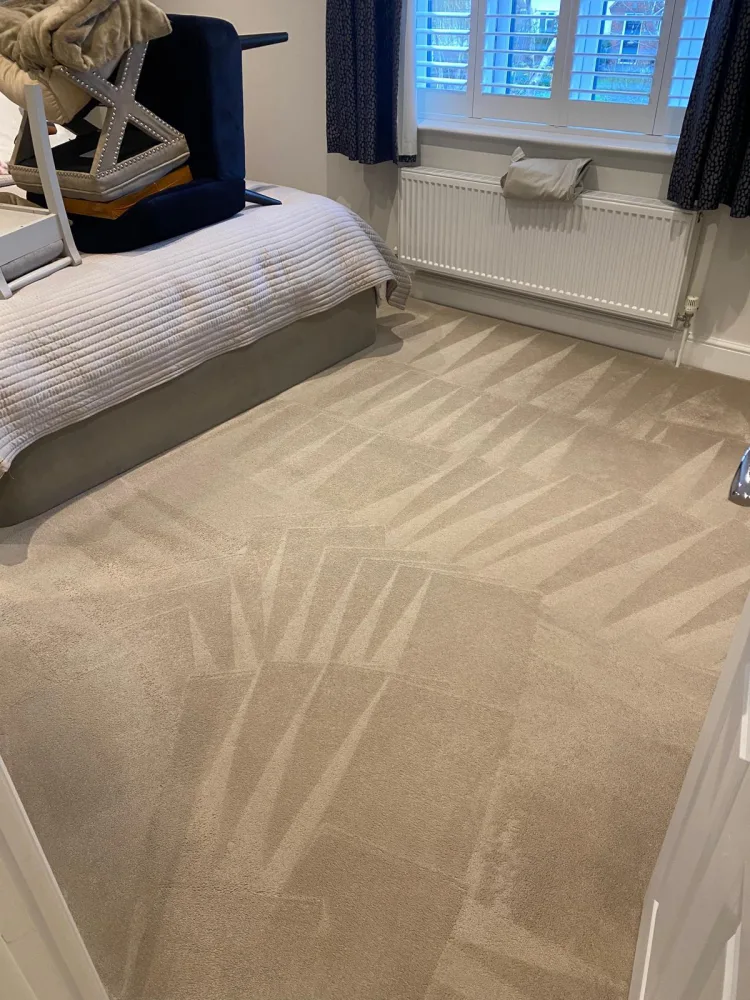
If you ask ten cleaning companies how often you should have your carpets done, you will get ten answers, and most of them will be suspiciously close to “more often than you currently do”. So let us be straight with you: for a lot of homes, once a year is genuinely enough. Some homes need it twice a year. A few can leave it eighteen months and lose nothing.
What actually decides it is not the calendar. It is how many feet cross the floor, whether anything in your house has four legs, and how the carpet is built. This guide walks through how we work that out when we look at a floor, so you can do the same without anyone standing in your hallway.
Start with the baseline, then adjust
This is roughly the table in our heads when someone asks. Find the row that sounds most like your house and treat it as a starting point rather than a rule.
| Your household | Deep clean roughly |
|---|---|
| One or two adults, no pets, quiet home | Every 12 to 18 months |
| Family home, general everyday use | Every 12 months |
| Pets, or children still at crawling age | Every 6 to 9 months |
| Someone in the house has asthma or hay fever | Every 6 months |
| Stairs, hallways, offices and other busy runs | Every 3 to 6 months, those areas only |
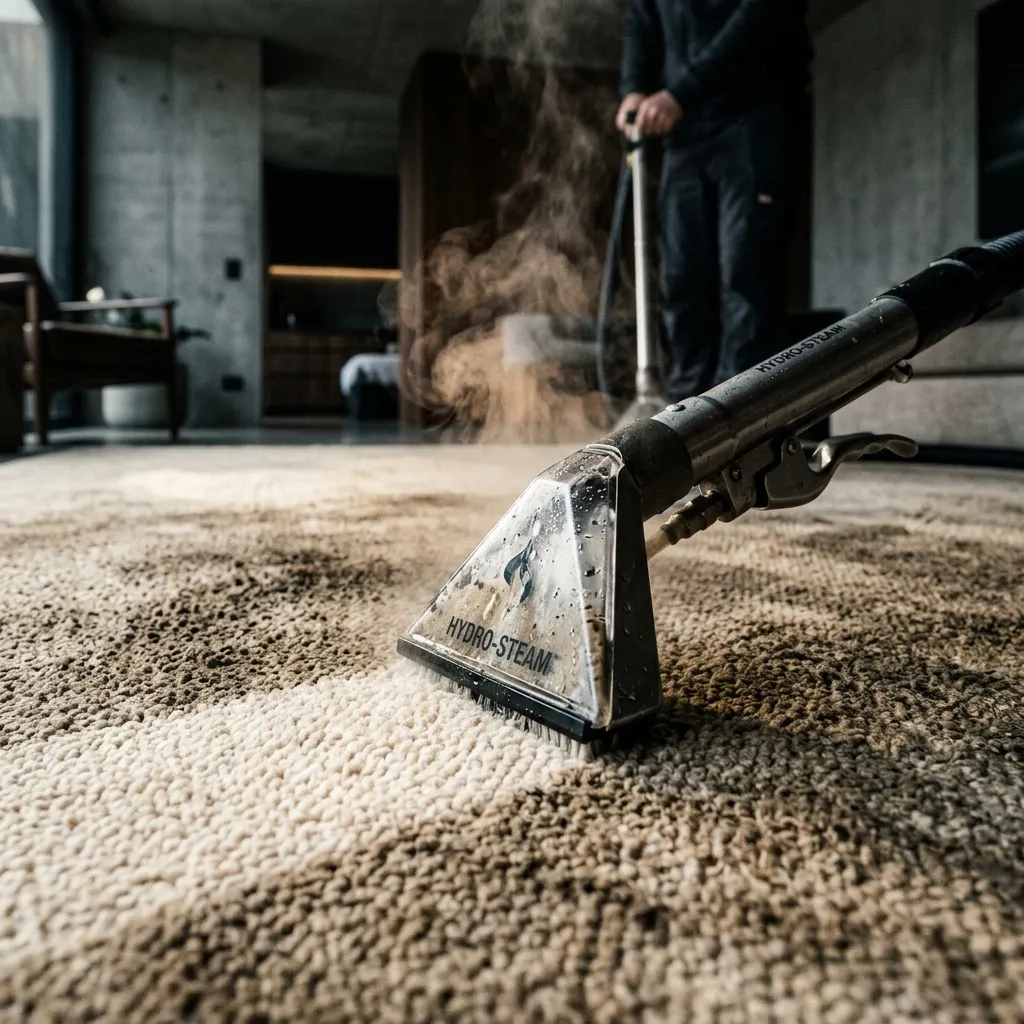
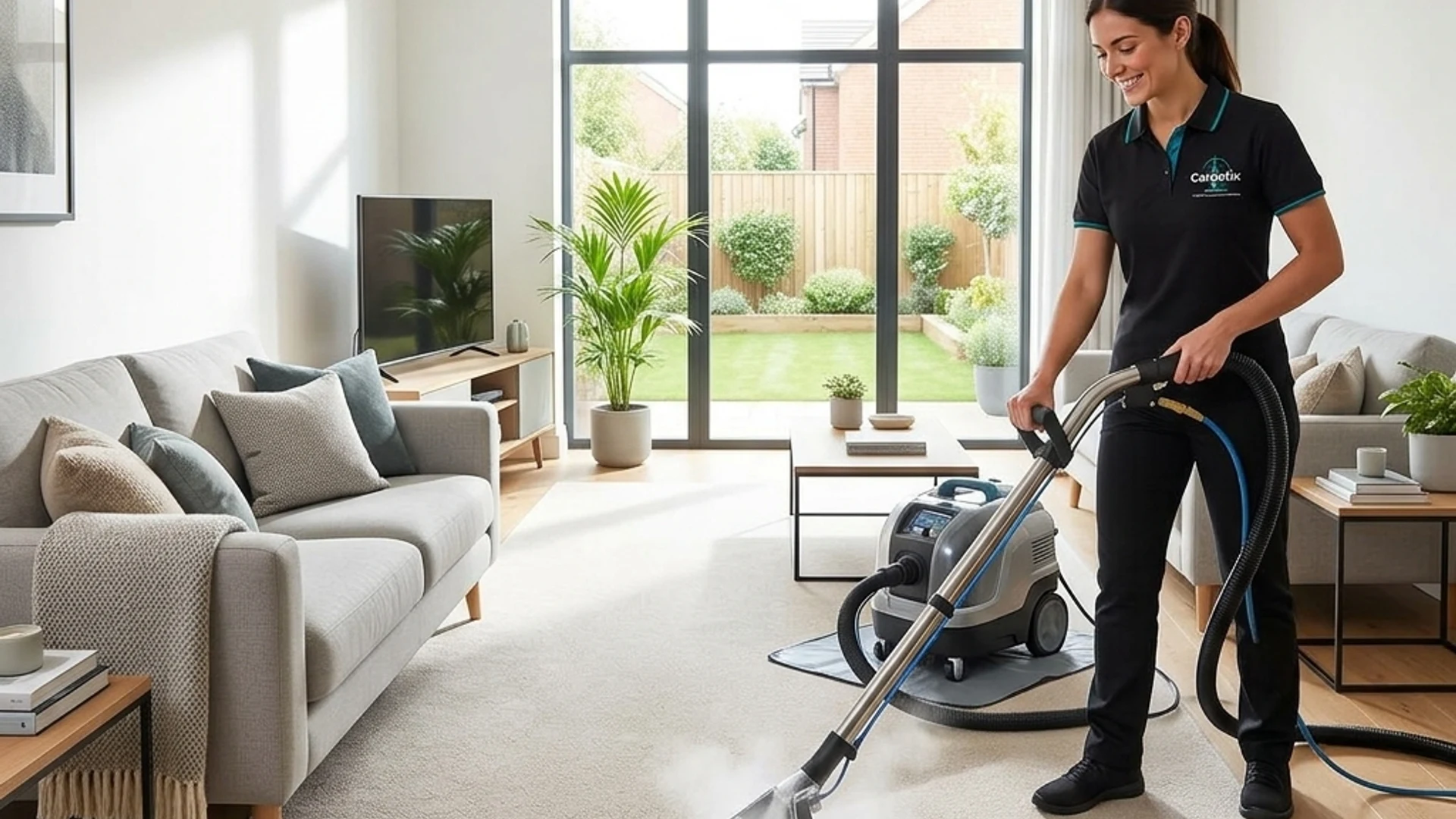
These figures are for a proper hot water extraction clean, the kind that pulls soil out of the base of the pile. That sits on top of your everyday vacuuming, never instead of it.
Stop thinking about “the house” and start thinking in zones
This is the single biggest shift that saves people money. A spare bedroom nobody sleeps in does not need the same attention as the hallway everyone walks down in wet shoes. When we turn up at a house, the difference between rooms is usually obvious from the doorway: the landing and stairs look tired while the back bedroom still looks close to new.
So do not book the whole house on one cycle. Do your stairs, landing and living room annually or twice-yearly, and leave the quiet rooms for eighteen months. You will spend less and the floors that actually get walked on will look considerably better.
The thing we wish more people did: put a proper mat at every external door and take shoes off indoors. It sounds like nagging, but the grit that wears carpet out mostly arrives on the soles of shoes. Houses with a shoes-off habit have visibly better carpets, and we can usually tell within about thirty seconds of walking in.
What actually moves your number
Pets
Pets bring three things a carpet does not love: hair, oils from the coat, and the occasional accident. Even a spotless, well-trained dog leaves dander that settles down where a vacuum cannot reach. The reason we suggest 6 to 9 months is not that your carpet will look filthy at 10 months, it is that odour builds silently. By the time you can smell a carpet, the problem has been developing for a while, and it is far harder to shift than it would have been to prevent.
Small children
Children under about five live at carpet level. They crawl on it, eat on it and put their hands on it and then in their mouths. For that stage of family life, more frequent cleaning is less about appearance and more about the fact that it is the surface your child spends most of the day in contact with.
Allergies and asthma
Carpet gets blamed for allergies more than it deserves. A clean carpet actually works in your favour, trapping allergens so they are not circulating in the air. The catch is that a full filter has stopped filtering. If someone in the house has hay fever, asthma or a dust mite sensitivity, a six-month cycle keeps that working. Allergy UK has sensible, non-alarmist guidance on dust mites if you want to read further.
What the carpet is made of
Light colours and deep piles show dirt sooner than dark, low-pile carpet, though they are not necessarily dirtier. Wool wants gentler and less frequent wet cleaning than a tough polypropylene. None of this changes the underlying soil, it just changes how soon you notice. If your carpet is wool, look for products carrying WoolSafe approval rather than reaching for whatever is under the sink.
Three different jobs people keep confusing
Most of the confusion about frequency comes from treating carpet care as one task. It is three, and they run on completely different clocks.
Vacuuming, twice a week where it is busy
Once a week is fine in quiet rooms. This is the one that pays for itself, because it lifts loose grit before foot traffic can grind it into the fibres. Skip it and you will need the expensive step sooner.
Spot cleaning, within minutes
Blot, never rub, and deal with it while it is still wet. A fresh spill is a spill. A dry one is a stain. We have written up the method for each common spill in our guide to removing common carpet stains.
Deep cleaning, every 6 to 18 months
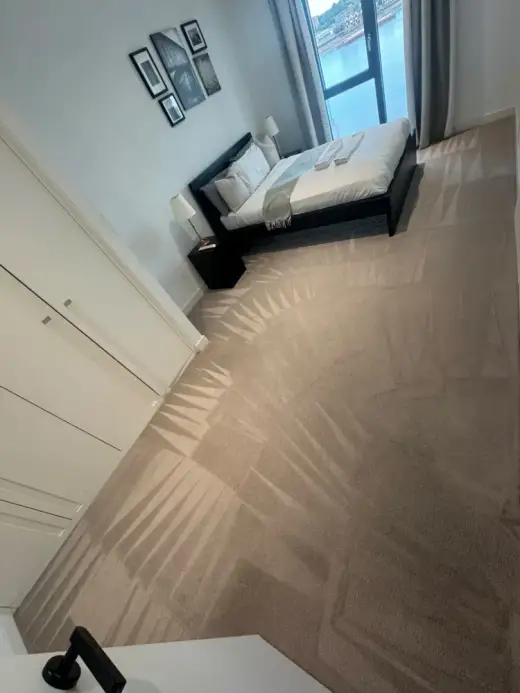
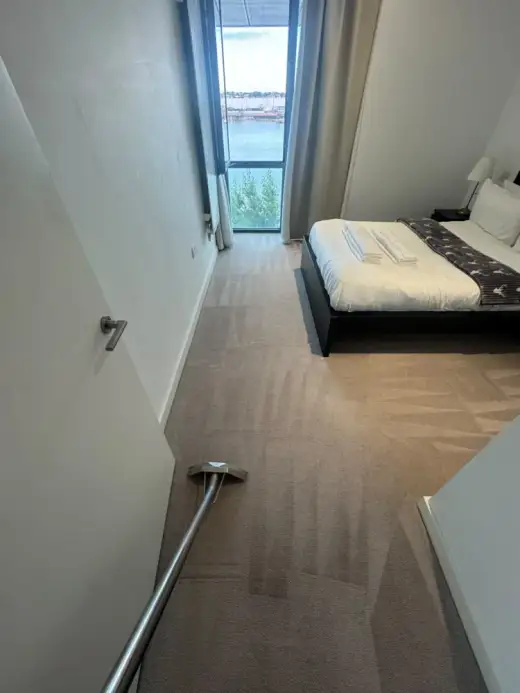
Only proper extraction flushes the soil, bacteria and allergens sitting in the base of the pile and the backing. Everything above keeps this step further apart, which is the whole point of doing it.
Five signs to stop waiting for the calendar
- Traffic lanes. A darker path along the route everyone walks. That is concentrated soil, and a vacuum will not touch it.
- The pile has gone flat. It has lost its spring and lies over. Usually grit weighing the fibres down rather than genuine wear, and it often comes back up.
- A smell that survives vacuuming. Particularly in pet homes. That is organic residue below the surface, and it will not clear on its own.
- More sneezing indoors than out. Worth paying attention to, especially in spring.
- It just feels grubby underfoot. Do not dismiss this one. In our experience people are almost always right about their own floors.
Does cleaning it often wear it out?
We hear this worry a lot, and the answer is reassuring. Done properly, cleaning protects carpet rather than wearing it. What genuinely destroys a carpet is the grit sitting in the base of the pile, which behaves like fine sandpaper against the fibres every time somebody walks across it. Taking that out on a sensible cycle is one of the better things you can do for a carpet you want to keep.
The caveat is that it has to be extracted properly, so the carpet is left damp rather than soaked. That is the difference between a carpet dry in a few hours and one still wet the next morning, and we go into it in how long carpets take to dry.
When it is worth doing yourself
Plenty of it. Vacuuming well and dealing with spills quickly are genuinely effective, and they are the two things that make the biggest difference to how your carpet ages. If you enjoy the process, a hired machine will freshen the surface for a get-together, as long as you go over it several times with the water off to pull as much moisture back out as you can.
Where hired machines struggle is suction. They put water in easily enough but cannot pull much of it back out, which is why a DIY clean can look worse a week later as the loosened soil wicks back up. That is worth knowing before you spend a Saturday on it, and it is the reason the once-a-year deep clean exists at all.
Where this advice comes from
We work to the standards below, and we have pointed you to them directly so you can check anything here yourself rather than taking our word for it.
- National Carpet Cleaners Association (NCCA) — The UK trade body for cleaning firms. Useful consumer advice and a directory if you want to check that whoever you hire is a member.
- WoolSafe — Independent certification for products and services that are safe to use on wool. Worth knowing about if your carpet is wool or a wool blend.
- Allergy UK — National charity with guidance on house dust mites and indoor allergens, which is the reason six-monthly cleaning is worth it in an allergy household.
- The Carpet Foundation — UK carpet industry body with consumer guidance on carpet types, care and warranties.
What we would actually buy
Very little of this is specialist. If you buy one thing off this list, make it the doormat.
A vacuum with genuinely good suction
Everything else on this list is optional. A vacuum you actually enjoy using, that you run over the hallway twice a week, will do more for your carpet than any product. Bagged or bagless makes far less difference than how often you reach for it.
A coir or rubber-backed barrier mat at every door
Unglamorous and the single best value thing you can buy. Most of the grit that grinds a carpet down walks in on shoes, and a decent mat stops a large share of it at the door.
Dr. Beckmann Carpet Stain Remover, or plain washing-up liquid
Keep one dedicated spot cleaner in the cupboard so you are not improvising at the moment something goes over. Honestly, a teaspoon of clear washing-up liquid in warm water handles most fresh spills just as well.
Bicarbonate of soda
A couple of pounds a box and it genuinely absorbs smells rather than covering them. Sprinkle on a dry carpet, leave a few hours, vacuum thoroughly. It does nothing on a damp carpet, so save it for after everything has dried.
Nobody pays us to list these and there are no affiliate links on this page. They are simply what we have found works, and in several cases the cheapest option genuinely is the best one. Whatever you use, patch-test it somewhere hidden first.
The Carpetix Team
We are a carpet, upholstery and rug cleaning team based in Leytonstone, East London. We write these guides from what we run into on actual jobs, which is why you will find us telling you when to leave something alone or handle it yourself rather than call anyone out. If a guide here saves you a call, it has done its job.
Last reviewed and updated 30 July 2026