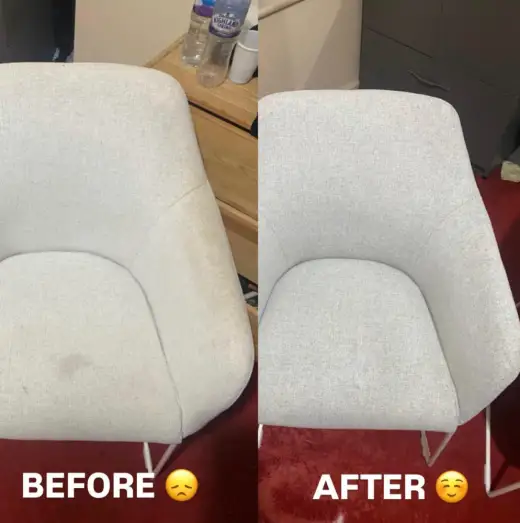
A sofa is one of the most-touched things you own and one of the easiest to damage while trying to look after it. The jobs we get called to rescue almost always follow the same pattern: someone tackled a small mark with warm soapy water, the mark came out, and two hours later there was a large pale ring around where it had been.
That is entirely avoidable, and it comes down to one step people skip. Find the care code before anything else touches the fabric. Everything below follows from that single letter.
Step one: find the care code
It is a small tag, usually under a seat cushion, along the base of the frame, or occasionally underneath the sofa where you have to tip it to see. One letter, and it tells you exactly what the fabric can take.
| Code | Meaning | Use |
|---|---|---|
| W | Water-based cleaning is safe | Upholstery cleaner or mild soapy water |
| S | Solvent only, no water | Dry-cleaning solvent. Water will mark it |
| WS | Either water or solvent | Whichever suits the mark |
| X | Vacuum only | No liquid at all. Professional only |
This is the whole thing. Water on an S or X fabric is how sofas get ruined, and the damage is usually permanent because the water itself marks the fibre rather than just sitting on it. If there is no tag and you genuinely cannot identify the fabric, treat it as delicate and test somewhere completely hidden, or get advice before you start.
Step two: vacuum properly first
Every clean starts dry. Upholstery attachment over the seat, back and arms, then the crevice tool right down the seams where crumbs and hair collect. Lift the cushions and do underneath them too. This matters more than it sounds: skip it and the moment you introduce moisture you are working abrasive grit into the weave rather than lifting it out. Use a soft brush head on anything delicate.
Step three: dealing with marks
Same principle as carpet. Blot, never rub, working from the outside of the mark inwards. Rubbing damages the nap, and a damaged nap stays visible as a different texture long after the stain itself has gone.
On W or WS fabrics
- A few drops of clear washing-up liquid in a cup of warm water.
- Dip a white cloth and wring it out until it is barely damp, then dab the mark.
- Rinse by dabbing with a second cloth carrying only clean water.
- Blot dry with a towel and let it air-dry fully before anyone sits down.
On S fabrics
A proper upholstery solvent cleaner, following the instructions on the bottle. No water at any point, including the rinse. Work in a ventilated room.
The mistake that causes water rings: treating a small spot in the middle of a large panel. Moisture spreads outward through the fabric and dries at the edges, leaving a tide line. If you are cleaning with water, feather the damp area out towards the seams so there is no hard edge, and dry the whole panel evenly with a fan.
Step four: freshening the whole thing
- Bicarbonate of soda for odour. Sprinkle lightly over dry fabric, leave 15 to 30 minutes or longer for stronger smells, then vacuum thoroughly. No moisture involved, so it is safe on far more fabrics than a liquid cleaner.
- On W fabrics, mist and blot evenly. Work panel by panel with a diluted cleaner on a cloth. The word to hold onto is evenly. A patch cleaned harder than its surroundings looks worse than the original grime did.
- Dry it fast. Windows open, fan on, room warm. Speed here is what stops tide marks and mustiness.
The mistakes that actually ruin sofas
- Ignoring the care code. Comfortably the biggest single cause of permanent damage.
- Over-wetting. Water rings, shrinkage in the cover, and a musty smell from padding that never fully dried.
- Scrubbing. Frays the fibres and leaves a permanently different texture.
- Coloured cloths or printed kitchen roll. They can transfer dye into damp fabric.
- Skipping the patch test. Back corner or under a cushion, every time.
- Heat on a fresh stain. Sets it into the fibre.
- Bleach or general household sprays. They strip colour and weaken fibres even when they seem to be working.
Notes on specific fabrics
- Cotton and linen are usually W or WS and clean up reasonably, but they water-mark very readily. Minimal moisture, and keep it even across the panel.
- Velvet needs a light touch and a brush through the pile in one consistent direction afterwards to restore the look. Check the code, because plenty of velvets are S.
- Microfibre is generally the most forgiving fabric in the house, but confirm the code anyway since some are solvent-only.
- Wool blends are often S or X and do not enjoy water. Treat as delicate regardless of what the tag claims.
- Anything marked X should not have a wet clean attempted at home under any circumstances.
Where the DIY line sits
Routine care and fresh spills are well within reach at home, and doing them promptly is what keeps a sofa looking good between deeper cleans. The point at which we would stop is an S or X code with no clear fabric identification, a valuable or antique piece, a set-in stain that has already resisted one attempt, or an odour that is clearly coming from the padding rather than the cover.
If you want to know how often a proper deep clean is actually worth doing, we have set out a realistic schedule in how often to deep clean a sofa. And if yours is leather rather than fabric, the rules are completely different, which we cover in can you steam clean a leather sofa.
Where this advice comes from
We work to the standards below, and we have pointed you to them directly so you can check anything here yourself rather than taking our word for it.
- National Carpet Cleaners Association (NCCA) — Covers upholstery as well as carpet, and worth checking if you are hiring someone to clean a sofa you care about.
- WoolSafe — Relevant if your sofa is a wool or wool-blend fabric, where ordinary alkaline cleaners can strip the fibre.
- Which? cleaning advice — Independent consumer testing, useful if you want an unbiased comparison of upholstery cleaning products before buying one.
What we would actually buy
A sofa needs less kit than people expect. The vacuum attachment matters more than any bottle.
A vacuum with a proper upholstery and crevice tool
The step people skip, and the one that does the most. Grit sitting in the seams is abrasive and gets ground in every time somebody sits down. Cleaning a sofa you have not vacuumed just spreads that around.
Clear washing-up liquid, or a dedicated upholstery cleaner
A few drops in warm water covers most everyday marks. If you would rather use something purpose-made, Dr. Beckmann and HG both do reasonable upholstery spot cleaners. Whatever you use, apply it to the cloth.
A solvent-based dry upholstery cleaner
For S-coded fabrics this is the only safe route, and it is worth buying rather than improvising. Read the label, work in a ventilated room, and do not be tempted to add water at the rinse stage.
Bicarbonate of soda
Safe even on fabrics you cannot wet, because there is no moisture involved. Sprinkle, leave, vacuum thoroughly. It genuinely absorbs rather than perfuming over the top.
A rubber pet hair brush or a damp rubber glove
Sounds like an old wives tale and works better than any vacuum attachment we have used. Drag it across the fabric and the hair balls up ready to lift off.
Nobody pays us to list these and there are no affiliate links on this page. They are simply what we have found works, and in several cases the cheapest option genuinely is the best one. Whatever you use, patch-test it somewhere hidden first.
The Carpetix Team
We are a carpet, upholstery and rug cleaning team based in Leytonstone, East London. We write these guides from what we run into on actual jobs, which is why you will find us telling you when to leave something alone or handle it yourself rather than call anyone out. If a guide here saves you a call, it has done its job.
Last reviewed and updated 30 July 2026