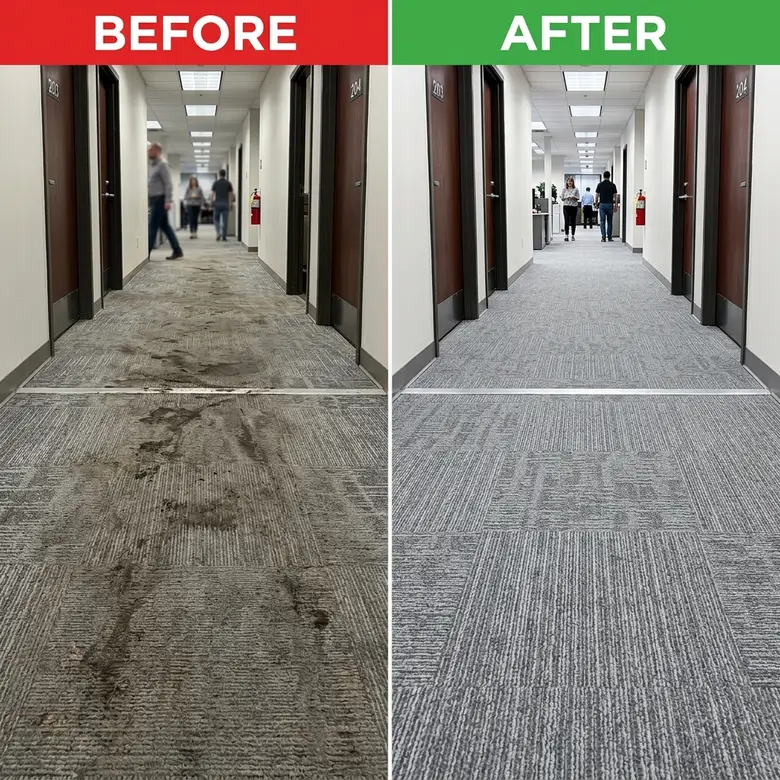
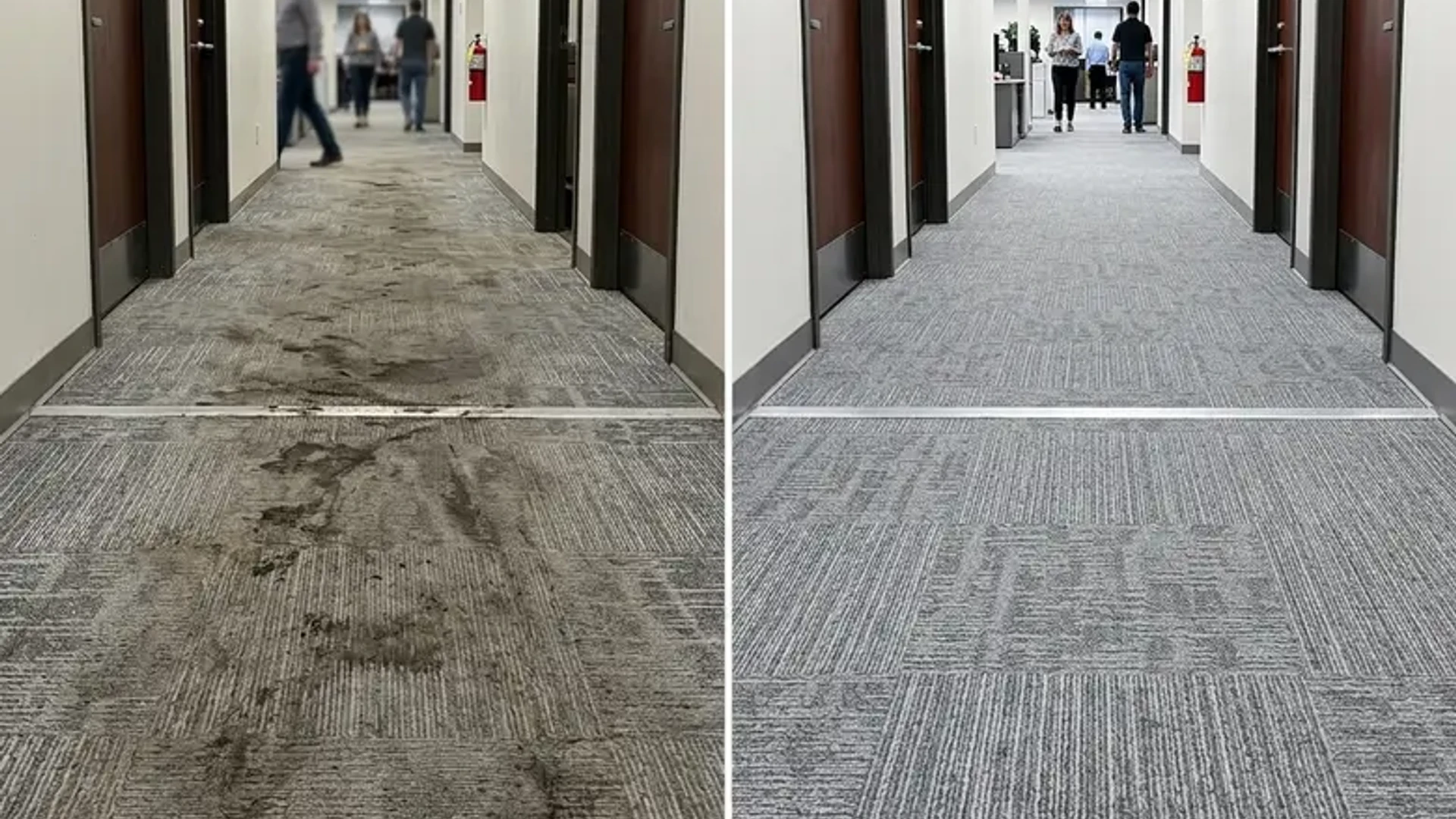
Office carpet rarely fails because of a dramatic spill. It fails gradually, along the routes people walk, and by the time anyone raises it the damage is usually physical rather than cosmetic. Understanding that changes where you spend the budget.
The dark paths that appear from reception to the lifts are not mainly dirt sitting on the fibre. They are abrasion. Grit tracked in from outside sits in the pile and acts like fine sandpaper every time somebody steps on it, scratching the fibre surface until it scatters light differently and reads as permanently dark. Cleaning helps, but the fibre damage is done. Which is why the most valuable thing in this article is about matting rather than cleaning.
1. Barrier matting, done properly
The overwhelming majority of soil in a building is walked in through the front door. Barrier matting is the only measure that stops it arriving at all, and most offices under-specify it badly.
The mistake is treating matting as a doormat rather than a system. A single mat inside the entrance gets roughly one footfall per foot, which removes a small fraction of what is on a shoe. Matting works by repeated contact, so what you want is a run long enough for several full strides, ideally in stages: a coarse scraper section outside or immediately inside, then an absorbent section to take up moisture.
- Length beats quality. A longer run of ordinary matting outperforms a short run of expensive matting.
- Cover the full width of the entrance. People walk round a mat that only covers the middle.
- Vacuum the matting daily. A saturated mat stops absorbing and starts redistributing. This gets forgotten constantly.
- Do the side and back doors too. The smoking exit and the loading door often bring in the worst of it and rarely get matting at all.
2. Vacuum by zone, not by rota
Most cleaning specifications vacuum the whole floor at one frequency. That over-serves the quiet rooms and under-serves the entrance, which is where nearly all the soil is. Split the floorplate into zones instead and put the effort where the footfall is.
| Zone | Vacuum | Interim clean |
|---|---|---|
| Entrance, reception, lift lobbies | Daily | Every 2 to 3 months |
| Main corridors and circulation | 4 to 5 times a week | Quarterly |
| Open plan desk areas | 2 to 3 times a week | Twice a year |
| Kitchen and breakout areas | Daily | Quarterly |
| Private offices, meeting rooms | Weekly | Annually |
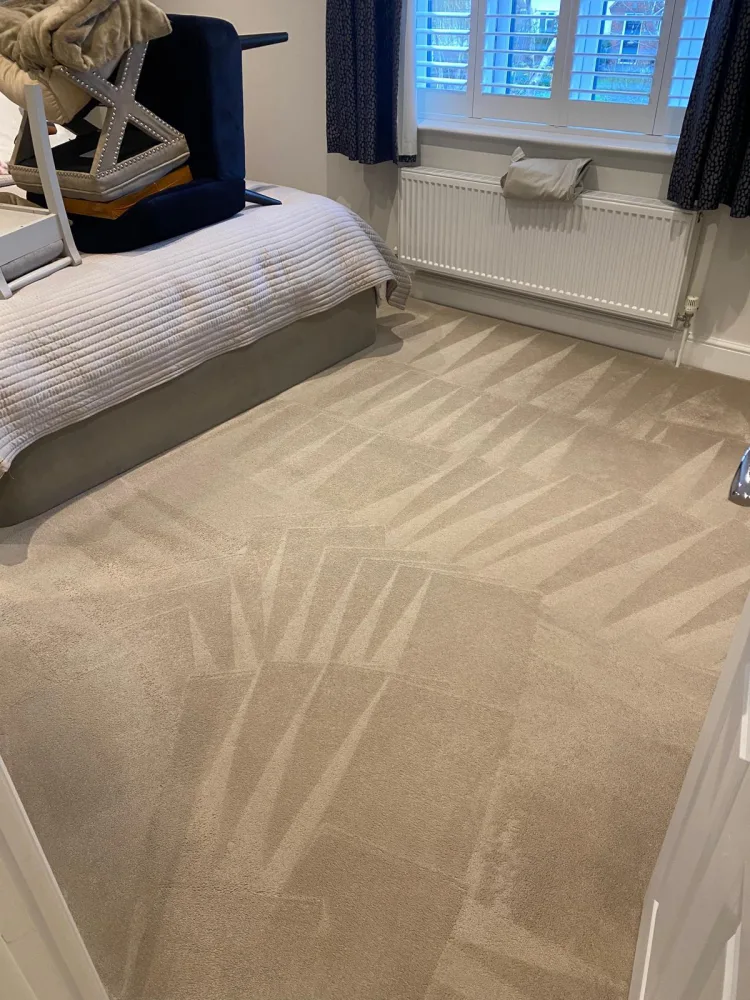
Two practical points on the vacuuming itself. Cut-pile commercial carpet needs a working brush bar, because agitation is what releases embedded soil, and suction alone leaves most of it. And check the belts periodically. A vacuum with a worn belt sounds entirely normal while the brush barely turns, and it can go months without anyone noticing.
3. A spill policy people will actually use
Coffee is the main event in most offices, and the difference between a spill and a stain is measured in minutes. The problem is almost never that people do not care. It is that nothing is within reach when it happens, so they put a paper towel over it and move on.
- Put spill kits where spills occur: by the coffee machine, in each kitchen point, near reception. Not in a locked cupboard on another floor.
- Keep the instruction to one line: blot with a white cloth, do not rub, tell facilities. That is genuinely all most people need to know.
- Log spills. If the same three metres of carpet keeps appearing in the log, that tells you where a bin or a mat needs to go.
- Use signage. HSE guidance treats prompt spill response and clear signage as part of the same slips and trips duty, so this is a safety obligation as much as a carpet one.
The technique itself is the same as at home, and our guide to removing common carpet stains covers coffee and the rest properly if you want something to base a one-page instruction on.
4. Interim cleaning between the big ones
This is the piece most offices skip, and it is what makes the difference over a lease term. Instead of waiting for the annual deep clean while the entrance zone gets steadily worse, clean the high-traffic zones on a short cycle using a low-moisture method.
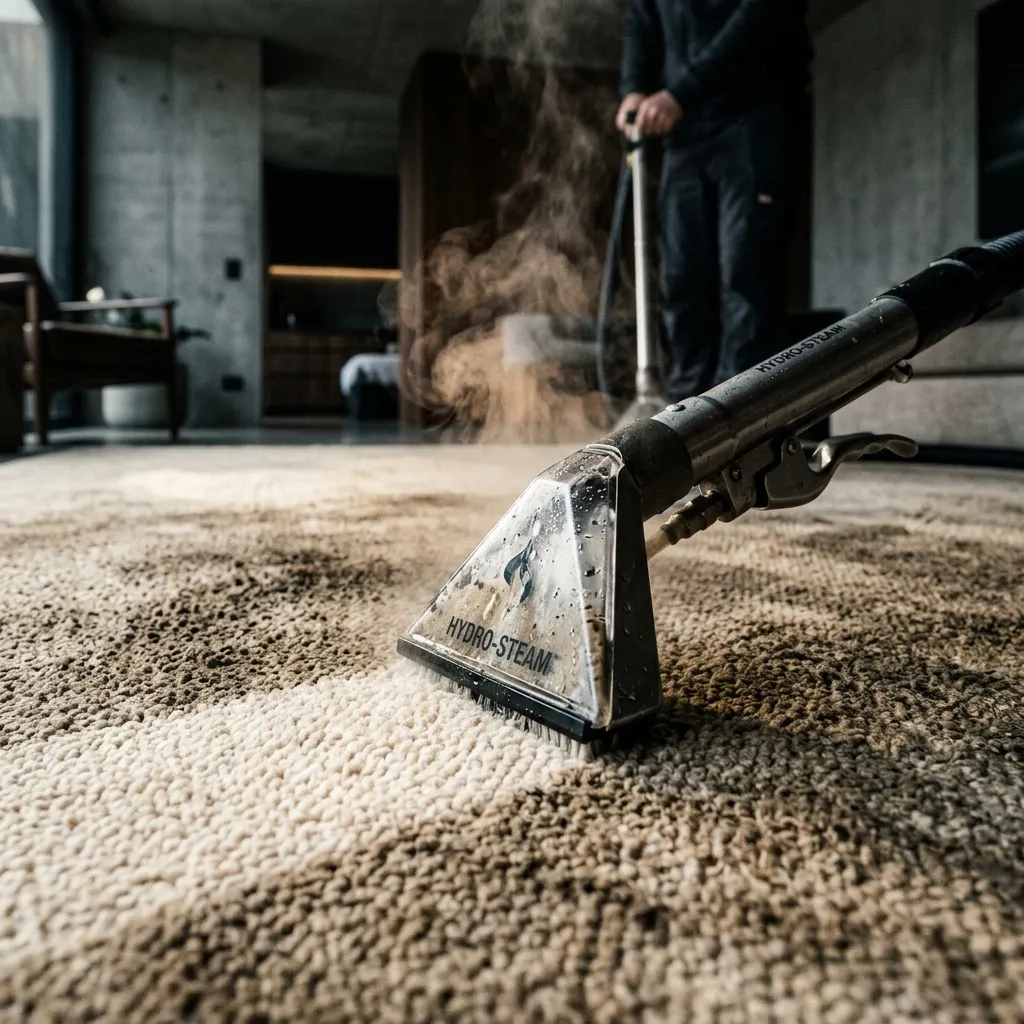
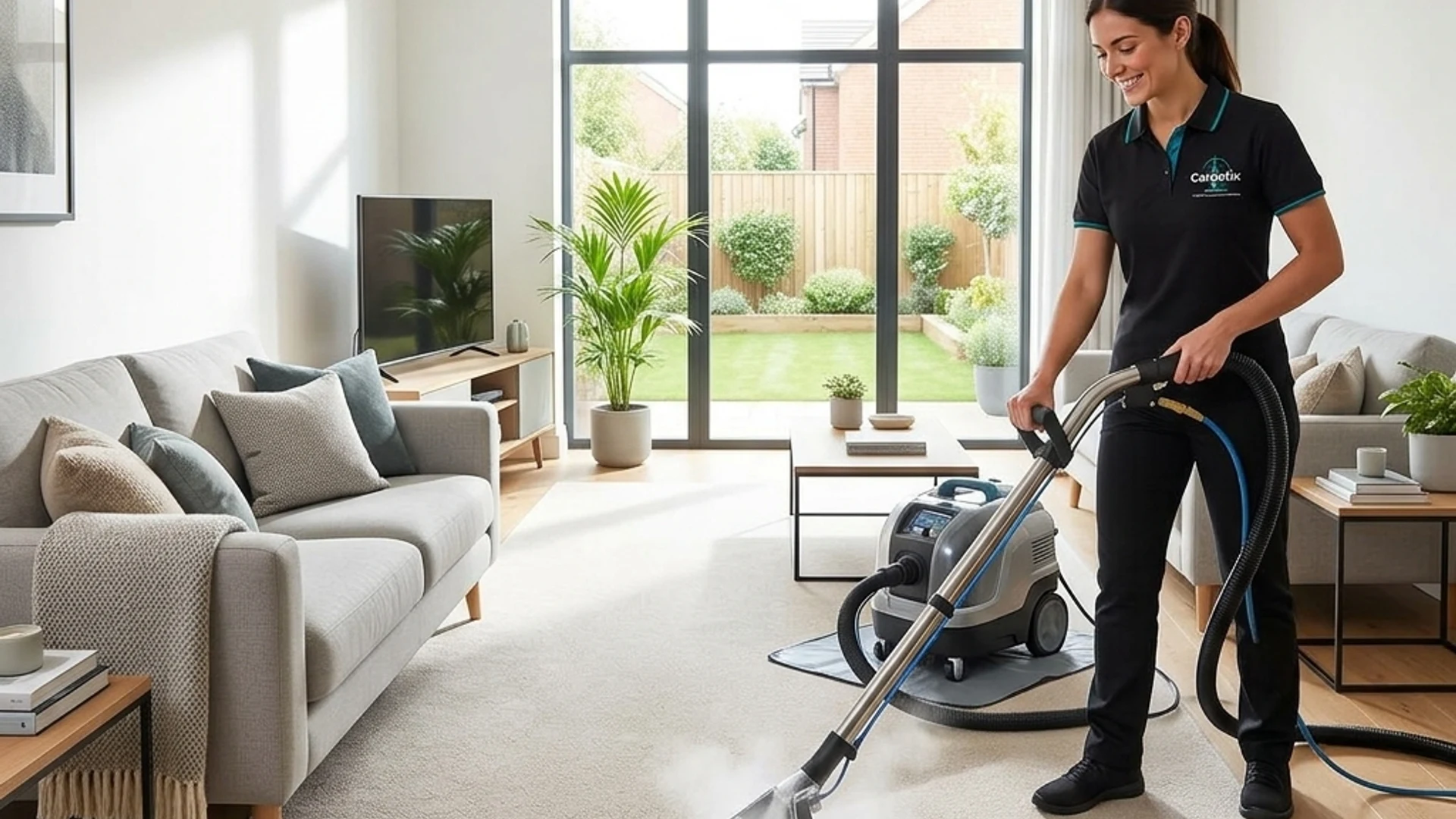
The practical appeal is that it fits around the business. Low-moisture cleaning dries in well under an hour, so an evening visit leaves the floor usable the next morning with no closed-off areas and no wet patches. Doing the entrance and corridors quarterly this way, with a full restorative clean once or twice a year, keeps a floor looking consistent rather than cycling between good and shabby. We have compared the two approaches in steam versus dry carpet cleaning.
5. Small things that pay off
- Chair mats under desks. Castors chew a specific patch of carpet, and replacing a mat is far cheaper than replacing tiles.
- Rotate carpet tiles. If the floor is tiled, swapping worn entrance tiles with tiles from a quiet corner evens out wear across the whole floorplate for free.
- Keep spare tiles from the original install. Dye lots change. Matching tiles three years later is often impossible.
- Keep maintenance records. Many contract carpet warranties require documented cleaning at specified intervals. Losing a claim on paperwork is an avoidable way to lose one.
If you are building a specification from scratch, the order of priority is: matting first, then zoned vacuuming, then spill response, then interim cleaning, then restorative cleaning. Most offices arrive at it in exactly the reverse order, which is why they end up paying for restorative work more often than they should.
Where this advice comes from
We work to the standards below, and we have pointed you to them directly so you can check anything here yourself rather than taking our word for it.
- IICRC — Publishes the standards for commercial carpet maintenance, including the zoning approach this article is built on.
- National Carpet Cleaners Association (NCCA) — UK trade body covering commercial contractors, and a reasonable way to check a supplier has genuine training behind them.
- HSE — slips and trips — Health and Safety Executive guidance. Directly relevant, since matting, spill response and wet floor signage are safety measures as well as cleaning ones.
- The Carpet Foundation — Useful on contract carpet specification and what warranties typically require in terms of documented maintenance.
What we would actually buy
If the budget only covers one line item this year, spend it on matting. Nothing else on this list returns as much.
A long barrier matting run at every entrance
If the budget only stretches to one thing, this is it. Several strides of matting, not a token square, captures most of the grit before it reaches the carpet. It works without anyone having to remember to do anything.
An upright with a working brush bar and a real filter
Cut-pile commercial carpet needs agitation to release soil, which a suction-only machine will not provide. Check the brush bar spins and the belt is intact, because a worn belt makes a vacuum look like it is working while doing very little.
Small spill kits placed where spills happen
White cloths, a spotter and a scraper, kept by the kitchen point and the coffee machine rather than in a locked store. A spill dealt with in two minutes rarely becomes a stain; one found the next morning usually does.
Encapsulation or bonnet equipment for high-traffic zones
Low-moisture methods that let you clean entrance and corridor zones overnight with the office usable next morning. This is what keeps the busy areas presentable between the twice-yearly restorative cleans.
Wet floor signs
A safety requirement rather than a cleaning one, but relevant every time a spill is treated or an area is cleaned. HSE guidance treats prompt spill response and signage as part of the same duty.
Nobody pays us to list these and there are no affiliate links on this page. They are simply what we have found works, and in several cases the cheapest option genuinely is the best one. Whatever you use, patch-test it somewhere hidden first.
The Carpetix Team
We are a carpet, upholstery and rug cleaning team based in Leytonstone, East London. We write these guides from what we run into on actual jobs, which is why you will find us telling you when to leave something alone or handle it yourself rather than call anyone out. If a guide here saves you a call, it has done its job.
Last reviewed and updated 31 July 2026