If you have started ringing round for quotes, you have run into two phrases: steam cleaning and dry cleaning. They sound like opposites, and whoever is on the phone will usually be very confident that theirs is the correct one.
The truthful answer is that they are different tools for different situations, and both are recognised in the IICRC standard that professional cleaning is measured against. What follows is what each one is actually doing to your carpet, which is more useful than a sales pitch when you are trying to compare two quotes.
“Steam cleaning” is a misleading name
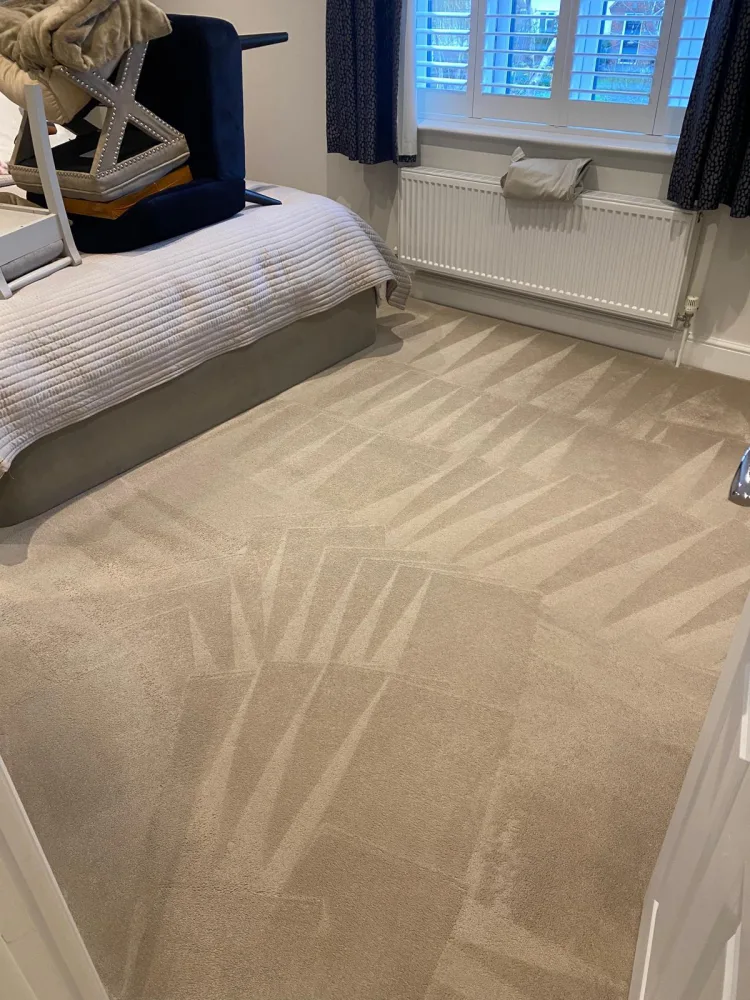
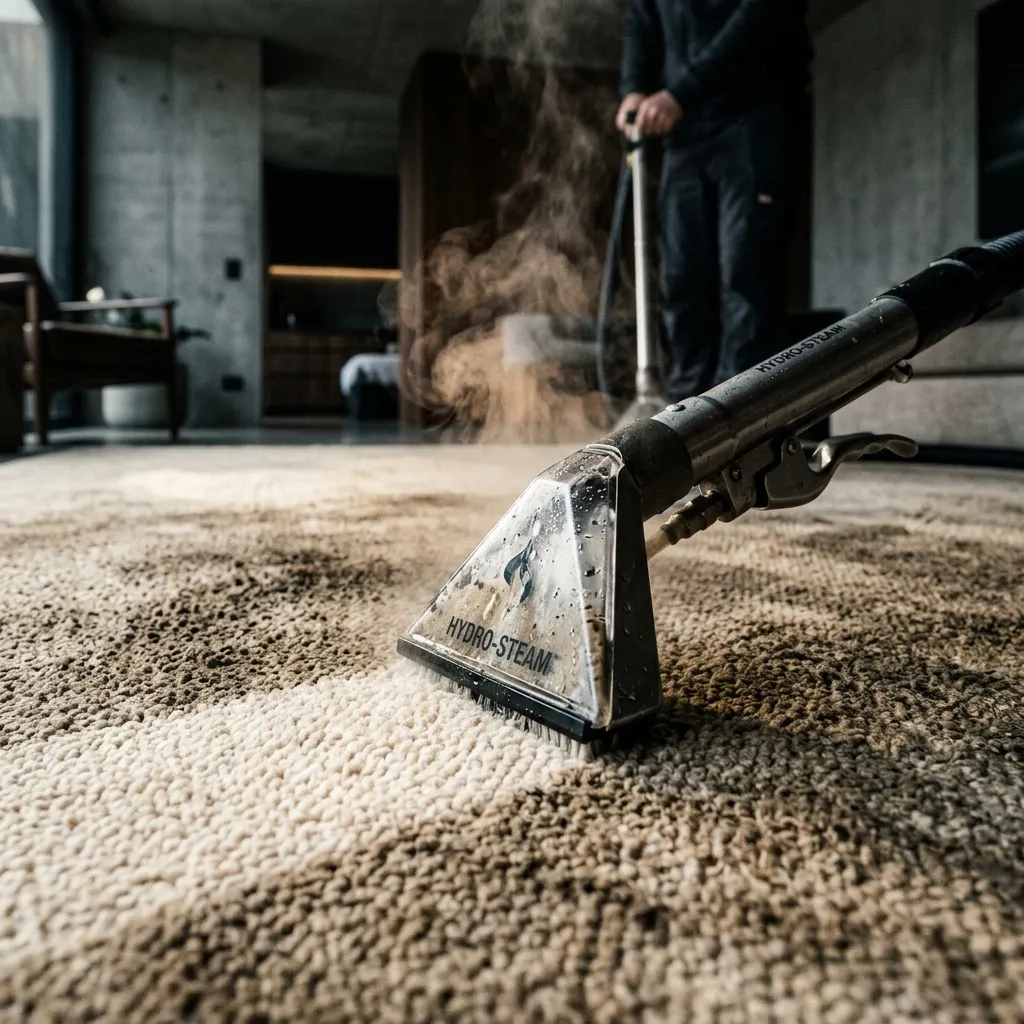
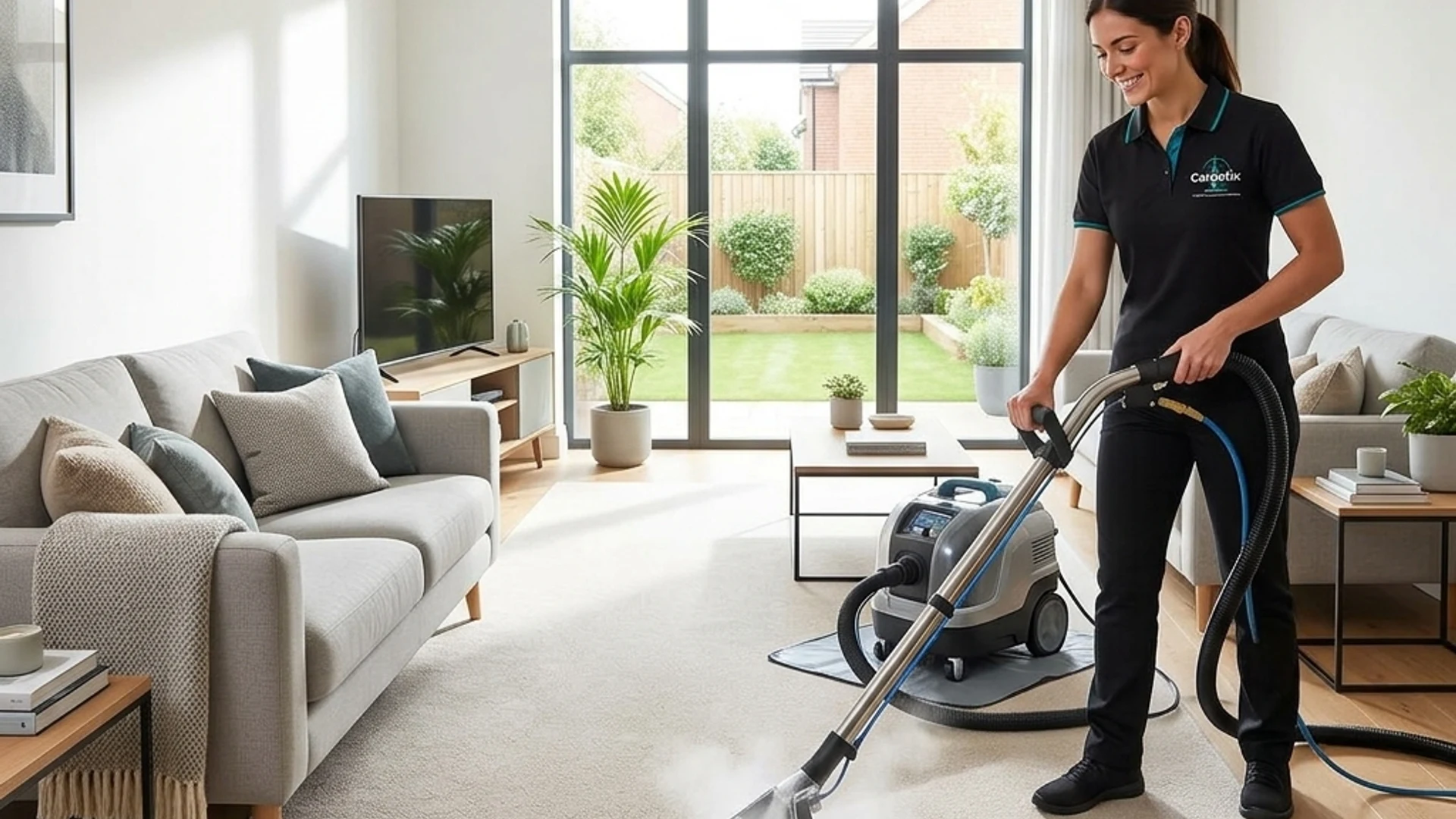
Nobody is putting steam through your carpet. The proper term is hot water extraction, and once you know the sequence, the name makes sense:
- A pre-spray goes down first and is left to dwell. This is the part that does the chemistry, loosening soil and breaking down oils.
- Hot water is injected into the pile under pressure.
- In the same stroke, a vacuum pulls that water straight back out, carrying the loosened soil with it.
Here is the part people miss. The heat is helpful, but the cleaning is happening because of the extraction. Anyone can put hot water into a carpet. Getting it back out again, along with everything it has picked up, is the entire job, and it is what separates equipment that costs thousands from a machine you hire for an afternoon.
Where it wins: depth. It reaches the base of the fibres and the backing, which is where the abrasive grit and the odour sources actually sit. It is also the method most carpet manufacturers specify in their care guidance.
“Dry cleaning” is not dry either
Low moisture is the accurate description. There is liquid involved, just very little of it. The usual approach:
- A compound or dry foam, lightly carrying solvents and detergents, is spread across the carpet.
- A machine works it down into the pile, where it absorbs and binds to soil.
- Once it has had time to work, the whole lot is vacuumed away, with the soil locked into it.
Because almost no water goes in, there is almost nothing to dry. In an office you can clean at five and have people back at their desks the next morning with no wet patches and no complaints. That is a real advantage and not a lesser method, it is simply solving a different problem.
Where it wins: speed and certainty. No drying to manage, no risk of over-wetting, no waiting before furniture goes back.
The two side by side
| Hot water extraction | Low moisture | |
|---|---|---|
| How deep it goes | Base of the pile and into the backing | Surface to mid-pile |
| Drying | 2 to 4 hours touch-dry, done properly | Usually under an hour |
| Allergens | Removes the most | Helps, but surface level |
| Pet odour | Can reach the source | Will not reach it |
| Best suited to | Annual deep cleans, pets, allergies, ground-in soil | Offices, quick turnarounds, maintenance between deep cleans |
How we would choose
Go with hot water extraction if it has been a while, if anyone in the house has asthma or hay fever, if you have pets, or if you can see traffic lanes rather than just general dullness. All four of those are depth problems, and depth is what it does.
Go with low moisture if downtime is the real constraint. A busy office, a rental changeover on a tight clock, a room that has to be usable this evening. Also worth considering if the setting is genuinely moisture-sensitive.
For most houses booking a clean once a year, hot water extraction is the one we would pick, simply because you are paying for a clean and it removes more. But if someone tells you low-moisture cleaning is a con, they are overselling.
The myth worth clearing up
A lot of the “steam soaks your carpet” reputation traces back to jobs where the extraction was too weak, not to the method. Water went in and not enough came back out. That is an equipment and technique problem, and it happens with hired machines and with underpowered operators cutting corners.
So when you are comparing quotes, the useful question is not “which method do you use”. It is “how long will it take to dry”. If the answer is a day or more, that tells you something about the extraction regardless of what they call the method. We go into the numbers in how long carpets take to dry.
About supermarket hire machines
These are technically hot water extraction, with a fraction of the vacuum power. They will freshen a carpet, and for a light refresh before people come over they are perfectly reasonable. The reason DIY jobs sometimes look worse a week later is that the soil got loosened but not fully removed, and as the carpet dries it travels back up to the surface.
If you are going to use one, the single most useful thing you can do is spend as long extracting as you did cleaning. Multiple dry passes over every strip, water off, until the recovery tank stops filling. It is dull and it doubles the job, and it is the difference between a good result and a disappointing one. Then get fans on it. Whether you are booking a clean or doing it yourself, our guide to how often carpets actually need cleaning will help you work out whether you are due at all.
Where this advice comes from
We work to the standards below, and we have pointed you to them directly so you can check anything here yourself rather than taking our word for it.
- IICRC S100 standard — The international standard for professional carpet cleaning. It sets out both hot water extraction and low-moisture methods as legitimate approaches, which is worth knowing when someone tells you one is the only real way.
- National Carpet Cleaners Association (NCCA) — UK trade body. Their member directory is a reasonable filter if you are comparing quotes and want to know who has actual training behind them.
- The Carpet Foundation — Worth checking your carpet manufacturer guidance through here, since some warranties specify a cleaning method.
What we would actually buy
If you are handling this yourself, these are the things that make the biggest practical difference.
A hired hot water extraction machine, used patiently
The machines themselves are fine. The mistake is rushing. Go over each pass three or four extra times with the water trigger off, purely to pull moisture back out. That single habit is the difference between a decent DIY result and a carpet that looks worse in a week.
Bissell SpotClean or a similar portable extractor
Genuinely useful if you have pets or small children and deal with regular accidents. Far more practical than hiring a full machine for one patch, and the extraction is real, if modest.
A dry carpet cleaning compound such as Host or Capture
Sprinkle, work in with a brush, leave, then vacuum thoroughly. Underrated for a quick freshen-up before visitors, and there is no drying time to plan around. It will not replace a deep clean.
A couple of ordinary household fans
The cheapest upgrade to any carpet clean. Airflow across the pile is what turns a slow, smelly dry into a quick one, and it costs nothing to run for a few hours.
Nobody pays us to list these and there are no affiliate links on this page. They are simply what we have found works, and in several cases the cheapest option genuinely is the best one. Whatever you use, patch-test it somewhere hidden first.
The Carpetix Team
We are a carpet, upholstery and rug cleaning team based in Leytonstone, East London. We write these guides from what we run into on actual jobs, which is why you will find us telling you when to leave something alone or handle it yourself rather than call anyone out. If a guide here saves you a call, it has done its job.
Last reviewed and updated 30 July 2026