The short answer: soak up as much urine as you can by standing on a towel laid over kitchen roll, rinse the patch with cold water and soak that up too, then apply an enzyme cleaner generously enough to reach as deep as the urine went. Leave it for the full time on the label, then let it dry naturally. No heat and no ammonia-based products.
The reason urine behaves differently from other spills is chemistry. Fresh urine is mostly water, and it lifts easily. But as it dries it leaves uric acid salts that bond to the fibre and barely dissolve in water. Normal detergent removes the visible mark and leaves those salts behind. They release odour every time humidity rises, which is why a patch you cleaned in spring can smell again in a wet November.
A fresh accident, step by step
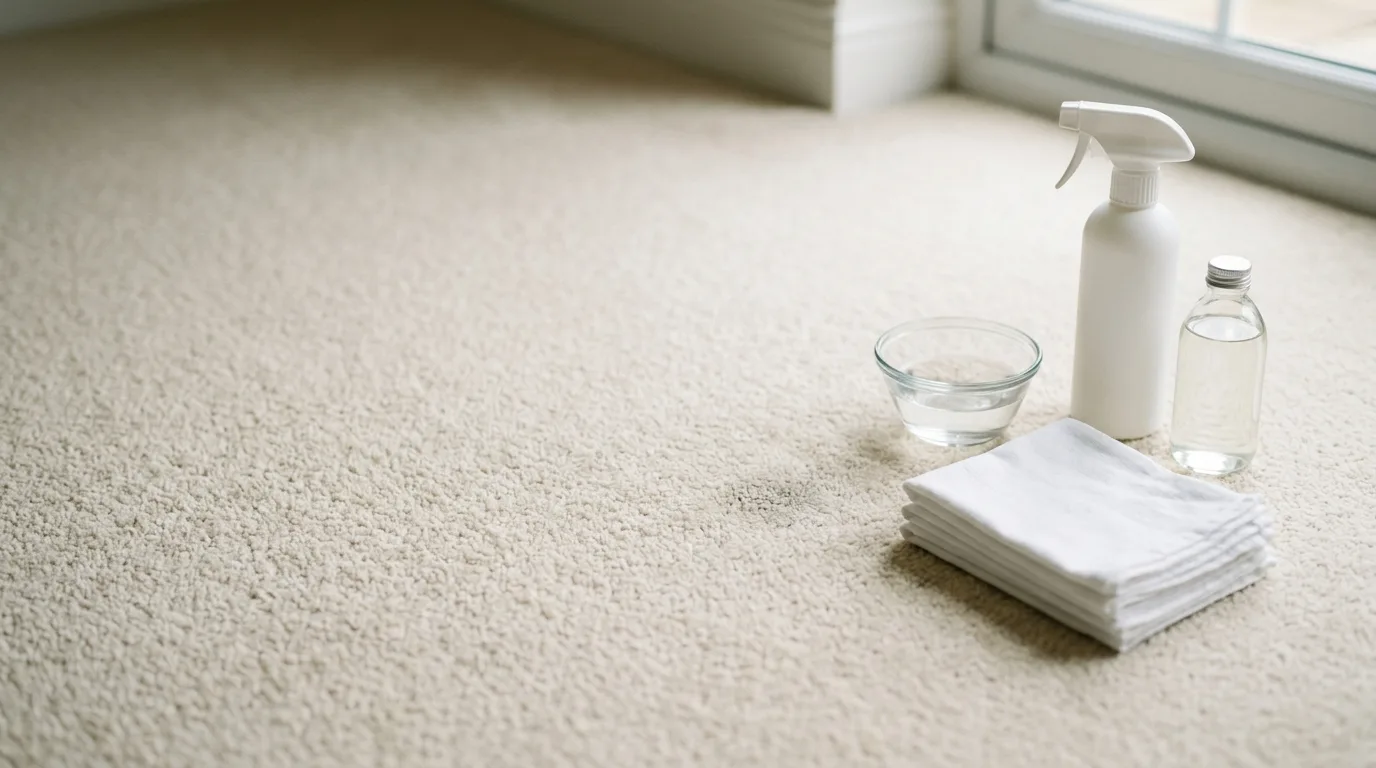
- Soak up, with pressure. Layer plain kitchen roll over the patch, fold a towel on top and stand on it. Swap for dry kitchen roll and repeat until it comes up almost dry. This single step removes more urine than every product combined.
- Rinse with cold water. Pour a small amount over the area and soak it up the same way. You are diluting what remains below the surface.
- Apply the enzyme cleaner generously. Urine spreads outwards and downwards as it soaks in, so treat an area noticeably wider than the visible mark, and use enough product to reach the base of the pile.
- Give it time, and keep it damp. Enzymes only work while wet. Leave it for the dwell time on the label. Loosely covering it with cling film stops it drying out before the enzymes have finished.
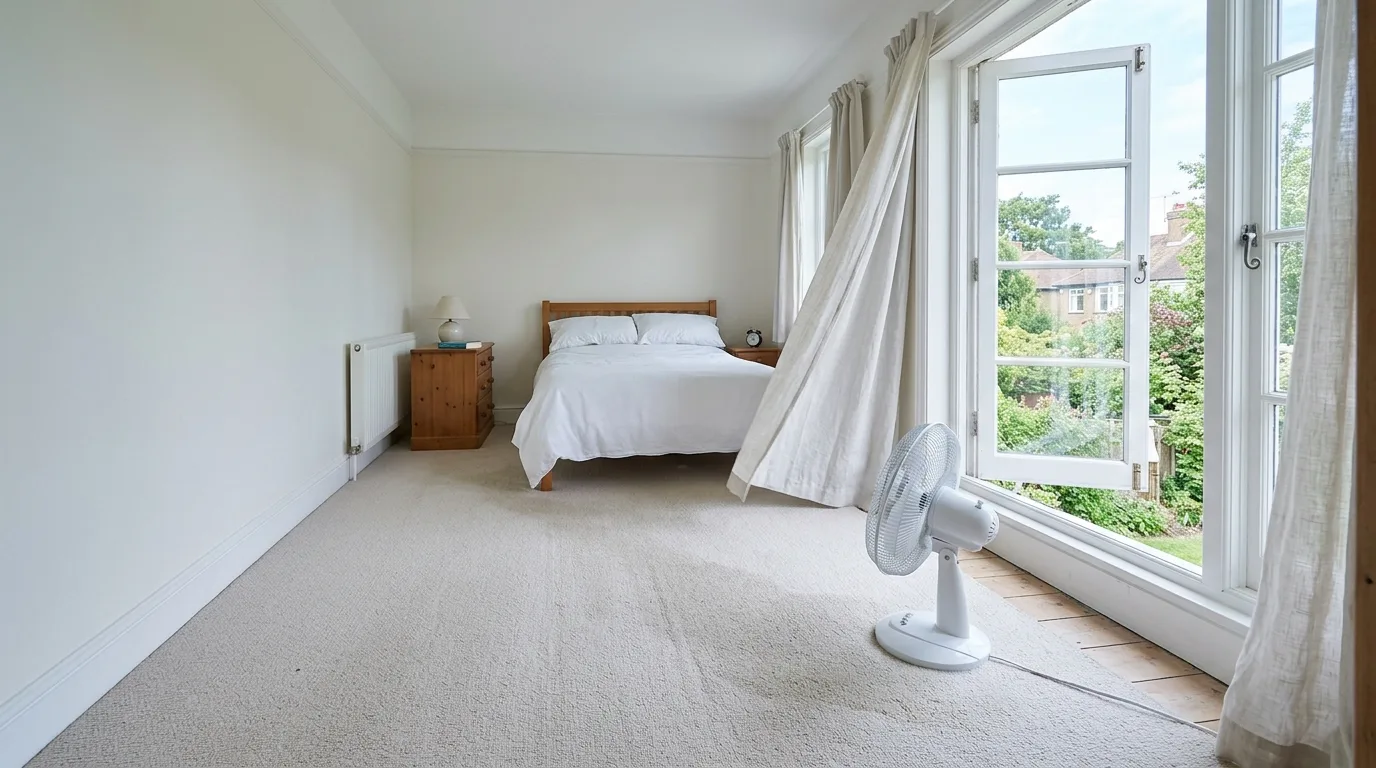
- Blot and air-dry. Press out the excess and let it dry on its own with the window open. Keep the pet off it until it is fully dry.
Never apply heat first. Steam, hot water or a hairdryer bonds the urine proteins to the fibre and can make the smell permanent. Enzyme treatment first, always. How enzymes work, and why they fail when they do, is in what enzyme cleaners actually do.
Old patches you can smell but not see
This is the common situation in a house with an older pet or after moving into a property with a previous one. The room smells, but there is no obvious stain.
- Find them with a UV torch. Draw the curtains and sweep the torch low over the carpet. Dried urine glows dull yellow or green. Mark each patch with masking tape.
- Rehydrate each patch with a little cold water. Enzymes cannot work on a dry deposit.
- Treat each one with enzyme cleaner exactly as above, generously and with the full dwell time. Old patches often need two rounds.
- Treat them all. One untreated patch is enough to keep the room smelling and to keep a pet returning.
Dog versus cat urine
| Dog | Cat | |
|---|---|---|
| Volume | Larger, spreads wide and deep | Smaller, more concentrated |
| Smell | Strong but more treatable | Much stronger and more persistent |
| Typical location | Near doors, corners, where marking | Corners, behind furniture, near litter tray |
| Likely to reach underlay | Yes, with a large dog | Less volume, but repeat spots often do |
| Treatment | Enzyme cleaner, wide area | Enzyme cleaner, often two or three rounds |
When it has reached the underlay
This is the honest limit of what can be done from above. A large dog, a repeated spot or an accident nobody found for a few days will have gone through the carpet backing into the underlay, which is thick, absorbent and sits against the floor with no airflow.
The signs are:
- The smell returns within days of a thorough enzyme treatment.
- The patch feels damp when pressed long after the surface looks dry.
- The smell is noticeably stronger on humid days or when the heating comes on.
At that point it needs sub-surface extraction, where treatment is pushed down through the carpet and pulled back out from below, or in bad cases lifting the carpet and replacing that section of underlay. No spray can reach it. If you have had a professional clean and the room now smells more of urine than before, that is usually this problem surfacing, and we explain it in why carpets smell after cleaning.
Stopping it happening again
- Neutralise every patch fully. A pet returns to spots that still smell like a toilet to them, even when you cannot smell anything.
- Avoid ammonia-based household cleaners on the carpet. Urine breaks down into ammonia, so an ammonia cleaner can smell like an invitation.
- Block access to a favourite spot for a few weeks after treating it, with furniture or a closed door.
- If a house-trained adult pet starts having accidents, see a vet. Urinary infections and other conditions often show up this way first.
For other marks around the house, our general stain removal method covers the rules that apply to every spill.
Where this advice comes from
We work to the standards below, and we have pointed you to them directly so you can check anything here yourself rather than taking our word for it.
- PDSA: The UK veterinary charity has sensible advice on house-training and on when toileting changes in a pet are worth a vet visit.
- Battersea: Practical guidance on house-soiling in dogs and cats, which is the other half of solving this: stopping it recurring.
- WoolSafe: Check any enzyme product against their list before using it on a wool carpet or rug.
What we would actually buy
An enzyme cleaner is the one thing worth buying specifically. Everything else is already in most cupboards.
An enzyme cleaner such as Simple Solution Stain and Odour Remover or Urine Off
The only type of product that breaks down uric acid rather than masking it. Follow the dwell time on the label and apply generously enough to reach the depth the urine went.
Plain kitchen roll and an old towel
Layer kitchen roll, fold a towel on top and stand on it. Repeat until it comes up nearly dry. This removes more urine than any product can.
A UV torch
Inexpensive and genuinely useful. Dried urine fluoresces, so you can find the patches you have been smelling but cannot see.
Bicarbonate of soda
Sprinkled on a completely dry carpet and vacuumed up after a few hours, it absorbs lingering odour. On a damp carpet it clumps and does nothing.
Ammonia cleaners, bleach and scented sprays
Ammonia smells like urine to a pet and can encourage a repeat. Bleach strips colour. Scented sprays cover the smell for an afternoon and leave the source untouched.
Nobody pays us to list these and there are no affiliate links on this page. They are simply what we have found works, and in several cases the cheapest option genuinely is the best one. Whatever you use, patch-test it somewhere hidden first.
The Carpetix Team
We are a carpet, upholstery and rug cleaning team based in Leytonstone, East London. We write these guides from what we run into on actual jobs, which is why you will find us telling you when to leave something alone or handle it yourself rather than call anyone out. If a guide here saves you a call, it has done its job.
Last reviewed and updated 27 September 2026