The short answer: blot the blood with a dry white cloth, then treat it with cold water and a few drops of clear washing-up liquid, blotting from the outside in. Rinse with cold water and let it air-dry. For dried blood, soak it with cold water first, then use biological detergent or an enzyme cleaner. Never use warm or hot water at any stage.
That last rule matters more than every product on this page. Blood is mostly water and protein, and protein sets when it is heated. A nosebleed on a carpet treated straight away with cold water is a five minute job. The same stain hit with a kettle of hot water, which is an instinct plenty of people have, can bond into the fibre for good.
Fresh blood, step by step
- Put on disposable gloves if the blood is not yours. It is basic hygiene rather than a cause for alarm.
- Blot the excess. Press a dry white cloth or plain kitchen roll straight down and lift. Repeat with clean sections until it stops picking much up. Do not rub.
- Dilute with cold water. Dampen the area lightly and blot again. You are thinning what is left so it lifts rather than soaks further in.
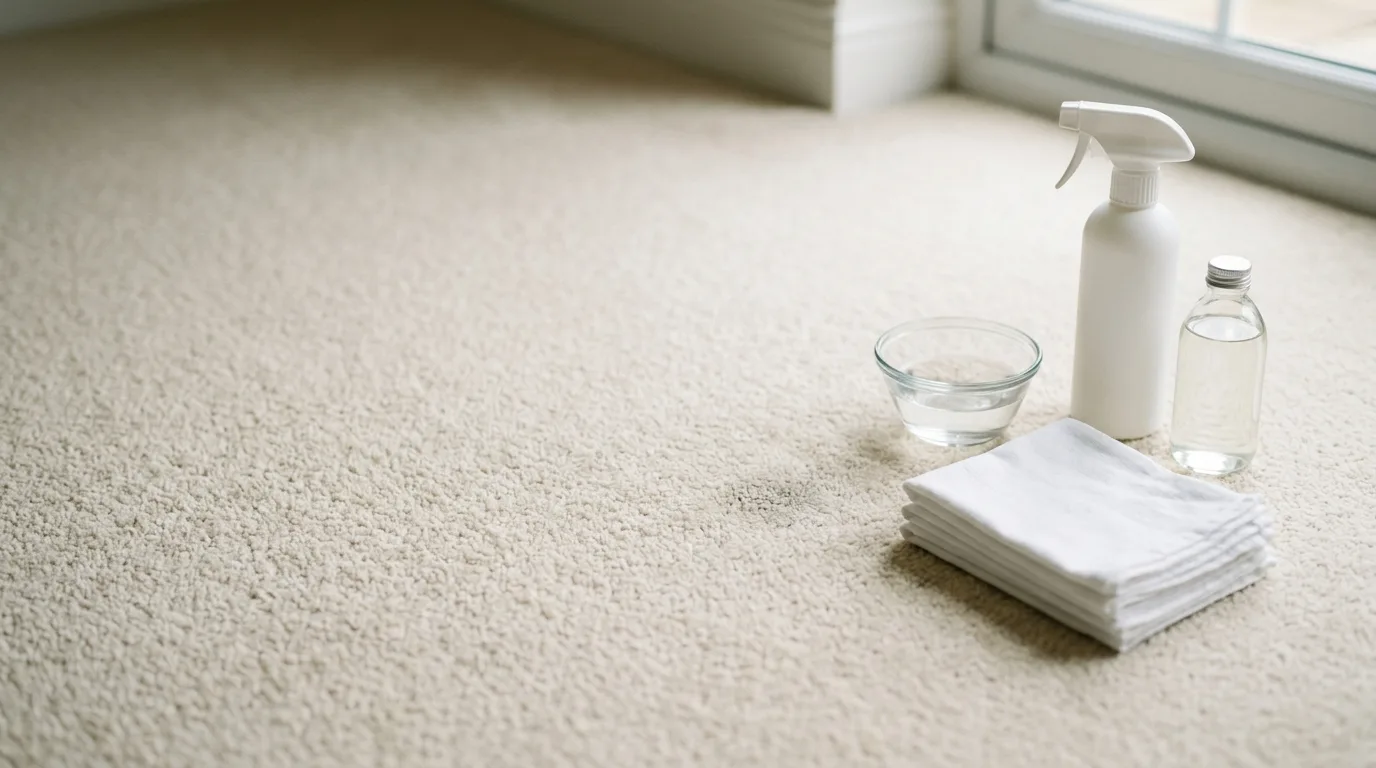
- Treat. Mix a few drops of clear washing-up liquid into a cup of cold water. Dampen a cloth with it, not the carpet, and blot from the outer edge of the stain towards the centre.
- Rinse. Blot with a cloth dampened in plain cold water. Leftover detergent attracts dirt and shows as a darker patch a few weeks later.
- Dry. Press a folded towel down hard, then leave it to air-dry with a window open or a fan pointed low across the floor.
If some colour remains: make a paste of table salt and cold water, work it gently into the mark with a gloved fingertip, leave it ten minutes, then blot, rinse and vacuum once dry. Salt draws out moisture and loosens the stain without bleaching.
Dried blood
A dried stain has had time to soak into the base of the pile, so the job is to rehydrate it and then break the protein down chemically, because blotting alone will no longer reach it.
- Scrape off anything crusted with the edge of a blunt knife or a spoon, then vacuum.
- Rehydrate. Lay a cloth soaked in cold water over the stain for ten to fifteen minutes.
- Apply a protein-digesting treatment. Either a capful of biological laundry liquid in a cup of cold water, or an enzyme stain remover used as the label says. Work it in gently and leave it for the full dwell time. Enzymes need time, and they need the area to stay damp while they work.
- Blot, rinse, repeat. Blot out, rinse with cold water, and repeat the treatment if it is still visibly lifting.
- Dry thoroughly with airflow.
Wool and silk: both are protein fibres themselves. The enzymes in biological detergent that digest blood can also weaken wool. On a wool carpet or rug, stick to cold water, a wool-safe product and patience. We explain why in what enzyme cleaners actually do.
Which treatment suits which carpet
| Treatment | Synthetic | Wool or silk | Best for |
|---|---|---|---|
| Cold water and washing-up liquid | Yes | Yes | Fresh blood |
| Salt and cold water paste | Yes | Yes, rinse well | Fresh blood, last traces |
| Biological laundry liquid | Yes | No | Dried blood |
| Enzyme stain remover | Yes | Only if labelled wool-safe | Dried or old blood |
| 3% hydrogen peroxide | Light colours only, test first | No | Final faint shadow |
| Hot water or steam | No | No | Nothing. It sets the stain |
A note on hydrogen peroxide
You will find hydrogen peroxide recommended for blood all over the internet, and it does work. It breaks down haemoglobin, which is why it fizzes on contact. The part that often gets left out is that it is a bleach.
On a cream or white synthetic carpet, a 3 per cent solution dabbed onto the last faint mark and blotted out is effective and safe. On anything coloured, dark, wool or silk, it risks leaving a pale patch that no one can put back. If you use it, test it inside a wardrobe first, use the pharmacy-strength version rather than anything stronger, and never combine it with vinegar or other cleaners in the same container.
What makes a blood stain permanent
- Heat of any kind: hot water, a steam cleaner, a hairdryer to speed up drying, or an iron.
- Rubbing, which spreads it across a wider area of fibre and drives it towards the backing.
- Leaving it for days. The longer it sits, the deeper it travels and the more it bonds.
- Chlorine bleach, which removes the stain and the carpet colour along with it.
Being straight about it: some old blood stains will not come out fully at home, particularly ones that have been heated or have soaked through to the underlay. If a mark keeps reappearing as the carpet dries, that is residue coming back up from below, which we cover in why stains come back after cleaning.
For every other kind of mark, our general stain removal method covers the rules that apply to all of them.
Where this advice comes from
We work to the standards below, and we have pointed you to them directly so you can check anything here yourself rather than taking our word for it.
- NHS guidance on handwashing and infection control: The sensible baseline for cleaning up any bodily fluid at home: gloves on, wash thoroughly after.
- WoolSafe: Wool is itself a protein, so check a product is approved for wool before using an enzyme or biological detergent on it.
- National Carpet Cleaners Association (NCCA): UK trade body. Useful if you want to check a firm is a member before handing them a carpet that matters to you.
What we would actually buy
Cold water does most of the work. The products below are for the marks it cannot finish.
Cold water and clear washing-up liquid
A few drops in a cup of cold water deals with most fresh blood. Use a clear one, because coloured washing-up liquid can leave its own tint on a pale carpet.
Biological laundry liquid, such as Persil Bio
Biological detergents contain protease, an enzyme that digests protein. A capful in a cup of cold water is a very effective dried-blood treatment for synthetic carpet. Not for wool.
An enzyme stain remover such as Simple Solution
Designed for organic stains and applied cold. Check the label for wool compatibility, because the same enzymes that digest blood can affect wool fibre.
3 per cent hydrogen peroxide from a pharmacy
Very effective on the last faint shadow, but it bleaches. Test inside a wardrobe first and never mix it with anything else in the same container.
Chlorine bleach and ammonia-based cleaners
Bleach strips carpet colour permanently. Ammonia damages wool and, mixed with bleach, produces a toxic gas. Neither is needed for blood.
Nobody pays us to list these and there are no affiliate links on this page. They are simply what we have found works, and in several cases the cheapest option genuinely is the best one. Whatever you use, patch-test it somewhere hidden first.
The Carpetix Team
We are a carpet, upholstery and rug cleaning team based in Leytonstone, East London. We write these guides from what we run into on actual jobs, which is why you will find us telling you when to leave something alone or handle it yourself rather than call anyone out. If a guide here saves you a call, it has done its job.
Last reviewed and updated 27 September 2026