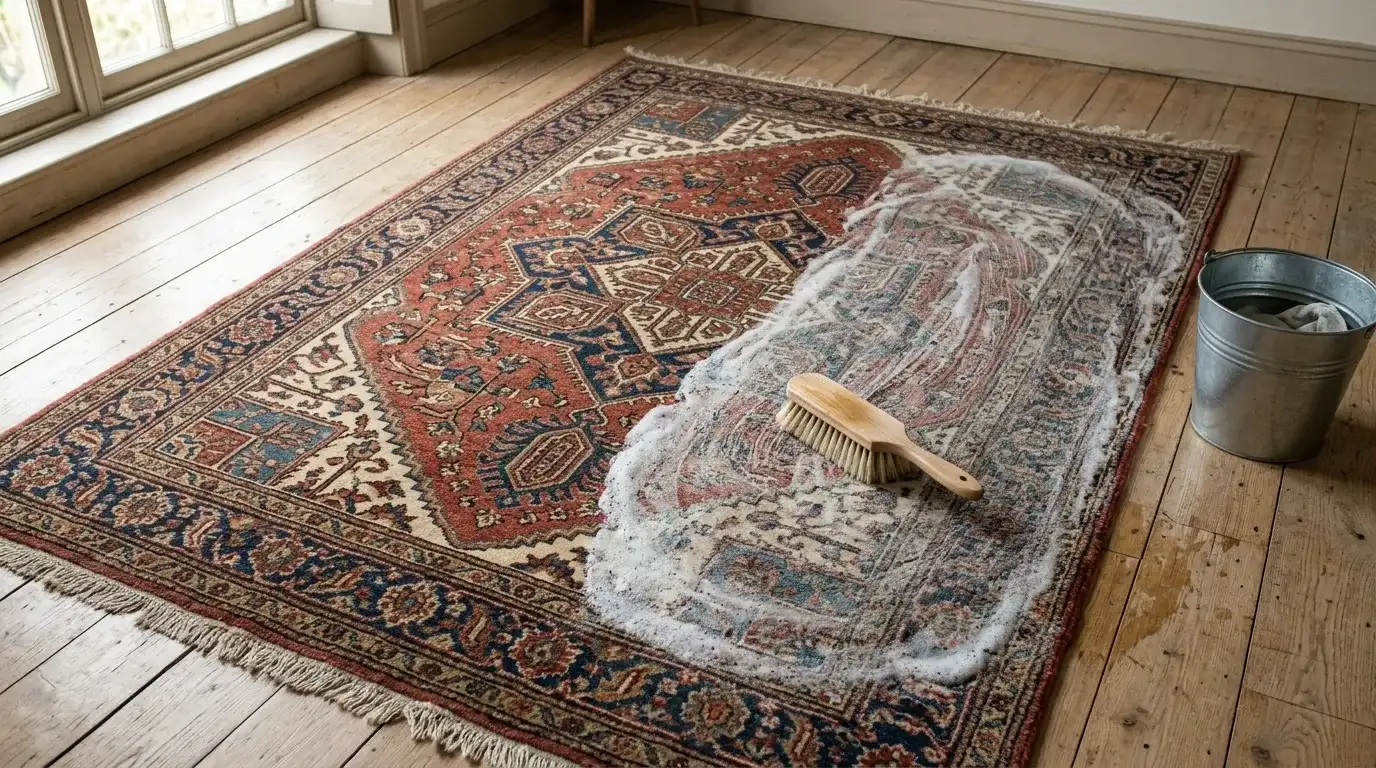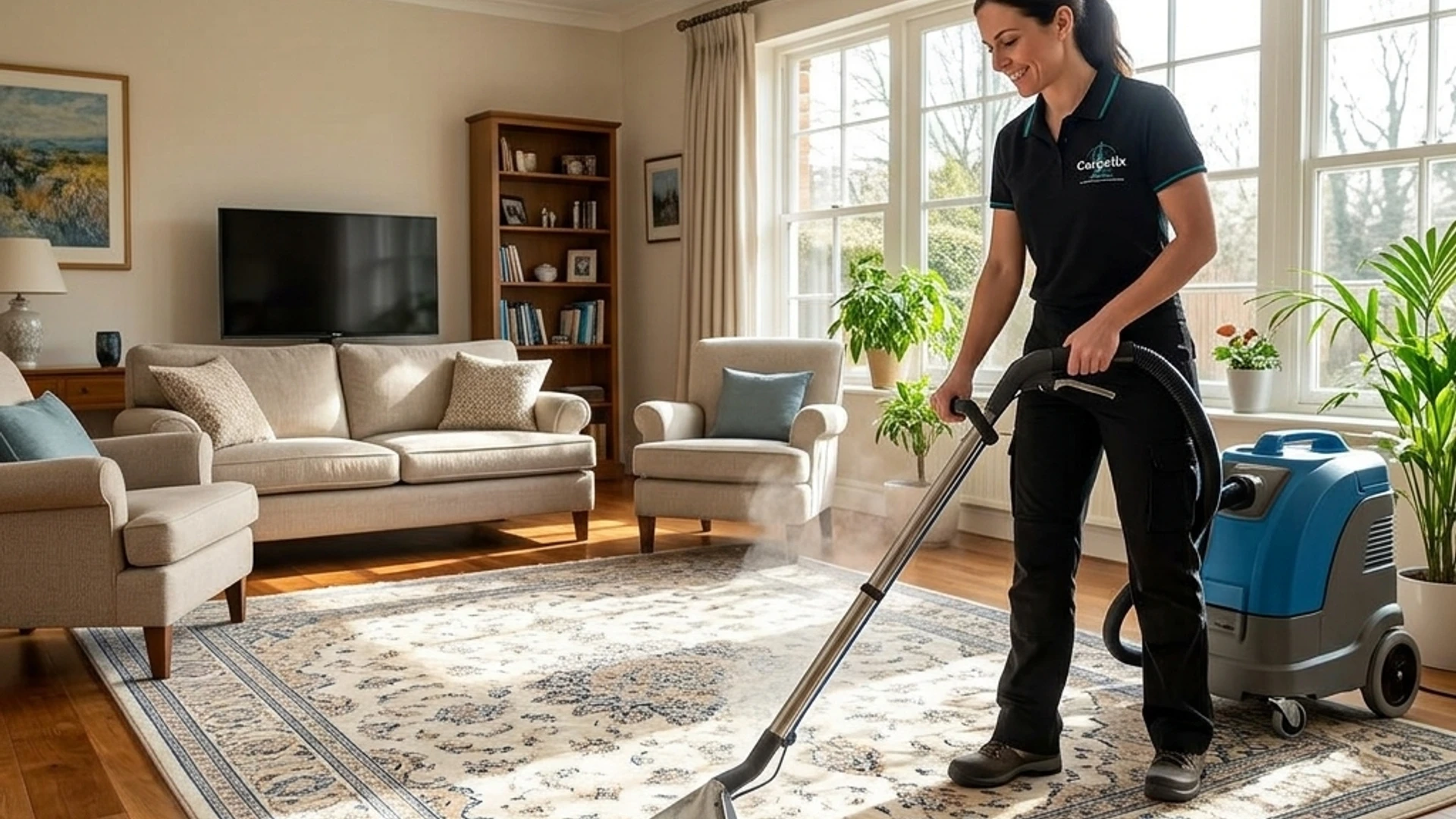
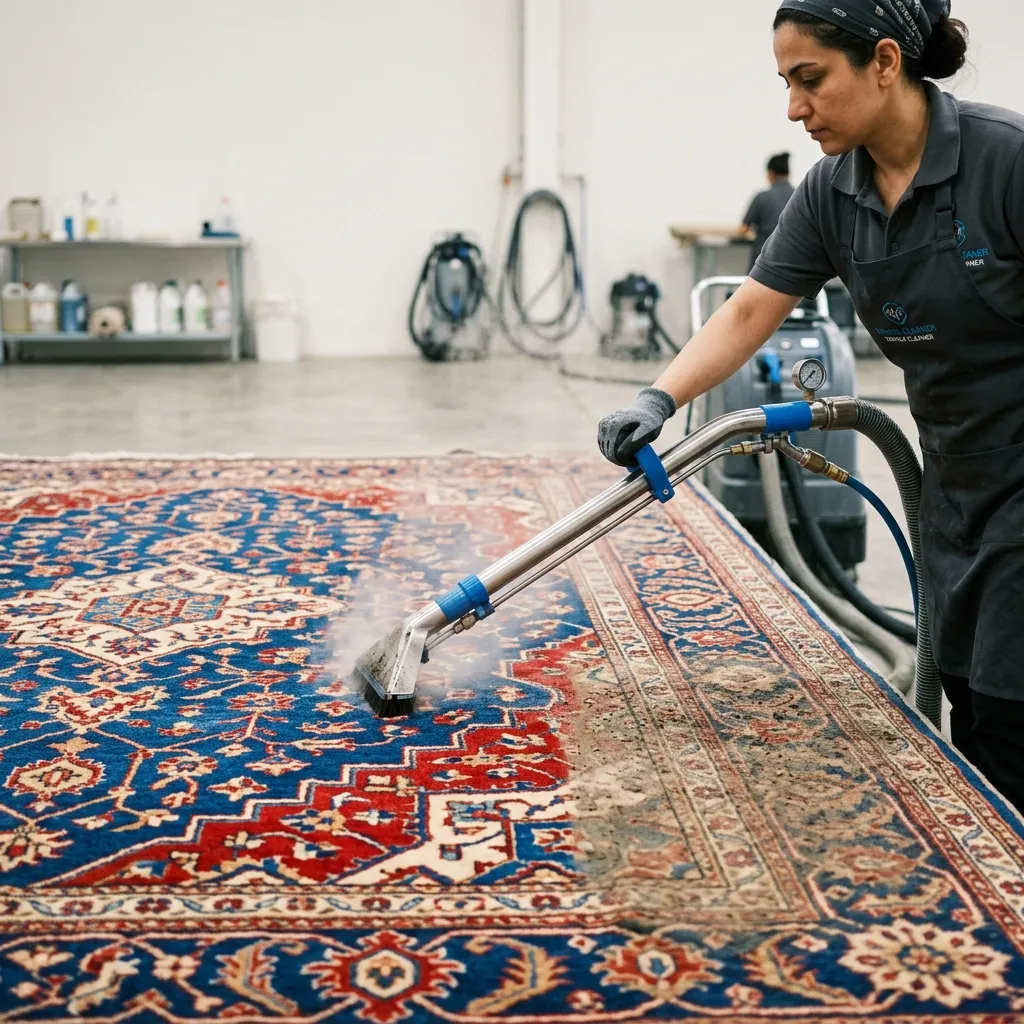
The short answer: most rugs smell after cleaning because they are still damp, usually on the underside, where they sit against the floor with no airflow. Wool also smells like a wet animal while it dries, which is normal and fades. A sour, rubbery or ammonia smell is different: that points to a breaking-down latex backing or old urine in the foundation, and needs treating at the source.
We cover the fitted carpet version of this problem in why carpets smell after cleaning. Rugs deserve their own guide, because three things set them apart. A rug has two sides that both need to dry. It is often made of wool, which smells when wet in a way synthetic carpet never does. And its construction, whether knotted, tufted or woven, decides what can hide inside it.
First, identify the smell
| What it smells like | Most likely cause | Worry? |
|---|---|---|
| Wet dog, wet sheep, farmyard | Damp wool, which is normal | No, if it goes within two days |
| Musty, like a cellar | Trapped moisture, usually underneath | Act now: dry it properly |
| Sour, rubbery, vinegary | Latex backing breaking down | Yes, it rarely recovers |
| Sharp ammonia | Old urine re-activated by water | Yes, needs enzyme treatment |
| Stale, faintly chemical | Detergent left in the pile | Needs rinsing out |
| Sharp and mouldy, getting stronger | Mould in the foundation | Yes, act quickly |
The six causes
1. Wet wool smells like wet wool
This catches out almost everyone the first time. Wool is an animal fibre with natural lanolin, and when it gets wet it smells faintly of the animal it came from, much like a wet jumper or a dog coming in from the rain. It is not a sign that anything has gone wrong, and it disappears once the rug is dry through. The only thing to watch for is how long it lasts: if a wool rug still smells like this after two or three days, it has not dried.
2. The underside is still wet
A fitted carpet dries from the top with the underlay below it. A rug dries from the top while the underside lies flat against a floor with no air moving across it at all. The top can feel dry to the touch the same afternoon while the back stays damp for days, producing exactly the musty smell people describe. The fix is simple and non-negotiable: lift the rug off the floor. Two chairs, a drying rack or a clothes airer, with a fan across it, will dry a rug faster than anything else.
On a wooden floor, a damp rug is also a risk to the floor. Water held against timber can leave dark marks and make boards swell. Keep a damp rug off wood until both sides are dry.
3. The latex backing is breaking down
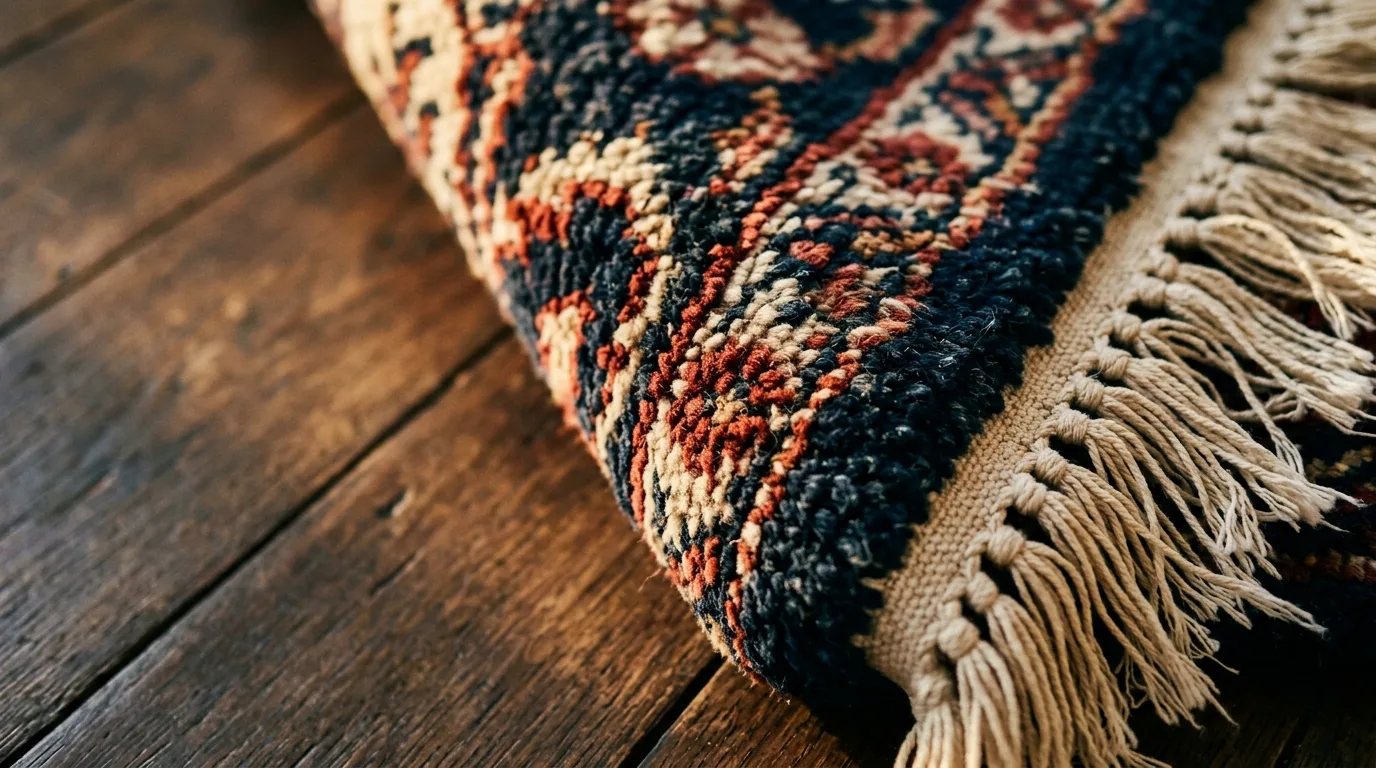
Hand-tufted rugs, and many machine-made ones, are held together by a layer of latex adhesive on the back, usually hidden under a fabric cloth. Latex does not like being soaked. When it is, it can begin to break down and give off a sour, rubbery or vinegary smell, and over time the backing can start to crumble and shed dust. Fast drying limits it, but a backing that has started to break down will not recover. This is why tufted rugs should only ever be cleaned with low moisture. You can tell a tufted rug by turning it over: the back is covered by a glued-on cloth, and the pattern does not show through.
4. Old urine has come back to life
A rug that has lived with a pet may carry old accidents deep in its foundation, dry and quiet for months. Water re-activates them, and the familiar ammonia smell returns stronger than anyone remembers. Surface cleaning cannot reach it. It needs an enzyme cleaner applied deeply enough to reach the foundation, or a full wash through the rug, which is usually done away from the home. How enzymes work, and why they sometimes fail, is covered in what enzyme cleaners actually do.
5. Detergent was left behind
Rugs are dense and hold on to anything put into them. Shampoo that was not fully rinsed out leaves a stale, faintly chemical smell and makes the pile feel slightly stiff or tacky. The answer is a thorough rinse with plain water and a proper dry. The same residue problem on fitted carpet is explained in why carpet feels sticky after cleaning.
6. Mould has started
The serious one. A rug left wet for several days, particularly a thick rug on a cold floor in a poorly ventilated room, can start growing mould in its foundation. The smell is sharper than ordinary mustiness and gets stronger rather than fading. Dry it immediately and completely. Light mustiness usually clears once the rug is properly dry; established mould in a foundation often does not, and the rug may need specialist cleaning or, in the worst cases, replacing.
What to do right now
- Lift it off the floor. Over chairs, a rack or an airer, so air reaches both sides.
- Get air moving. A fan across the rug and windows open. A dehumidifier helps in a closed room.
- Turn it. Once the top feels dry, flip it so the underside faces up.
- Only then use bicarbonate of soda, once it is completely dry. On a damp rug it does nothing.
- Keep it off the floor until the back is as dry as the front. This is the step everyone rushes.
Stopping it next time
- Choose the cleaning method by construction. Tufted and viscose rugs need low moisture, whatever their fibre.
- Dry a rug off the floor, never flat on it.
- Treat pet accidents with an enzyme cleaner at the time, so there is nothing waiting in the foundation.
- Test colourfastness before any wash, because a rug that bleeds also tends to get over-wetted trying to fix it.
For the safe way to clean a wool rug in the first place, see how to clean a wool rug, and for rugs you are washing yourself, how to deep clean a rug at home.
Where this advice comes from
We work to the standards below, and we have pointed you to them directly so you can check anything here yourself rather than taking our word for it.
- WoolSafe: Their approved product list is the place to check before using anything on a wool rug that has started to smell.
- NHS guidance on damp and mould: Worth reading if a musty smell has lasted weeks rather than days, because that points to damp rather than a cleaning issue.
- National Carpet Cleaners Association (NCCA): If a rug you paid to have cleaned came back smelling, the NCCA is a reasonable route if the cleaner will not resolve it.
What we would actually buy
Airflow fixes most rug smells. Everything else here is for the cases airflow alone cannot solve.
A household fan and something to lift the rug on
Two chairs, a drying rack or a clean clothes airer lifts the rug off the floor so air can reach the underside. A fan across it does the rest. Nothing else on this list matters as much.
Bicarbonate of soda
Absorbs lingering odour without adding any moisture, so it is safe on wool. Leave it for several hours and vacuum thoroughly, twice.
An enzyme cleaner labelled safe for wool
Breaks down the source rather than masking it. On a wool rug check the label carefully, because some enzymes that digest urine can also affect wool.
Fabric fresheners and scented sprays
They sit on top of a damp rug and mix with the smell rather than removing it, and they make it harder to tell whether the rug is actually drying.
Nobody pays us to list these and there are no affiliate links on this page. They are simply what we have found works, and in several cases the cheapest option genuinely is the best one. Whatever you use, patch-test it somewhere hidden first.
The Carpetix Team
We are a carpet, upholstery and rug cleaning team based in Leytonstone, East London. We write these guides from what we run into on actual jobs, which is why you will find us telling you when to leave something alone or handle it yourself rather than call anyone out. If a guide here saves you a call, it has done its job.
Last reviewed and updated 27 September 2026