The short answer: a carpet that feels sticky after cleaning almost always has detergent left in it. Too much shampoo went in and not enough was rinsed and sucked back out. The fix is to rinse it with plain water and extract that water out again, using more suction passes than wet ones. Adding more product makes it worse.
Carpet shampoo is designed to loosen dirt and then leave with it. When it stays behind, it dries into a thin tacky film on every fibre. You notice it in socks or bare feet first, then a few weeks later you notice something worse: the carpet is getting dirty faster than it did before it was cleaned, because that film grabs everything that walks across it.
First, is it actually residue?
A carpet that is still damp can feel faintly tacky, and people sometimes decide a clean went wrong when it simply has not finished drying. Before doing anything, give it a full day with windows open and air moving across the floor. Then check:
| What you notice | Likely cause |
|---|---|
| Tacky only while it still feels cool and damp | Not dry yet. Wait and ventilate |
| Tacky once completely dry, all over | Detergent residue across the whole carpet |
| Tacky in one patch only | An earlier spill, sugary drink or a spot treatment left there |
| Fibres feel stiff or crunchy | Heavy residue, usually from overdosing a home machine |
| Rub fibres between your fingers and they feel soapy | Residue. Confirmed |
| Went visibly grubby within weeks of the clean | Residue attracting dirt |
How it happens
Too much product
The most common cause by a distance. Home and hired machines come with a dilution rate on the bottle, and it is very tempting to add a bit extra for a dirty carpet. More shampoo does not clean better. It just leaves more behind.
No rinse pass
A thorough clean ends with water only, to carry the detergent out. Skipping it, or running out of time before doing it, leaves the product in the pile.
Weak extraction
Putting solution in is easy. Pulling it back out takes real suction. Smaller machines put in far more than they recover, which is why DIY cleans produce this more than professional ones. It is the same root cause behind a carpet that smells musty after cleaning: too much going in, not enough coming out.
Sugary spills underneath
If one patch is sticky, think about what was spilled there. Fizzy drinks, juice and sweetened coffee leave sugar that a clean can dissolve and spread without fully removing.
How to fix it
- Vacuum thoroughly to lift dirt already stuck to the residue.
- Rinse with plain water. If you have access to a carpet cleaning machine, empty the tank completely and refill it with clean water and no product at all.
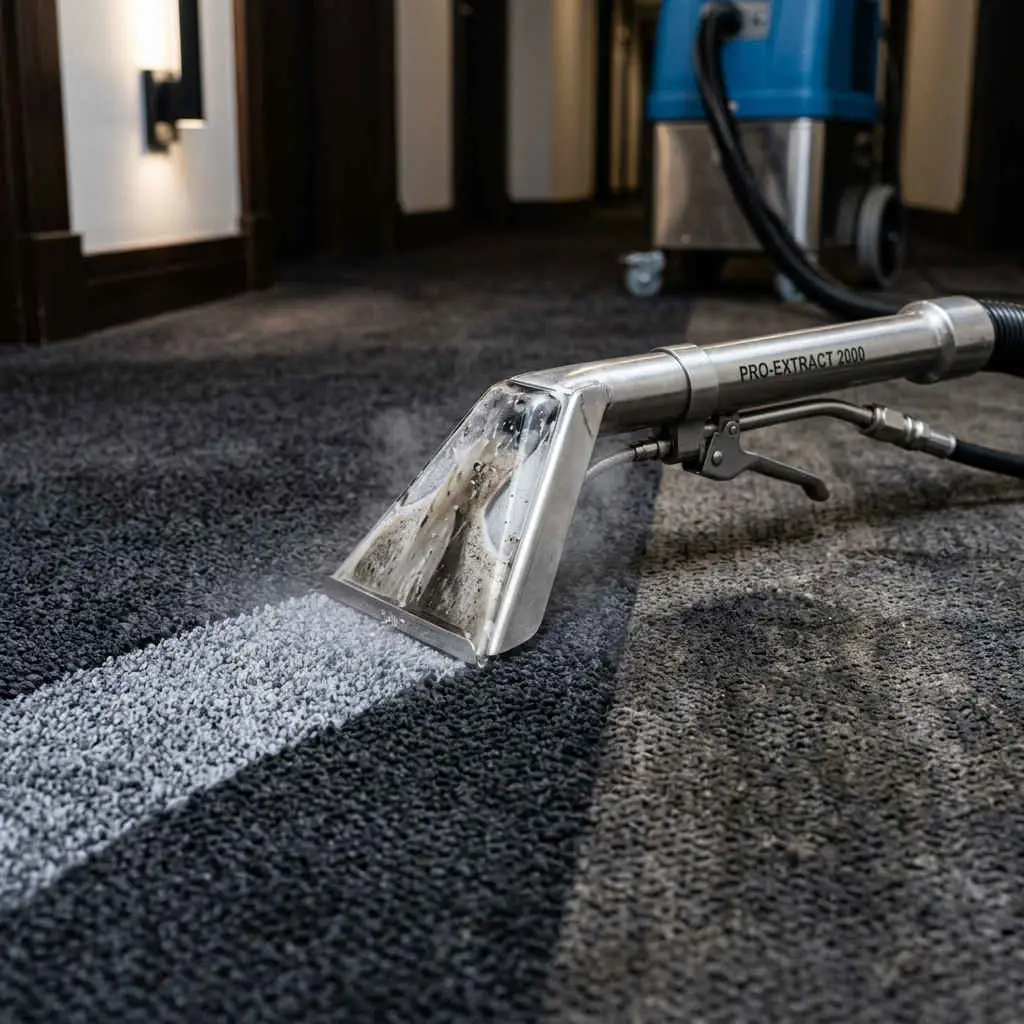
- Extract more than you wet. For every pass with the spray on, make two or three with suction only. This is the part that actually removes the residue.
- On synthetic carpet with heavy residue, a weak rinse of about one part white vinegar to ten parts water helps release alkaline shampoo. Follow with a plain-water rinse. Test first, and do not use it on wool unless the product is wool-safe.
- Dry well with fans and ventilation, then check once it is completely dry. Repeat on any patch that still feels tacky.
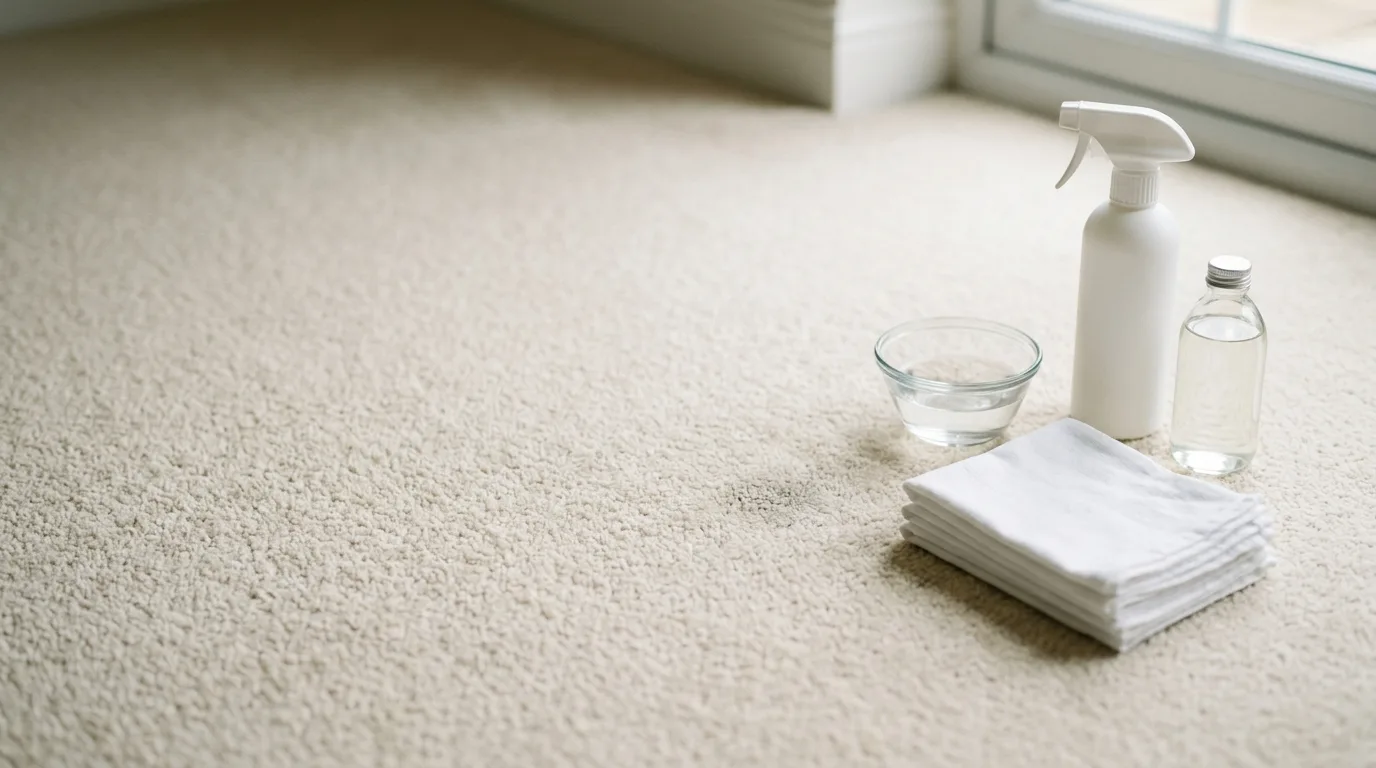
No machine? For a small area, blot with a cloth dampened in plain water, press firmly with a dry towel, and repeat several times. It is slow, but it works on patches. A whole room needs proper extraction.
Stopping it next time
- Use the dilution on the bottle, not more. A dirtier carpet needs more passes, not stronger solution.
- Always finish with a water-only rinse pass.
- Make more suction passes than spray passes, every time.
- If you are hiring someone, ask whether they rinse. A good answer includes the word extraction.
Residue is also the most common reason a stain seems to reappear weeks after cleaning, as dirt builds up on the leftover film in the same place. That is different from a stain returning within a day, which is covered in why stains come back after cleaning.
And if you are weighing up methods, low-moisture cleaning avoids most residue and damp problems at the cost of some depth. We compare them in steam cleaning versus dry carpet cleaning.
Where this advice comes from
We work to the standards below, and we have pointed you to them directly so you can check anything here yourself rather than taking our word for it.
- National Carpet Cleaners Association (NCCA): If a clean you paid for left the carpet sticky, the first step is to go back to whoever did it, and the NCCA is the route if that goes nowhere.
- WoolSafe: Wool carpets need wool-safe rinse products. Their approved list is the place to check.
What we would actually buy
The fix is mostly water and suction. Nothing here needs buying specially except, possibly, the loan of a machine.
Plain water and something that extracts it
A carpet cleaning machine with only clean water in the tank, or a wet and dry vacuum. The suction is what removes residue; the water only loosens it.
White vinegar, well diluted
Roughly one part to ten parts water as a rinse helps release alkaline shampoo. Follow with a plain-water rinse. Not neat, and test first.
Fans and an open window
A thoroughly rinsed carpet takes on more water, so it needs good airflow to dry before it starts to smell.
More carpet shampoo
The instinct when a carpet feels grubby is to clean it again with the same product. That adds more residue. Rinse first.
Nobody pays us to list these and there are no affiliate links on this page. They are simply what we have found works, and in several cases the cheapest option genuinely is the best one. Whatever you use, patch-test it somewhere hidden first.
The Carpetix Team
We are a carpet, upholstery and rug cleaning team based in Leytonstone, East London. We write these guides from what we run into on actual jobs, which is why you will find us telling you when to leave something alone or handle it yourself rather than call anyone out. If a guide here saves you a call, it has done its job.
Last reviewed and updated 27 September 2026