
The short answer: vacuum a Persian rug regularly with suction only and the brush bar off, keeping away from the fringe. Blot spills straight away with cool water and a wool-safe detergent after testing the colours. Turn it every six to twelve months, and vacuum the back a few times a year. Leave a full wash to a specialist every three to five years, or sooner in busy rooms.
Persian and oriental rugs are usually hand-knotted wool on a cotton foundation, and many use natural dyes. That combination is remarkably durable in daily use and remarkably easy to damage with the wrong kind of cleaning. The good news is that almost everything a rug like this needs from you is gentle and cheap. The things that harm it are mostly things people do out of care.
Why grit matters more than stains
Stains are what people worry about, but grit is what wears a Persian rug out. Fine sand and dust walked in on shoes settle deep in the pile, right down at the knots. Every footstep grinds those particles against the wool fibres, slowly cutting them. Over years, that is what turns a thick, lustrous pile into a thin, flat one in the walkways.
A dense wool rug can hold a surprising weight of this grit while still looking clean. So the single most valuable thing you can do is remove it, regularly, before it has a chance to do damage.
Vacuuming it properly
- Switch the brush bar off. A rotating brush pulls at the knots and wears the pile. Use suction only, or a hard-floor head.
- Go with the pile. Run your hand across the rug. One direction feels smooth, the other rougher. Vacuum in the smooth direction.
- Stop short of the fringe. Vacuums catch and chew fringes. Lift the head as you reach the ends.
- Do the back occasionally. A few times a year, flip the rug and vacuum the underside, then the floor beneath it. You will be surprised what comes out.
For small rugs, taking them outside and gently shaking them, or laying them face down on clean grass and patting the back, removes grit very effectively. Avoid beating a rug hard or shaking it by its fringe, both of which strain the foundation.
Dealing with a spill
- Blot immediately with a dry white cloth, pressing straight down. Never rub, which spreads the spill and roughens the wool.
- Test the colours nearby. Press a damp white cloth on a hidden part of each colour close to the spill. If anything transfers, stop there.
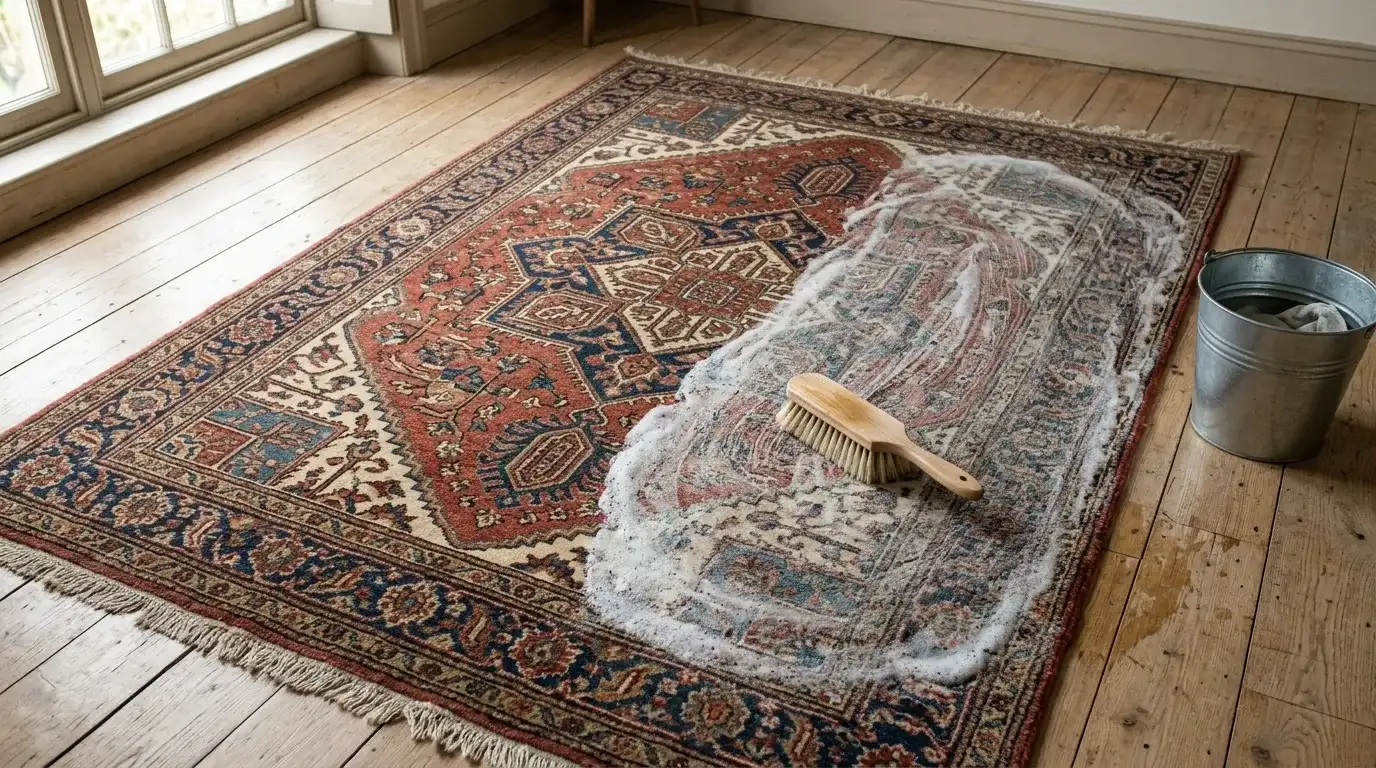
- Treat gently. Blot with a cloth dampened in cool water and a little wool-safe detergent, working from the outside of the mark inwards.
- Rinse and dry. Blot with plain cool water, press a dry towel down firmly, and prop that part of the rug up so air reaches the underside.
If the dye moves, stop. Natural dyes in older rugs can bleed with very little water, and once a red has run into a cream, the mark is extremely hard to reverse. That is the point to hand it to a specialist, not to try harder. For specific spills, see red wine and pet urine, using wool-safe products throughout.
Looking after the fringe
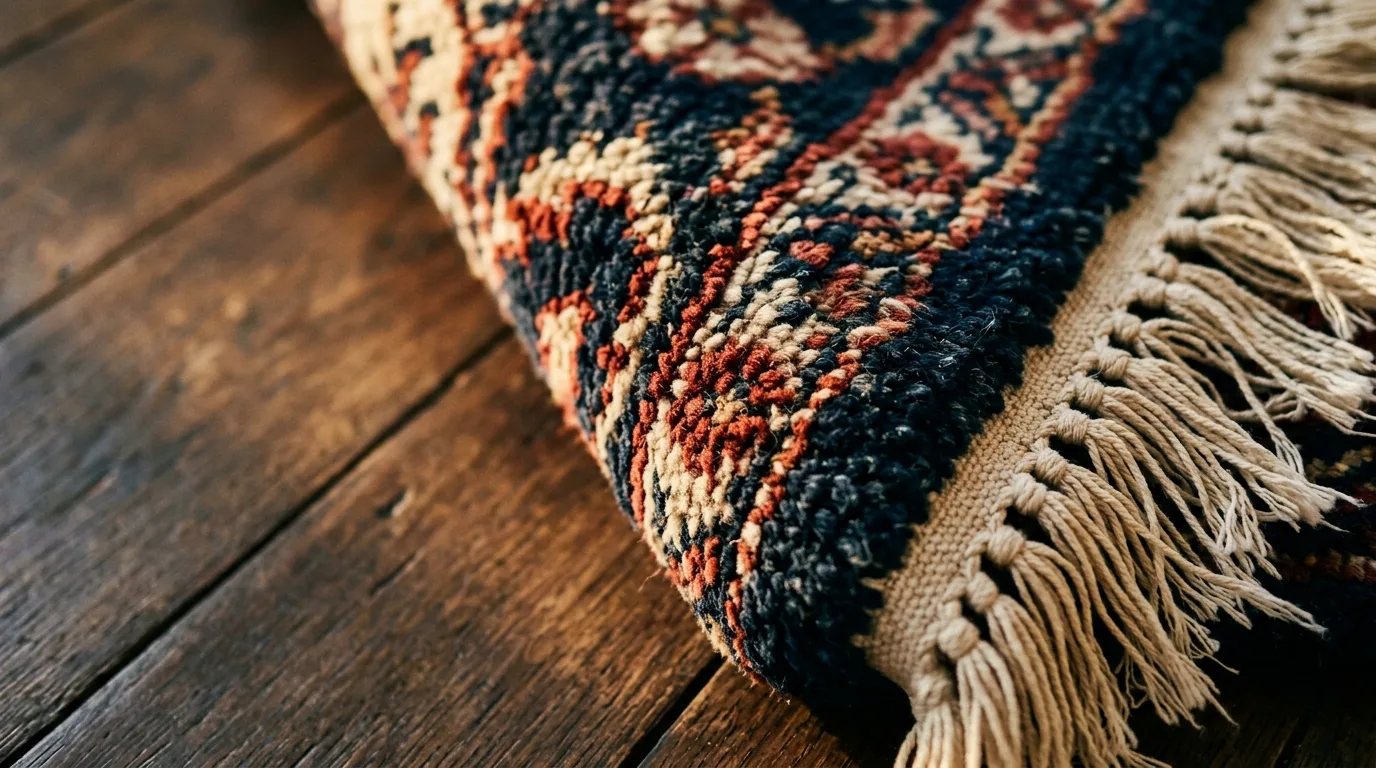
On a hand-knotted rug the fringe is not decoration sewn on afterwards. It is the ends of the warp threads that run the full length of the rug, the threads every knot was tied around. Damage the fringe and you are damaging the structure of the rug, and repairing it properly means reweaving.
- Comb it straight with your fingers or a wide-toothed comb rather than vacuuming it.
- Spot-clean marks with a barely damp cloth and a little wool-safe detergent, then blot dry.
- Do not bleach a greying fringe. It weakens the cotton and it will break sooner.
- Tuck the fringe under the rug in a doorway or under a chair leg, where it gets caught most.
Turning, light and moths
Turn the rug every six to twelve months. Sunlight fades natural dyes, and footfall always follows the same routes. Rotating the rug end to end spreads both, so it ages evenly rather than developing one pale, worn half.
Keep an eye on the parts that never move. Clothes moth and carpet beetle larvae feed on wool, and they favour dark, undisturbed places: under a sofa or a heavy chest, or the underside of a rug that is never lifted. Bare patches where the pile has gone down to the knots, or fine silky threads in the base of the pile, are the signs. Vacuuming underneath furniture and the back of the rug a few times a year is the best prevention there is.
What not to do
| Tempting | Why not |
|---|---|
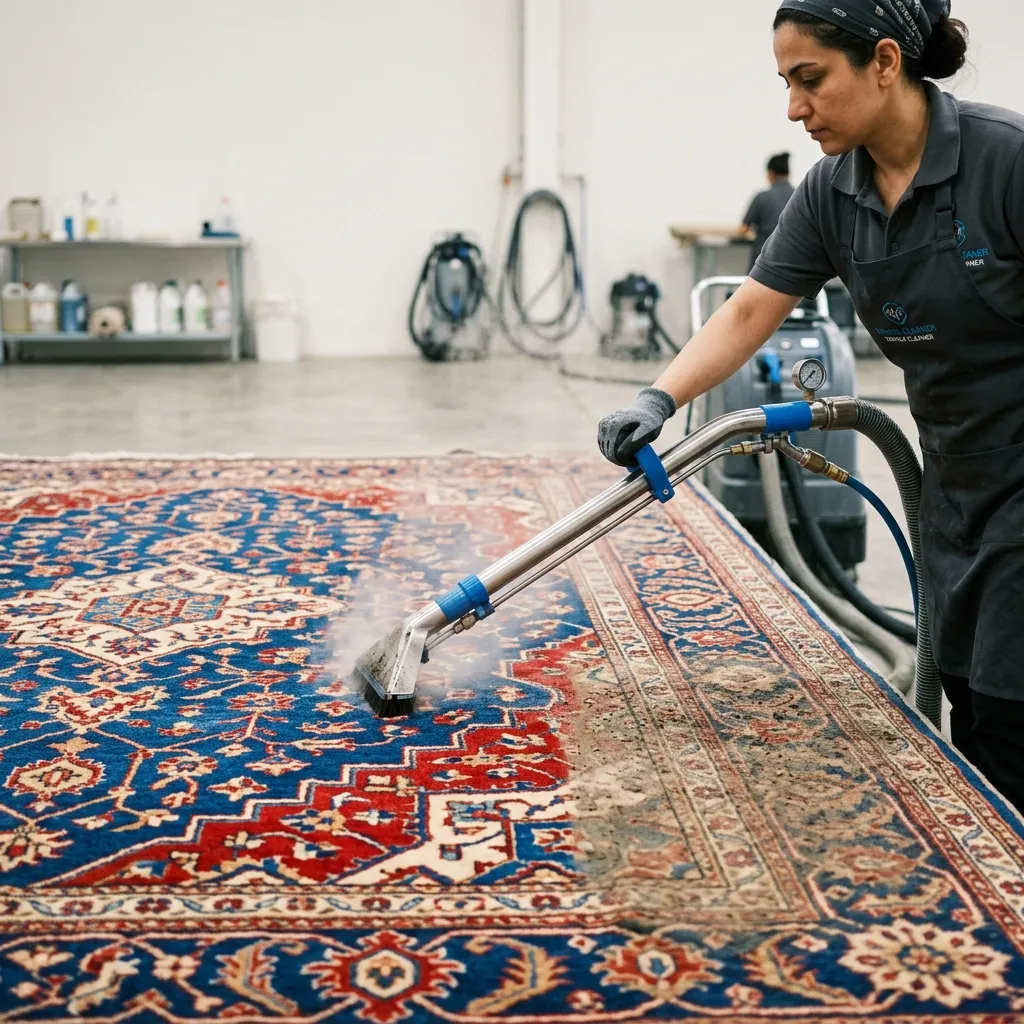
| Steam cleaner or hired carpet machine | Too much water and heat for wool and natural dyes |
| Carpet shampoo | Usually too alkaline, stripping the wool and loosening dyes |
| Washing it in the bath | A full-size Persian rug holds far too much water to dry evenly |
| Drying it in strong sun | Fades the dyes and can dry the foundation unevenly |
| Hanging it by one edge or the fringe | Stretches and distorts the foundation |
| Bleach or stain removers not made for wool | Can permanently change the colour and weaken the fibre |
When it needs a full wash
Every three to five years in a quiet room, and every one to two in a hallway, a dining room or a home with pets. The signs are colours looking dull, the pile feeling gritty when you run your hand across it, or a smell that airing does not shift.
A proper wash means thorough dusting to remove the grit, a controlled wash, and drying flat and fast, which is why valuable Persian rugs are usually cleaned away from the home. If yours has started to smell after getting wet, see why rugs smell after cleaning, and for wool rugs more generally, how to clean a wool rug.
Where this advice comes from
We work to the standards below, and we have pointed you to them directly so you can check anything here yourself rather than taking our word for it.
- WoolSafe: Check any detergent or spot cleaner against their approved list before using it on a Persian rug.
- English Heritage: caring for collections: Conservation guidance on textiles and on clothes moths, which are a real threat to wool rugs left undisturbed.
What we would actually buy
A Persian rug needs very little from a shop. Most of this is about what to use gently and what to leave alone.
A vacuum with the brush bar switched off
Suction alone removes grit without pulling at the knots. Many vacuums have a setting or a hard-floor head that does this.
A wool detergent such as a WoolSafe-approved spot cleaner, and white cotton cloths
For blotting spills with cool water. Use only a product approved for wool, and test it on a hidden corner first.
A natural rubber or felt rug underlay
Stops the rug creeping and creasing, reduces wear from the floor below, and lets air move underneath. Avoid cheap PVC grippers, which can stick to and mark some floors.
Carpet shampoo, steam cleaners and hired machines
All of them put in more water or heat than a Persian rug can safely take, and most carpet shampoos are too alkaline for natural dyes.
Nobody pays us to list these and there are no affiliate links on this page. They are simply what we have found works, and in several cases the cheapest option genuinely is the best one. Whatever you use, patch-test it somewhere hidden first.
The Carpetix Team
We are a carpet, upholstery and rug cleaning team based in Leytonstone, East London. We write these guides from what we run into on actual jobs, which is why you will find us telling you when to leave something alone or handle it yourself rather than call anyone out. If a guide here saves you a call, it has done its job.
Last reviewed and updated 27 September 2026