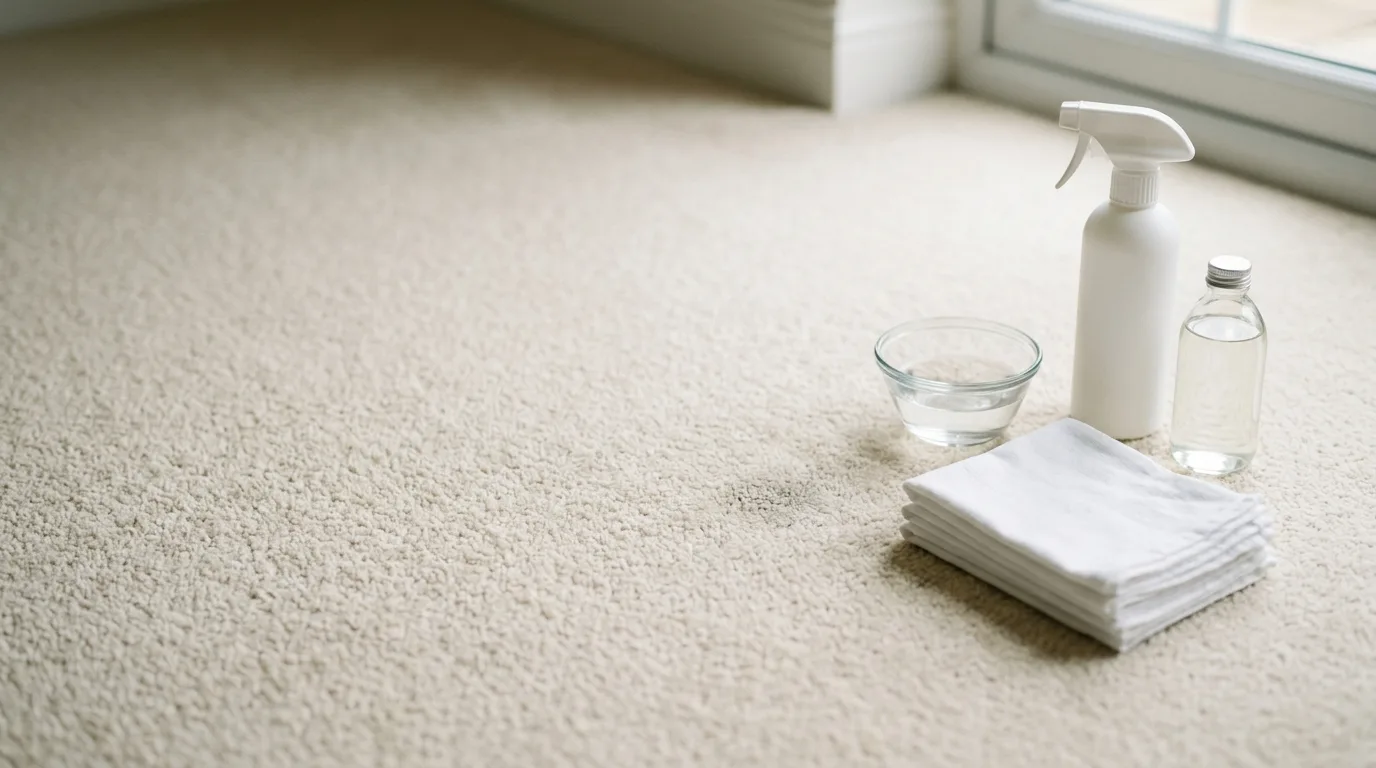

The short answer: blot the wine with a dry white cloth, then pour a little cold water on and blot it up, three or four times over. Then blot with a teaspoon each of clear washing-up liquid and white vinegar in a cup of warm water, working from the outside in. Rinse with plain water and air-dry. Skip the salt and the white wine.
Red wine gets its colour from natural pigments and tannins. While it is still wet, most of that colour is sitting in the liquid rather than bonded to the fibre, which is why dilution works so well. Every time you pour on cold water and blot it back up, you take a share of the colour with it. Once the wine dries, or gets heated, the pigment attaches to the fibre and the job becomes much harder.
Fresh wine, step by step
- Blot hard. Press a dry white cloth straight down and lift. Switch to a clean section each time. Do not rub, which spreads the colour and frays the fibre tips.
- Dilute and blot, repeatedly. Pour a small amount of cold water onto the stain and blot it straight back up. Do this three or four times. It feels too simple to work; it is the most effective step on this page.
- Treat. Mix a teaspoon of clear washing-up liquid and a teaspoon of white vinegar into a cup of warm water. Dampen a cloth and blot from the outer edge towards the centre.
- Rinse. Blot with a cloth dampened in plain water until no more colour or suds transfer.
- Dry. Press a folded towel down firmly, then let it air-dry.
The two myths. Salt absorbs some liquid but does not lift colour, and it dries into the pile. White wine is just more liquid, plus sugar that goes sticky and attracts dirt. Both are only doing what cold water does, less well.
Why the carpet fibre changes everything
The same glass of wine behaves very differently depending on what your carpet is made of. This is not something most stain guides mention, and it explains why the same method works perfectly in one house and barely at all in another.
| Fibre | How it takes wine | Realistic outcome |
|---|---|---|
| Polypropylene | Resists water-based dyes. Colour sits on the surface. | Usually comes out fully, even partly dried |
| Polyester | Fairly resistant to water-based dyes. | Good, if treated quickly |
| Nylon | Takes up dyes readily. Wine behaves like a dye on it. | Fresh: good. Dried: often a faint mark remains |
| Wool or 80/20 wool blend | Absorbs dye readily, and needs gentle, wool-safe products. | Fresh: good. Dried: hard, sometimes permanent |
Not sure which you have? Our carpet fibre guide explains how to tell. On a wool rug specifically, see how to clean a wool rug.
Dried red wine
Found it the morning after? It is still worth trying, particularly on synthetic carpet.
- Rehydrate. Lay a cloth soaked in cold water over the mark for five to ten minutes.
- Treat and blot with the washing-up liquid and vinegar solution, several rounds, rinsing between them.
- On light synthetic carpet only, an oxygen-based carpet stain remover used as directed, or a dab of 3 per cent hydrogen peroxide, can lift the remaining pink shadow. Test both somewhere hidden first.
- Rinse and dry thoroughly.
When it is not coming out
Being straight with you: a dried wine stain on nylon or wool that has survived two or three careful attempts has usually dyed the fibre. At that point it is no longer sitting on top of the carpet to be lifted. It has become part of its colour.
Professional equipment can reach further than a cloth, and plenty of marks that look permanent do shift under proper extraction. But some do not, and anyone who promises otherwise without seeing it is guessing. The same logic applies to a mark that fades and then returns pink as the carpet dries, which is residue coming back up from below, covered in why stains come back after cleaning.
Coffee and tea stains share the tannin problem and respond to a very similar approach, covered in coffee and tea stains on carpet. For everything else, the general stain removal method covers the rules that apply to every spill.
Where this advice comes from
We work to the standards below, and we have pointed you to them directly so you can check anything here yourself rather than taking our word for it.
- WoolSafe: Many oxygen-based stain removers are too alkaline for wool. Check their approved list before using one on a wool carpet.
- National Carpet Cleaners Association (NCCA): UK trade body with consumer guidance, and a membership list worth checking before hiring anyone.
- Which?: Independent testing of carpet stain removers, if you want a view on branded products before buying.
What we would actually buy
Water first, then kitchen cupboard, then a specialist product only if a shadow remains on synthetic carpet.
Cold water and white cloths
Genuinely the most important thing here. Dilute and blot, several times over, before any product goes near it.
Clear washing-up liquid and white vinegar
A teaspoon of each in a cup of warm water. The detergent lifts, the mild acid helps with the tannins. Suitable for most carpets including wool, after a test.
An oxygen-based carpet stain remover, such as Vanish Carpet Care
Effective on the pink shadow that remains. Follow the dwell time on the label and test first, because oxygen-based products can lighten some dyes.
Bicarbonate of soda
As a paste on the damp, already-treated mark, it draws out a little more as it dries. Vacuum thoroughly afterwards.
Salt, white wine and chlorine bleach
Salt and white wine do not lift colour and leave residue behind. Bleach removes the carpet colour along with the stain.
Nobody pays us to list these and there are no affiliate links on this page. They are simply what we have found works, and in several cases the cheapest option genuinely is the best one. Whatever you use, patch-test it somewhere hidden first.
The Carpetix Team
We are a carpet, upholstery and rug cleaning team based in Leytonstone, East London. We write these guides from what we run into on actual jobs, which is why you will find us telling you when to leave something alone or handle it yourself rather than call anyone out. If a guide here saves you a call, it has done its job.
Last reviewed and updated 27 September 2026