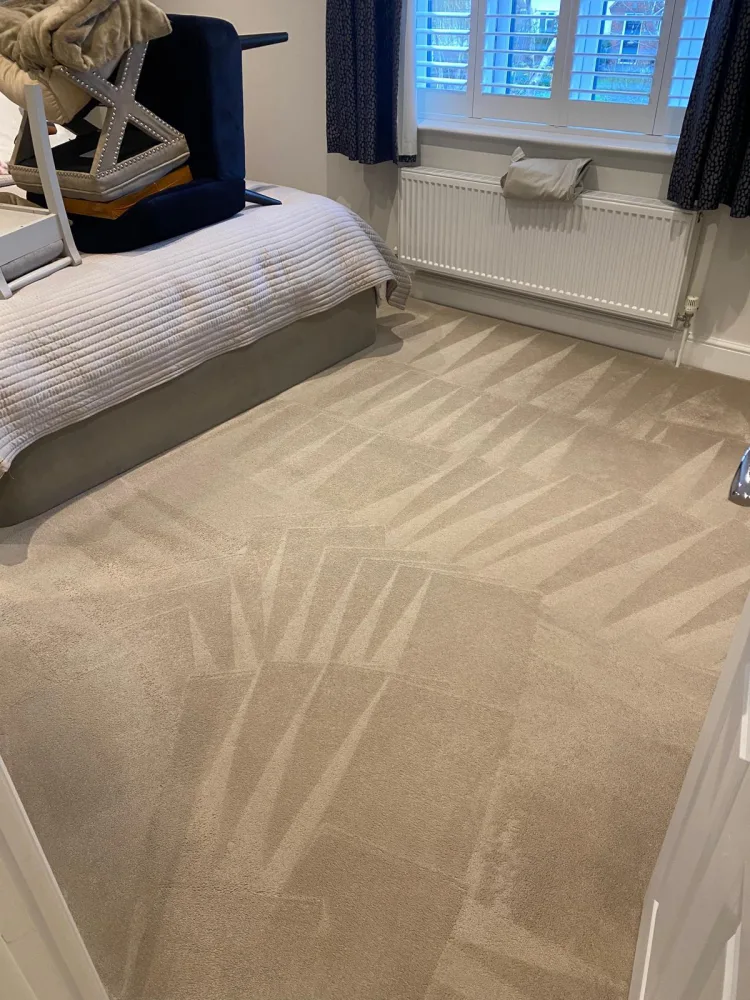
The short answer: a stain that comes back as the carpet dries is wicking. Part of the original spill soaked into the base of the pile, the backing or the underlay. Cleaning re-wet it, and as the carpet dried from the top down, moisture travelled upward and left the residue on the fibre tips. The fix is less water, harder blotting, and a weighted towel left overnight to draw the residue out.
It works like a candle wick or kitchen roll dipped in water. Carpet fibres draw moisture upward, and whatever is dissolved in that moisture comes with it. When the water evaporates at the surface, the dissolved stain is left behind at exactly the point you can see it. A carpet dries from the top, so the surface acts like a pump, steadily pulling from below until the reservoir is empty.
Wicking, resoiling or browning?
Three different problems produce a mark after cleaning, and each has a different fix. Timing and shape tell them apart.
| Wicking | Resoiling | Browning | |
|---|---|---|---|
| When it appears | Hours to two days | Two to six weeks | As it dries, same day |
| Shape | Same shape as the old stain | Traffic routes, or a spot that was treated | Tide-mark rings or an overall yellow-brown cast |
| Colour | Colour of the original spill | Grey, dull | Tan to brown |
| Cause | Residue below the surface | Detergent or oil film attracting dirt | Over-wetting natural fibre or jute backing |
| Fix | Less water, weighted towel | Plain-water rinse and extraction | Mild acid treatment, faster drying |
Stains most likely to wick
- Large drink spills, especially coffee, tea, cola and red wine, because the volume carries them through to the backing. See coffee and tea stains and red wine.
- Pet urine, which spreads outwards and down as it soaks in, and often reaches the underlay. See removing pet urine from carpet.
- Oil and grease, which sit at the base of the pile where water cannot shift them. See oil and grease on carpet.
- Anything treated by scrubbing, because scrubbing drives the spill downwards instead of lifting it.
How to fix a stain that has wicked back
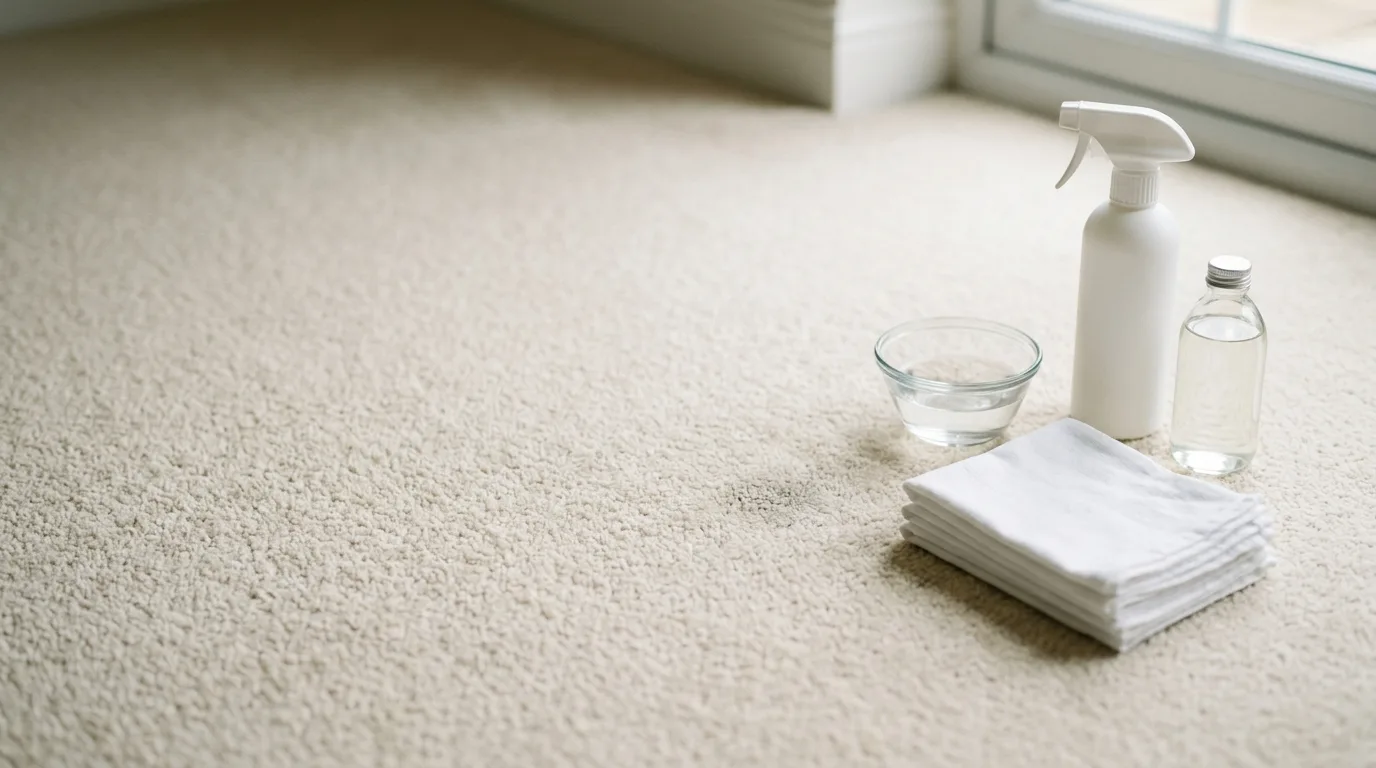
- Re-treat lightly. Use the right product for the original stain, with as little liquid as possible. The goal is to dissolve what has surfaced without reaching deeper.
- Blot much harder than feels necessary. Fold a towel, stand on it, swap it for a dry one, repeat.
- Weight a towel overnight. Lay a thick, folded white towel over the damp area and put something heavy on it, such as a stack of books. As the carpet dries, the residue wicks up into the towel rather than stopping at the surface.
- Check the towel. If it has picked up colour, repeat with a clean one. When it comes up clean, the reservoir below is empty.
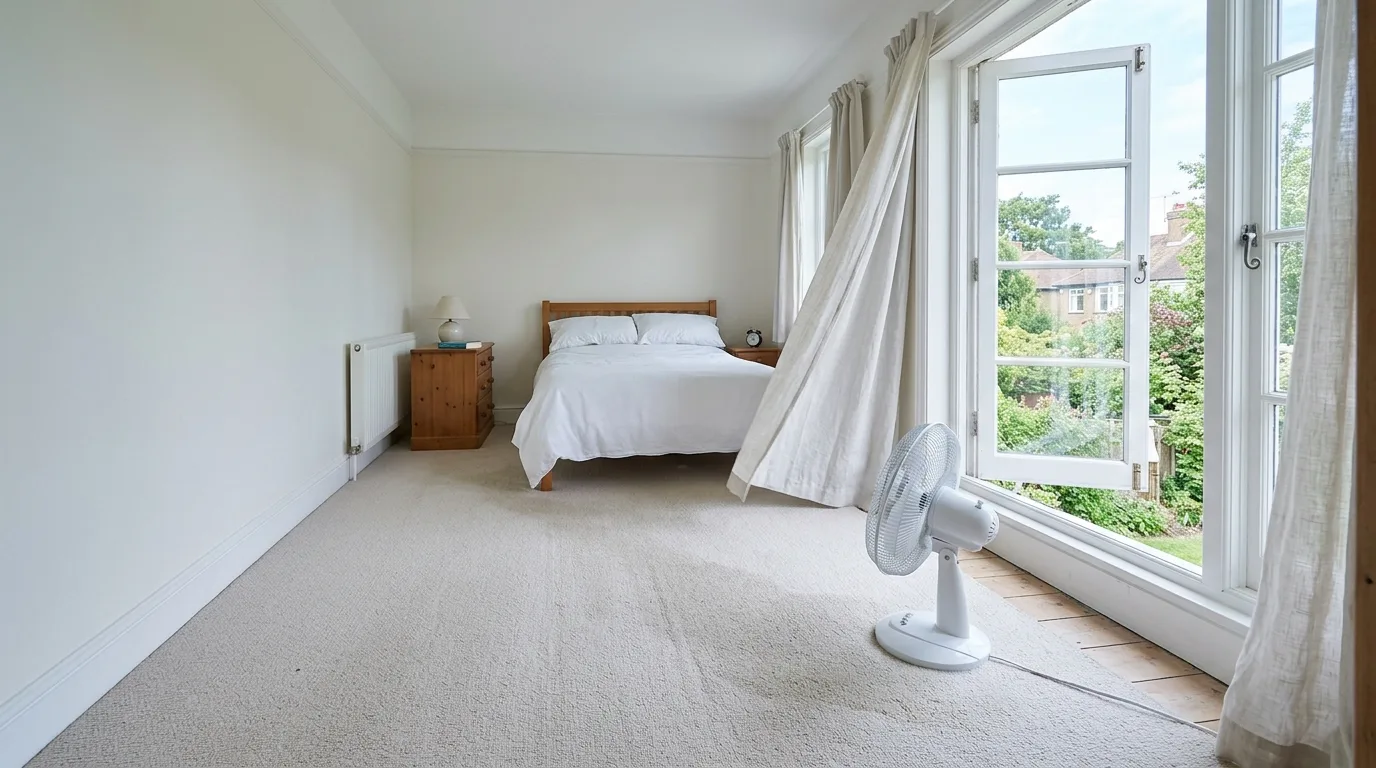
- Dry fast. Fans aimed low across the floor. The quicker the carpet dries, the less time anything has to travel.
When it keeps coming back. Two or three cycles with the towel method clears most wicking. If a mark still returns after that, the source is in the underlay, where treatment from above cannot reach. That needs extraction from below the carpet, or replacing that piece of underlay.
A word on browning
Browning looks like wicking but is a separate problem, and it catches people out on wool, sisal, seagrass and on carpets with a jute backing. When these natural fibres get too wet, particularly with an alkaline cleaner, colour from the fibre itself is released and migrates to the surface as the carpet dries. The result is a tan or brown cast, or brown tide-marks where the wet edge dried.
More cleaning makes it worse. It responds to a mildly acidic treatment and much faster drying. Its appearance is also a clear sign that too much water went into the carpet, which usually brings a musty smell after cleaning along with it.
Preventing it in the first place
- Deal with spills the same day, blotting rather than scrubbing, so less reaches the backing.
- Use as little liquid as you can get away with when treating a stain.
- Judge a clean on how much water comes out, not how much goes in.
- Get air moving across the floor straight after any wet cleaning.
If what you are seeing is a gradual darkening over weeks rather than a stain returning overnight, that is residue rather than wicking, covered in why carpet feels sticky after cleaning.
Where this advice comes from
We work to the standards below, and we have pointed you to them directly so you can check anything here yourself rather than taking our word for it.
- IICRC: The body behind the S100 carpet cleaning standard, which treats over-wetting and slow drying as the main causes of wicking and browning.
- National Carpet Cleaners Association (NCCA): UK trade body. If a paid clean left marks that keep returning, this is the route if the firm will not come back.
What we would actually buy
Wicking is solved by technique far more than by products. This is what actually helps.
Thick white towels and something heavy
A folded towel weighted down overnight draws wicking residue into itself rather than into the carpet surface. It costs nothing and it is often all that is needed.
Fans pointed low across the floor
The faster the carpet dries, the less time residue has to travel. Airflow at floor level makes a real difference.
The right product for the original stain
Enzyme cleaner for urine, milk and blood; washing-up liquid for grease; mild vinegar solution for tannin stains. Treat what caused it, not just the mark on top.
More water and more scrubbing
The instinct is to clean harder. More water reaches deeper, dissolves more of the source, and makes the next wick worse.
Nobody pays us to list these and there are no affiliate links on this page. They are simply what we have found works, and in several cases the cheapest option genuinely is the best one. Whatever you use, patch-test it somewhere hidden first.
The Carpetix Team
We are a carpet, upholstery and rug cleaning team based in Leytonstone, East London. We write these guides from what we run into on actual jobs, which is why you will find us telling you when to leave something alone or handle it yourself rather than call anyone out. If a guide here saves you a call, it has done its job.
Last reviewed and updated 27 September 2026