The short answer: scrape up any solids, cover the spill with cornflour or bicarbonate of soda for 20 to 30 minutes and vacuum it up, then blot the remaining mark with a teaspoon of clear washing-up liquid in a cup of warm water. Rinse with plain water and let it air-dry. Stubborn or motor oil may need a solvent spot remover afterwards.
Oil does not dissolve in water, so a damp cloth on a fresh grease spill mostly pushes the oil sideways into clean fibre. The trick is to remove as much as possible while it is still liquid, using something absorbent, and only then use a product designed to break oil down. That order is the whole method.
Step by step
- Lift the solids. Scoop up butter, food or thick grease with a spoon, lifting upwards rather than pressing into the pile.
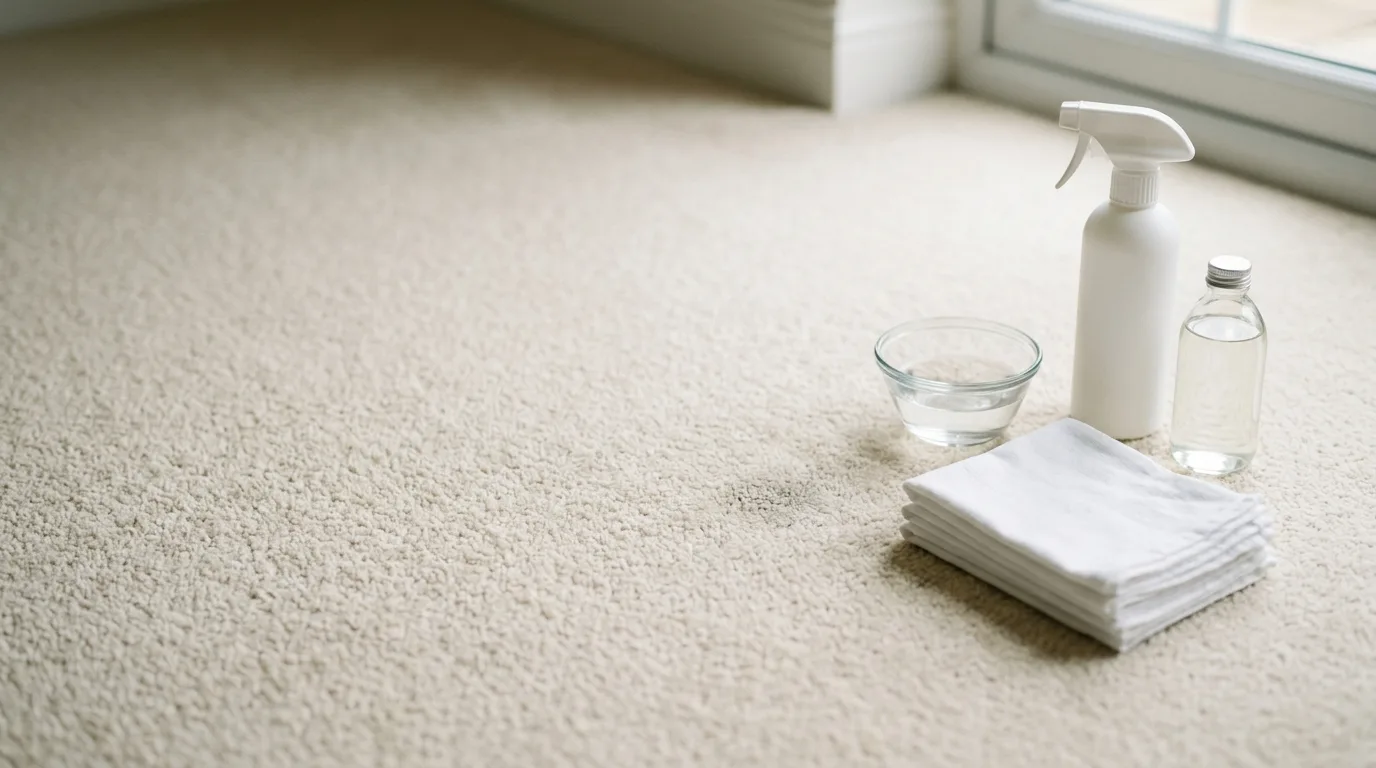
- Absorb. Cover the spill with a thick layer of cornflour or bicarbonate of soda and press it in gently. Leave it for 20 to 30 minutes. Vacuum it up thoroughly. If the powder came up yellow or greasy, do it again.
- Degrease. Mix one teaspoon of clear washing-up liquid into a cup of warm water. Dampen a white cloth and blot the mark from the outside inwards. Warm helps here; hot does not.
- Rinse properly. Blot with a cloth dampened in plain water, several times, until no suds come up. This is the step people skip, and it is the one that stops the patch going dark again.
- Dry. Press dry with a towel and let it air-dry.
Still a shadow? Repeat the degreasing step once more before reaching for anything stronger. Most household grease comes out on the second pass.
Different kinds of grease
| Spill | First step | Then | Difficulty |
|---|---|---|---|
| Cooking oil | Cornflour, 30 minutes | Washing-up liquid solution | Easy if fresh |
| Butter or margarine | Scrape, then cornflour | Washing-up liquid, rinse well | Easy |
| Takeaway grease or curry | Scrape, absorb | Washing-up liquid, then treat any colour | Moderate. Turmeric dyes |
| Motor oil | Absorb thoroughly | Washing-up liquid, then solvent spotter | Hard |
| Candle wax | Harden, break off, vacuum | Brown paper and a warm iron | Moderate |
| Lipstick or make-up | Lift with a blunt knife | Solvent spotter, then detergent | Moderate |
Motor oil and the solvent question
Oil walked in from a driveway or dripped from a bike chain is heavier and more stubborn than anything from a kitchen. Absorbing and degreasing still comes first, and often gets most of it, but the final trace usually needs a solvent-based spot remover.
Use these with care. Most fitted carpets are held together by a latex adhesive between two layers of backing, and solvents can soften it. Soak a carpet with solvent and the backing can start to separate, which causes rippling that no cleaning will fix. Put a small amount on a cloth rather than on the carpet, dab rather than rub, open a window, and test in a hidden spot first.
Your carpet fibre matters here
Polypropylene, the most common carpet fibre in UK rental and new-build flats, resists water-based stains well but has a natural affinity for oil. Grease clings to it. That is why an oily patch on a polypropylene carpet can look clean, then quietly go grey over a few weeks as the leftover film collects dirt from shoes. The fix is a more thorough degrease and rinse, not a stronger product.
Wool handles oil better but needs wool-safe products throughout. Not sure what your carpet is made of? Our carpet fibre guide explains how to tell.
When it looks clean and then comes back
Two different things cause this, and they look almost identical.
- Within a day or two: oil left at the base of the pile has travelled back up as the carpet dried. That is wicking, covered in why stains come back after cleaning.
- Over several weeks: a thin film of oil or detergent stayed on the surface and has been collecting dirt. That is resoiling, and the answer is a thorough plain-water rinse. The same thing happens after an over-shampooed clean, which we explain in why carpet feels sticky after cleaning.
For every other kind of spill, our general stain removal method covers the rules that apply to all of them.
Where this advice comes from
We work to the standards below, and we have pointed you to them directly so you can check anything here yourself rather than taking our word for it.
- HSE guidance on solvents (COSHH): If you are using a solvent-based spot remover, the ventilation and handling advice is worth thirty seconds.
- National Carpet Cleaners Association (NCCA): UK trade body, and the place to check membership before hiring anyone for a carpet you care about.
- WoolSafe: Before using any spot remover on a wool carpet, check it against their approved list.
What we would actually buy
In the order we would reach for them. Most grease never gets past the first two.
Cornflour or bicarbonate of soda
Either absorbs fresh oil well, both cost next to nothing, and neither harms the fibre. Cornflour is slightly more absorbent. Bicarbonate also helps with any smell.
Clear washing-up liquid
A genuine degreaser, which is what grease needs. Clear rather than coloured, so it cannot tint a pale carpet.
A solvent-based carpet spot remover
Dissolves oil that detergent cannot. Use a small amount on a cloth rather than directly on the carpet, because solvents can soften the latex adhesive that holds the backing together.
Brown paper and a household iron
The paper absorbs the wax as the iron melts it. Low heat, keep it moving, and replace the paper as it fills.
Hot water on its own
Warm water with detergent helps. Hot water without it just melts and spreads the grease, and heat can set any coloured dye in the spill.
Nobody pays us to list these and there are no affiliate links on this page. They are simply what we have found works, and in several cases the cheapest option genuinely is the best one. Whatever you use, patch-test it somewhere hidden first.
The Carpetix Team
We are a carpet, upholstery and rug cleaning team based in Leytonstone, East London. We write these guides from what we run into on actual jobs, which is why you will find us telling you when to leave something alone or handle it yourself rather than call anyone out. If a guide here saves you a call, it has done its job.
Last reviewed and updated 27 September 2026