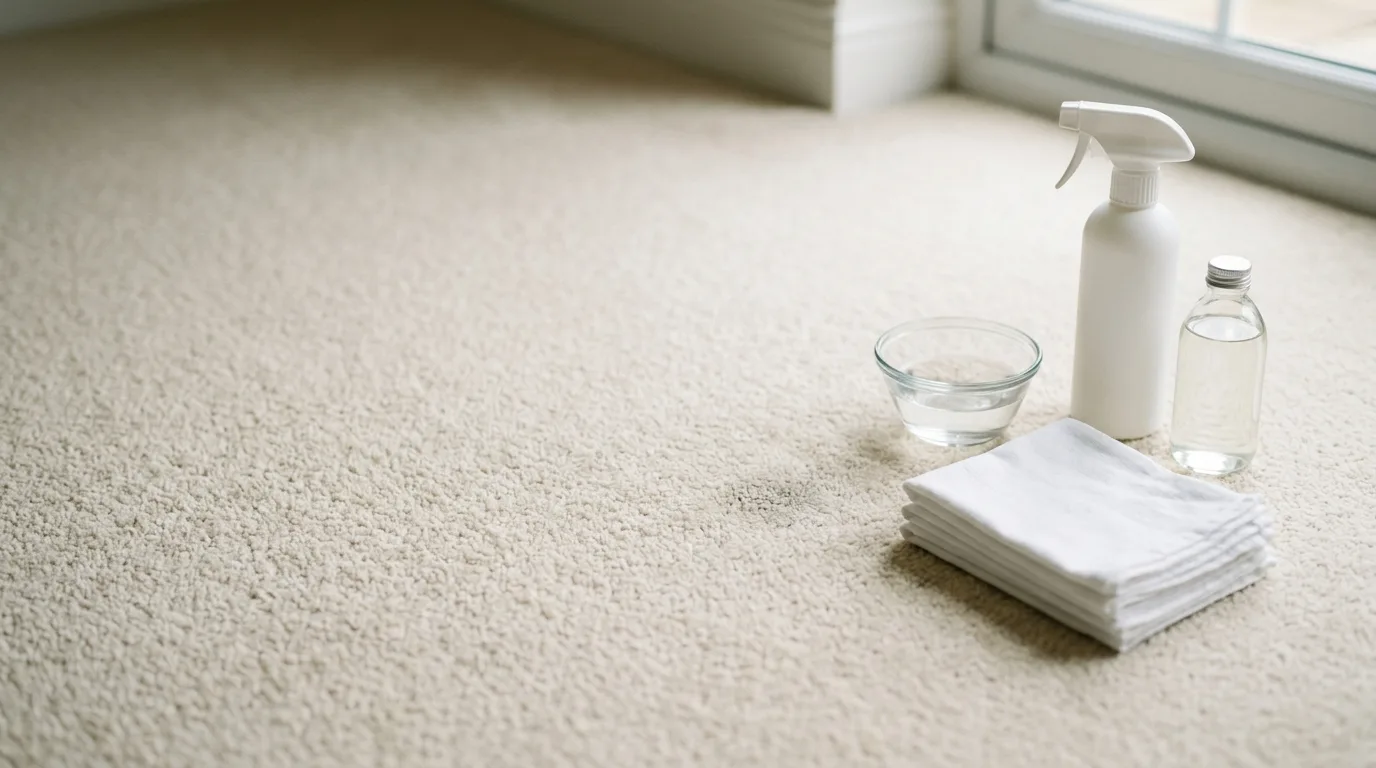

The short answer: blot the spill with a dry white cloth, dilute it with a little cold water and blot again, then treat it with a teaspoon each of clear washing-up liquid and white vinegar in a cup of warm water. Rinse thoroughly with plain water, because leftover milk and sugar are what cause smells and returning marks, then let it air-dry.
Coffee and tea stain through tannins, the same compounds that give wine its colour. A hot drink arrives already warm, which gives it a head start at setting into the fibre, so speed matters more here than with a cold spill. The good news is that tannin stains respond well to a mild acid, which is why white vinegar earns its place in the treatment.
Fresh coffee or tea, step by step
- Blot immediately. Press a dry white cloth down and lift, switching to a clean area each time. Catch it before the edges start drying into a ring.
- Dilute with cold water. A small amount, then blot it back up. Two or three rounds.
- Treat. One teaspoon of clear washing-up liquid and one teaspoon of white vinegar in a cup of warm water. Apply to the cloth, then blot from the outside of the stain inwards.
- Rinse, and then rinse again. Blot with plain water several times. This is the step that decides whether the patch stays clean.
- Dry. Press a folded towel down firmly and let it air-dry with some ventilation.
Black, milky or sweet: why it matters
| Drink | What it leaves | Extra step |
|---|---|---|
| Black coffee or black tea | Tannin colour only | None. The standard method is enough |
| With milk | Tannin, plus milk protein and fat | Rinse thoroughly, or follow with an enzyme cleaner |
| With sugar | Tannin, plus sugar residue | Extra rinsing. Sugar goes sticky and attracts dirt |
| Latte or flat white | Mostly milk | Treat as a milk spill. Enzyme cleaner is worth it |
| Herbal or fruit tea | Plant dyes, often strong | Treat quickly. Hibiscus and berry teas can dye the fibre |
The milk trap. The brown mark disappearing does not mean the milk has gone. Milk soaks to the base of the pile, and if it stays there it turns sour within a couple of days. If a spot where you spilled a latte starts to smell, that is what has happened. An enzyme cleaner digests the protein, and how those work is in what enzyme cleaners actually do.
Old or dried coffee stains
- Rehydrate with a cloth soaked in cold water, laid over the mark for five to ten minutes.
- Treat in rounds with the washing-up liquid and vinegar solution, rinsing between each. Old tannin stains usually fade in stages rather than disappearing at once.
- On light synthetic carpet, an oxygen-based carpet stain remover can lift the last brown shadow. Test first and follow the label.
- Rinse and dry thoroughly.
Being straight about it: an old coffee stain on nylon or wool that survives several careful rounds has often dyed the fibre, and may leave a faint shadow whatever is used on it.
The stain that keeps coming back
Coffee is one of the most common causes of a stain that reappears after it seemed to have gone. A large mug spilled on a thick carpet soaks down into the backing. Surface treatment lifts the top, and then, as the carpet dries over the next day or so, moisture moving upwards carries the coffee back to the surface. The patch returns in the same shape, often slightly paler.
That is wicking, and the fix is less water and more pressure: treat lightly, blot very hard, then lay a folded white towel over it with something heavy on top overnight, so the residue wicks into the towel instead. The full explanation is in why stains come back after cleaning.
Red wine shares the tannin chemistry and a very similar method, covered in how to get red wine out of carpet. For every other kind of spill, see the general stain removal method.
Where this advice comes from
We work to the standards below, and we have pointed you to them directly so you can check anything here yourself rather than taking our word for it.
- National Carpet Cleaners Association (NCCA): UK trade body, with consumer guidance and a membership list worth checking before hiring anyone.
- WoolSafe: If the carpet is wool, check any branded stain remover against their approved list first.
What we would actually buy
Most coffee never needs more than the first product. The others are for milk and for stains that have had time to settle.
Clear washing-up liquid and white vinegar
A teaspoon of each in a cup of warm water. The acid loosens tannins, the detergent lifts them. This handles most coffee and tea on its own.
An enzyme stain remover, such as Simple Solution
Breaks down milk protein, which detergent can leave behind. Check the label if the carpet is wool, because some enzymes can affect wool fibre.
An oxygen-based carpet stain remover, such as Vanish Carpet Care
Lifts the brown shadow that household solutions leave. Test first, follow the dwell time, and do not use on wool unless it says it is safe.
Plain white cotton cloths
Coloured cloths and printed kitchen roll can release their own dye into a damp carpet, and coffee is usually on a pale one.
Nobody pays us to list these and there are no affiliate links on this page. They are simply what we have found works, and in several cases the cheapest option genuinely is the best one. Whatever you use, patch-test it somewhere hidden first.
The Carpetix Team
We are a carpet, upholstery and rug cleaning team based in Leytonstone, East London. We write these guides from what we run into on actual jobs, which is why you will find us telling you when to leave something alone or handle it yourself rather than call anyone out. If a guide here saves you a call, it has done its job.
Last reviewed and updated 27 September 2026